
Cowboy Bebop (カウボーイビバップ), an original anime series initially broadcast in Japan throughout 1998 and early ’99, went on to be a big success on American cable television and beyond three years later.1 The episodic show follows a pair of bounty hunters in 2071 who travel on their spacecraft, the Bebop, across the solar system when humanity has largely been forced to abandon Earth due to a catastrophic warp gate accident that partially destroyed the moon.
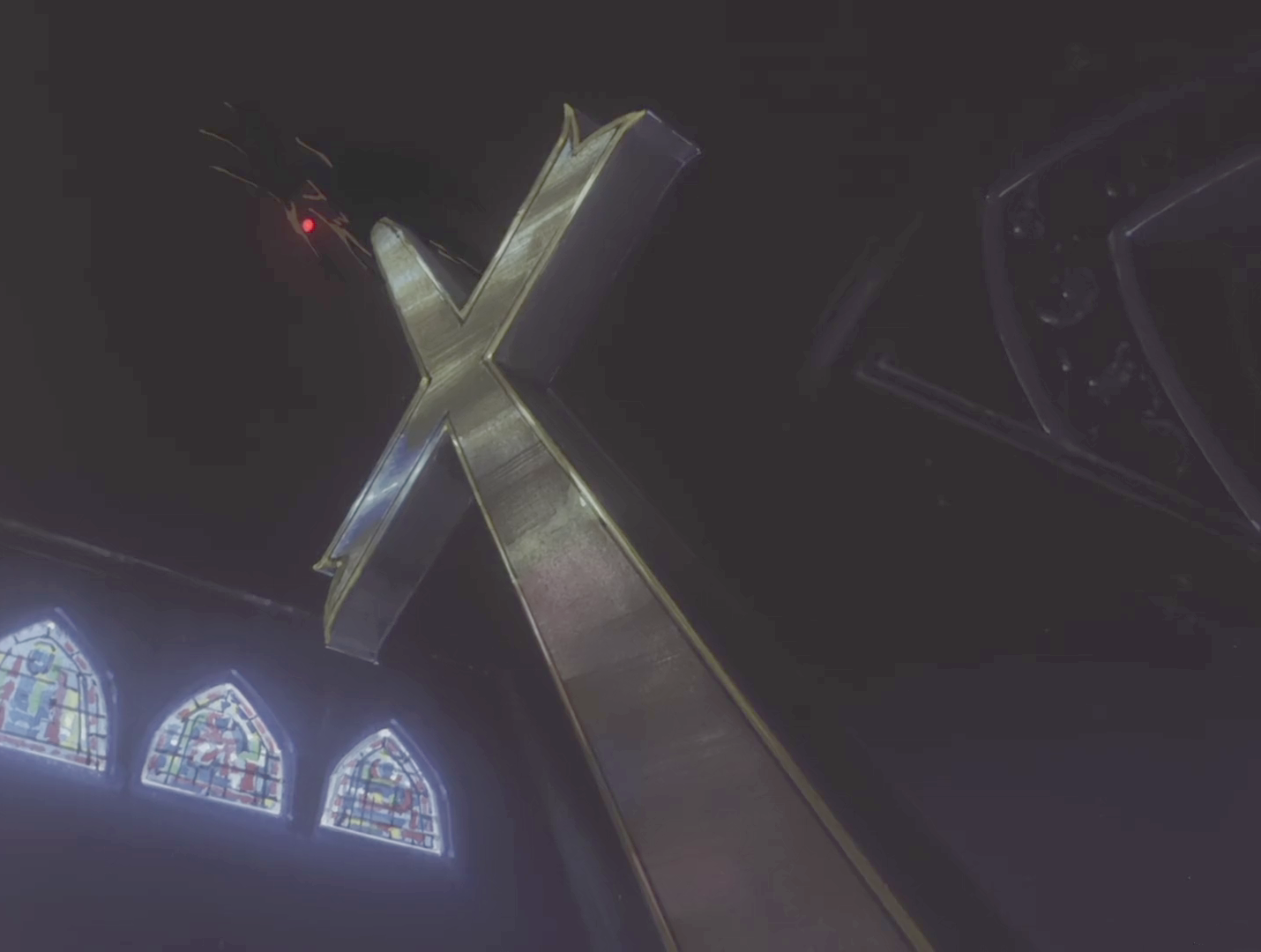
Mostly it’s about nostalgic style than plausible future, particularly since we’ve somehow managed to colonise the asteroid belt and terraform Venus, Mars and the Galilean moons of Jupiter in a couple of generations. But it has an extremely high level of art direction, evident in its backgrounds, character animation, and mechanical design, with occasional bits of hard science when it suits. Anyway, on rewatching for the first time in twenty-odd years, I noticed there’s a showdown in a building that really looks like Chartres Cathedral. I mean, really. So much I need to tell you about it! At length! With footnotes!
A warning that this post, although it took a fair bit of effort, is the sort of nonsense fluff I used to stick on Twitter, but I am very wary about putting any effort into that website anymore since it’s utterly terrible post-Musk. And also going through the sequence frame-by-frame has got rather involved so it’s probably better off here anyway.
This variety of settings across the solar system up to Jovian moons means there’s a huge amount of freedom in the visual direction of each individual episode of Bebop. Not least when a big church building crops up in episode 5, “Ballad of Fallen Angels”, which is pivotal in introducing the backstory for the seemingly happy-go-lucky main protagonist Spike Spiegel. I’m not the first person to notice the location is inspired by Chartres Cathedral, but I was fascinated quite how much it’s consistently modelled after aspects of the building: the architecture, sculpture and the stained glass.
In the episode, the recent addition to the crew of the Bebop, Faye Valentine, has fallen in a fairly obvious trap chasing a bounty related to the Martian crime syndicate of the Red Dragon that Spike used to work for. Permitted to communicate she’s held hostage at a church at the edge of a Martian city to the Bebop, Spike agrees to rescue her, but only (ostensibly, his personal motivations throughout the series are up for debate) because he wants to settle his score with her captor, his former partner in crime at the Red Dragon Syndicate: Vicious.
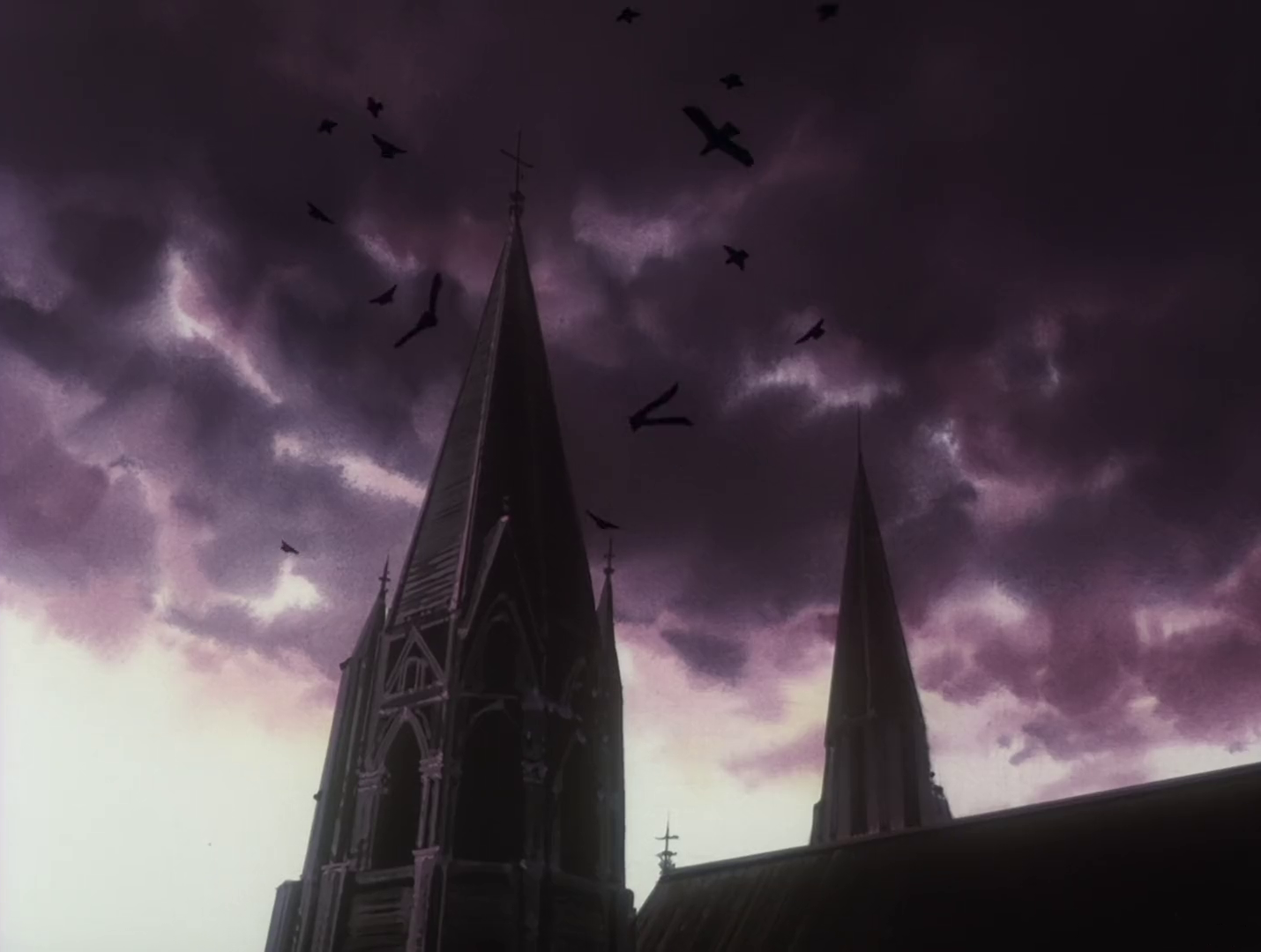
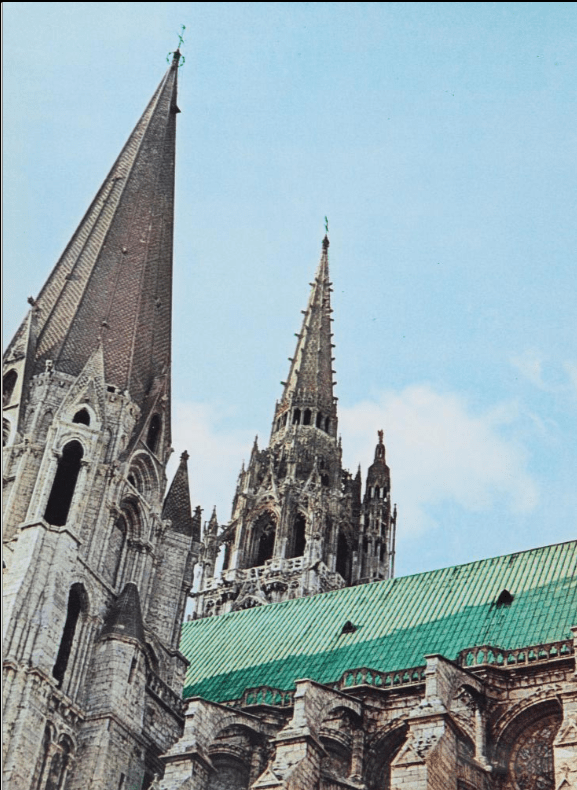
The establishing shot of the church – indeed, the first we know the showdown is going to be in a church – shows two asymmetrical towers with birds flocking around them in a gloom where the sun is likely below the horizon. The tower closest to us is patently based off Chartres’ south steeple, which is one of the earliest masonry church spires (although the scaling on the surface does make the spire look like it’s leaded, but believe me, it’s all stone), topped out c.1170. Its early Gothic gables on the sides of the octagonal stage under the spire are unmistakeable, even if a lot of the details are simplified. The BG artist has made the prudent decision to obscure the fiddly Flamboyant-style lantern of 1506-13 behind the high roof, although the spire is clearly sharper and taller than that of its partner in the foreground.
Then we see the whole “west” front of the building in an upward scrolling shot I’ve comped together (who knows what crater it’s in on Mars, although there are more craters in the northern hemisphere so whatever, we can probably keep general north-south liturgical topography for the rest of this).
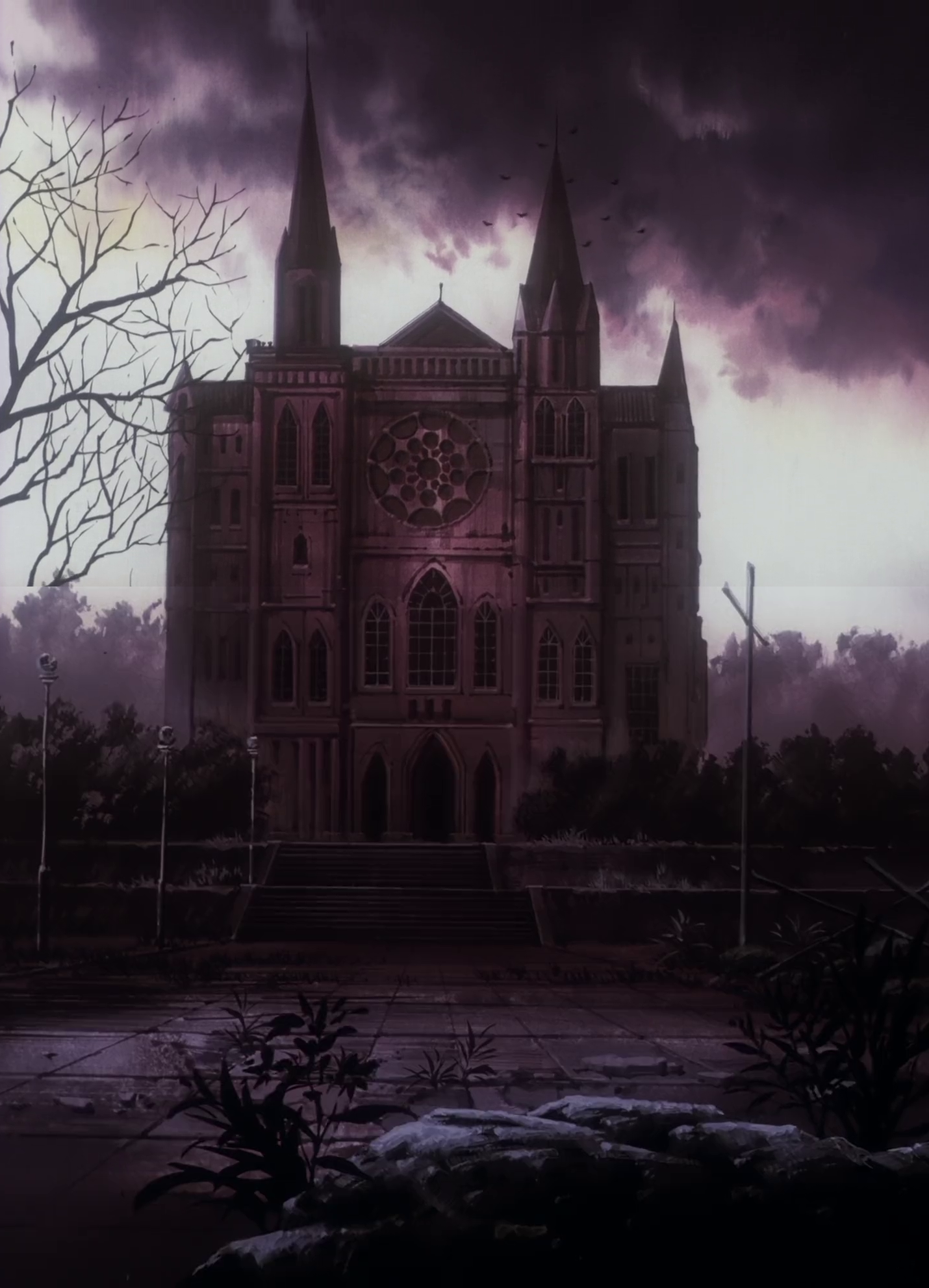
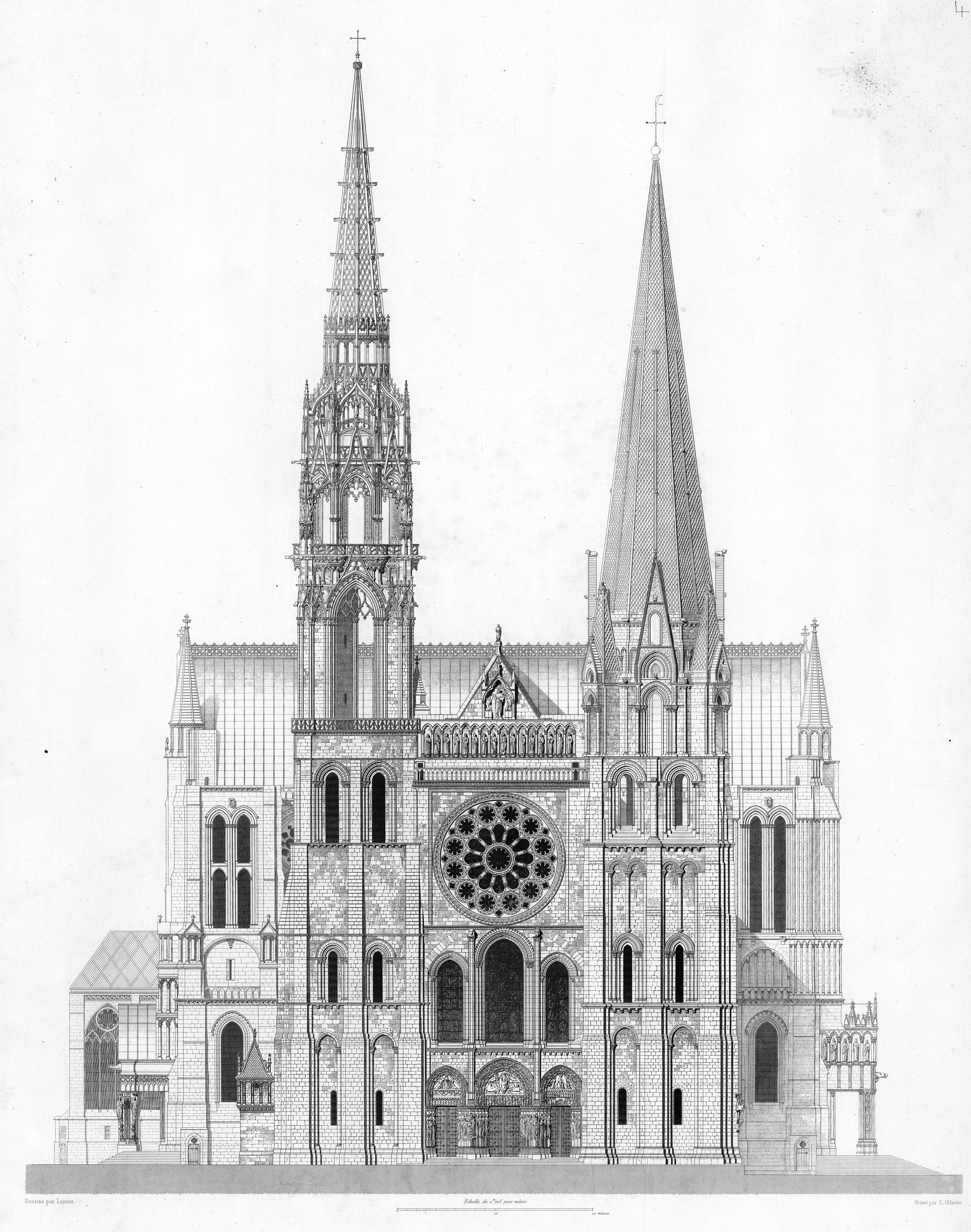
Note not only the north spire is taller, but the north tower it’s sat on too.2 The three windows over the central portals are more pointed but are basically the same as the Terran ones over the “Portail Royal” (three portals of elaborate and influential Early Gothic sculpture, probably of the 1140s). However, the rose window is modified to look like the slightly later south transept rose (note that the outer ring consists of semi-circles rather than octofoils), for reasons related to the final confrontation between Spike and Vicious. Note as well, the paired tall thin lancets on the projections to the sides of the steeples which have a lot of similarities (these are not actually the elevations of the transept arms themselves, but the transept towers that stand over the west/east aisles that were obviously intended to take spires of their own).
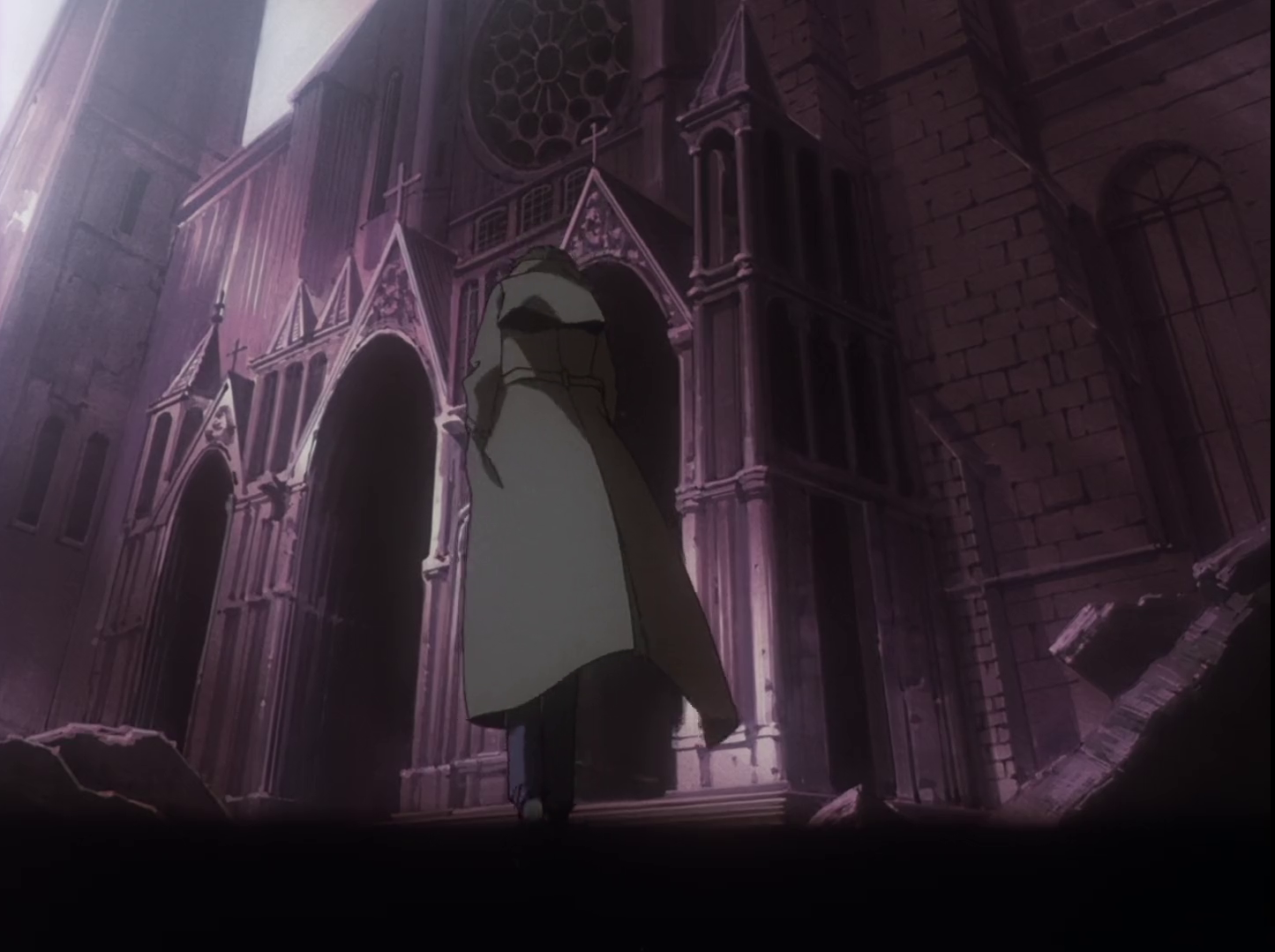
Spike then approaches the church (in his trench coat, which means business). This lovely bit of BG art in the consistent purple light that characterises this whole scene is also clearly based off Chartres Cathedral: but it’s not the main west entrance.
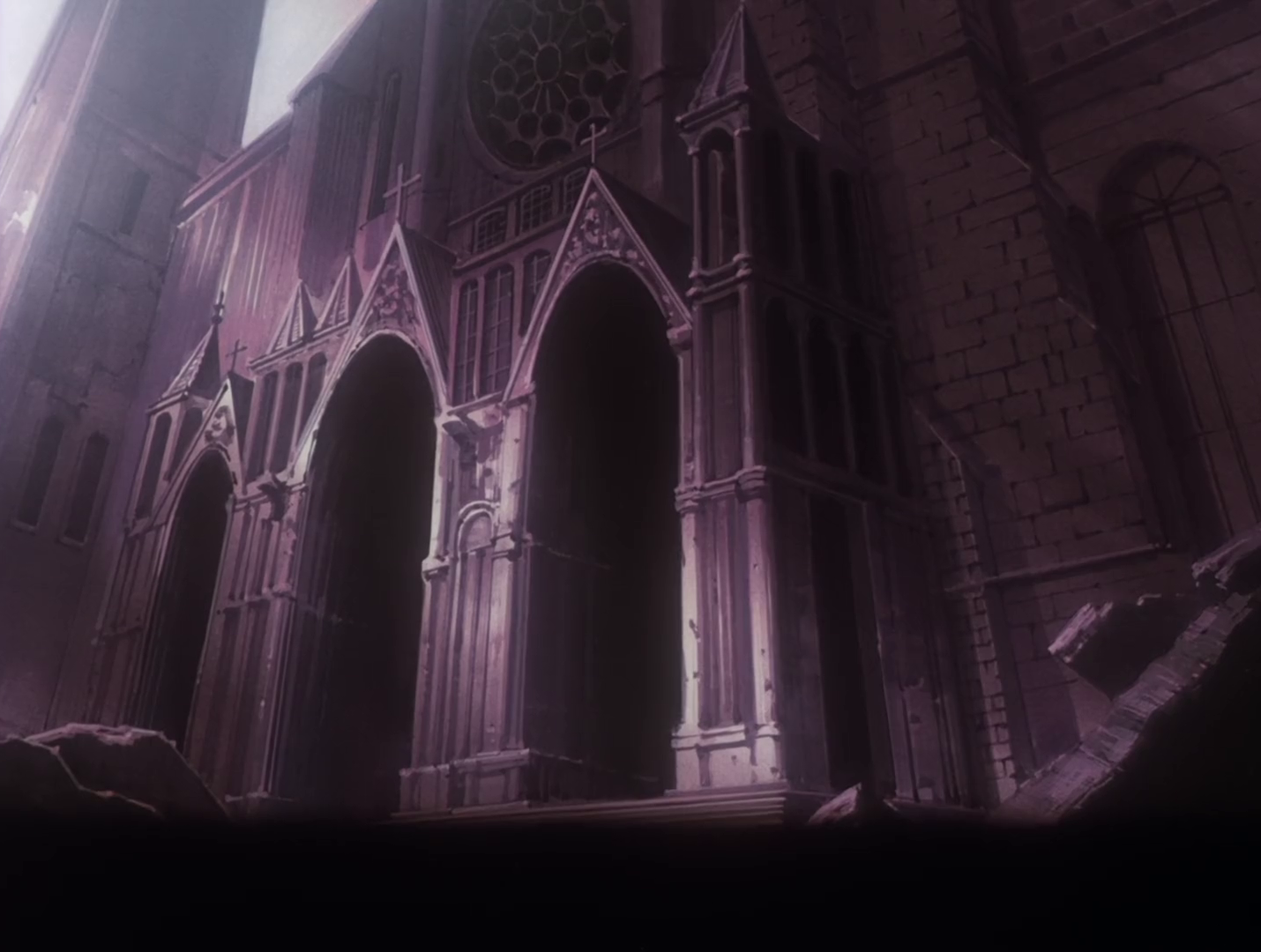
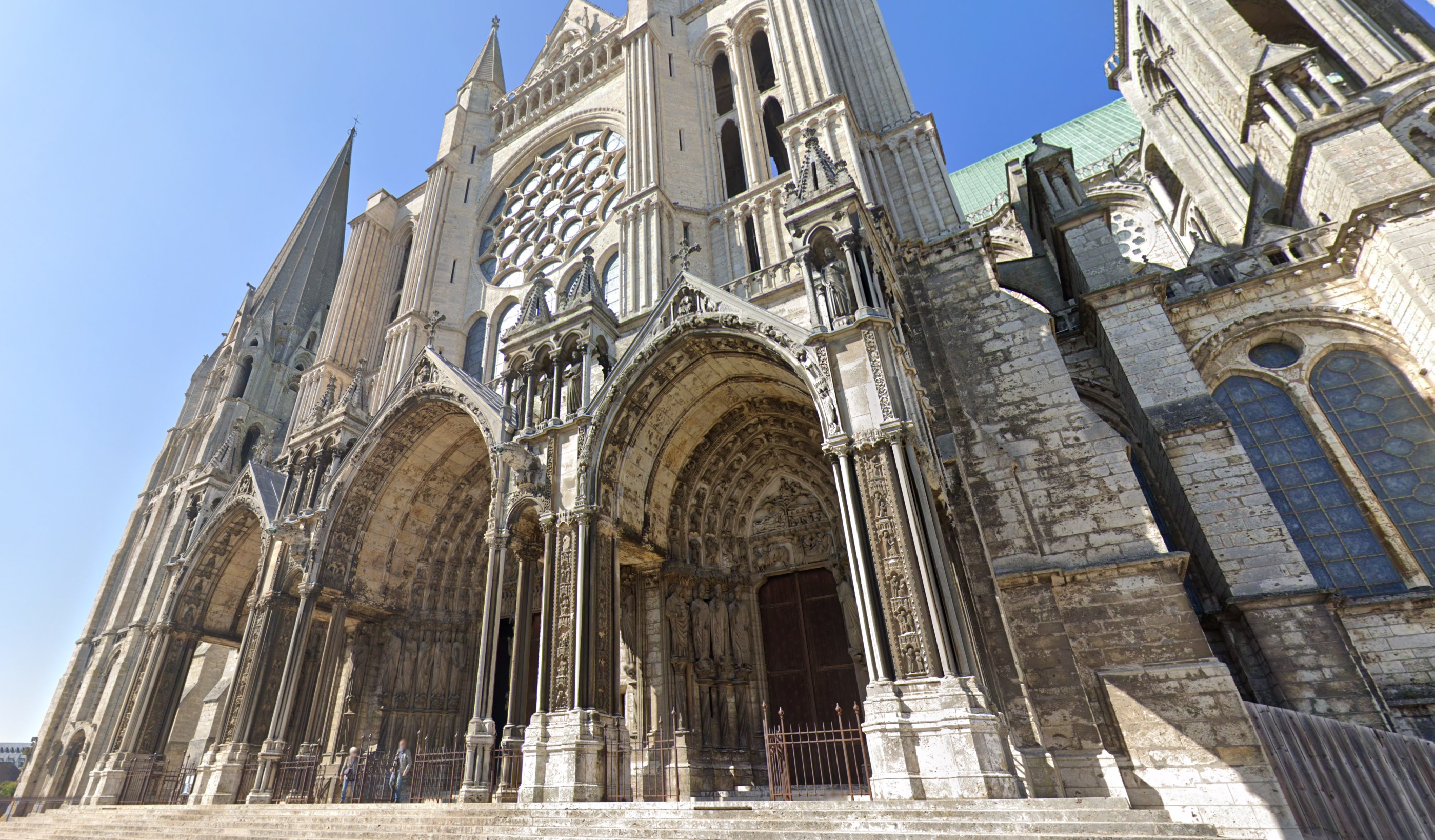
It’s the south porch, unequivocally. Yes, it’s different in a lot of details: the gables are steeper, and there’s a lot less figure sculpture, but there’s two massive giveaways it’s been copied by a BG artist.
One, the buttress to the right of Spike has been copied verbatim from Chartres. In the building it’s a very specific situation where an angle of the front set-off of the transept’s tower buttress was built by the Chartres masons – for some reason – even though it’s directly interfacing with the grand south porch and doesn’t actually need to be there, thus confusing generations of architectural historians about whether the porches were an afterthought or not.3
Regardless, it’s very funny this odd arrangement got copied into a background painting of a Gothic church on Mars for an animation made in Japan a bit over 800 years later.
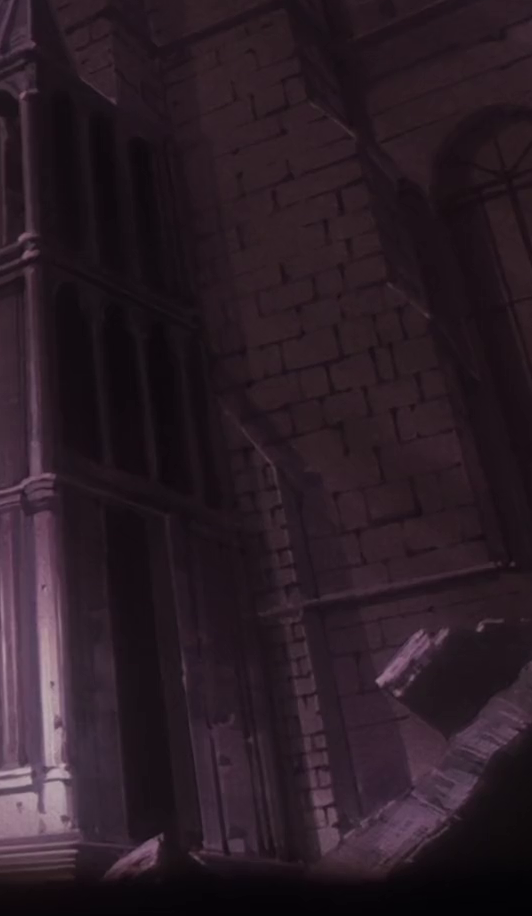
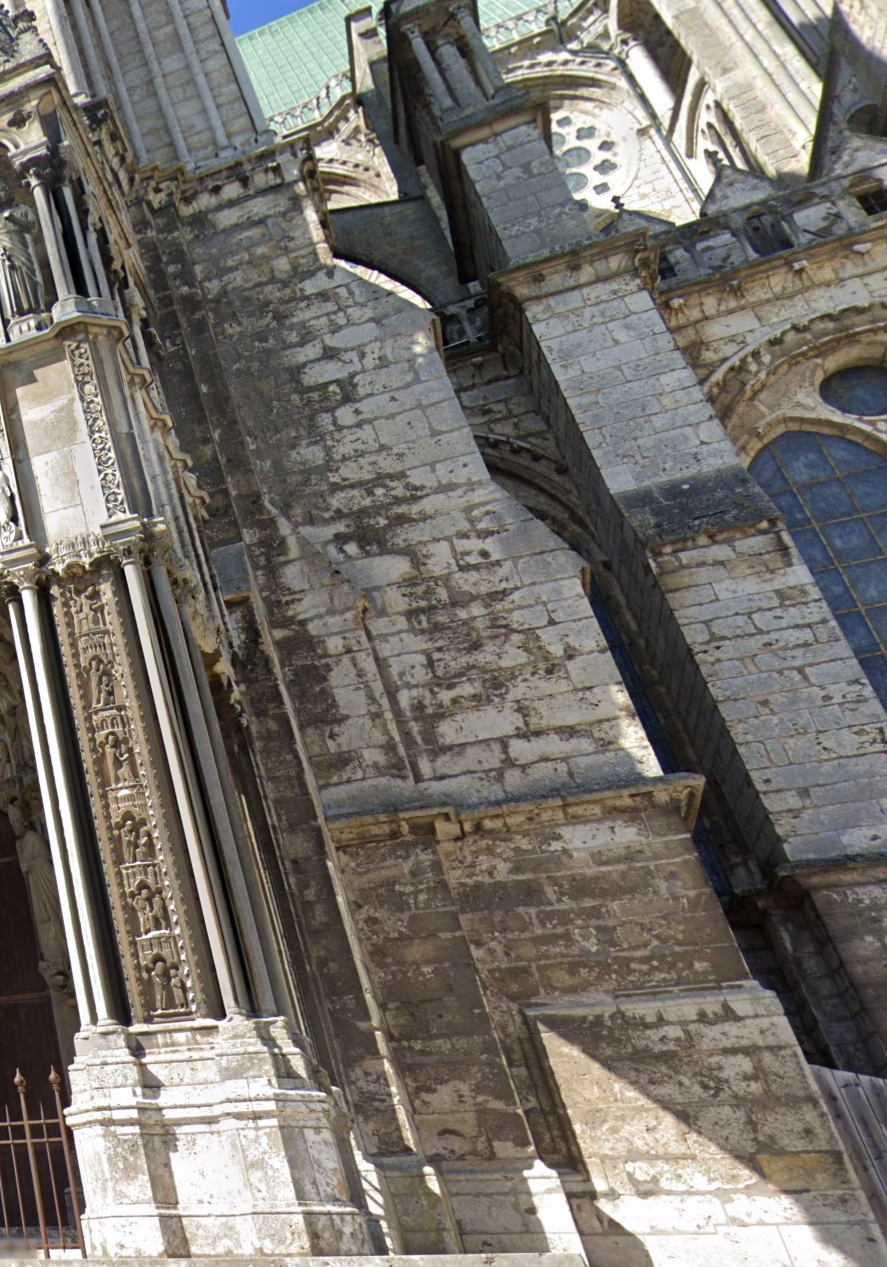
Second, the big heavy canopied tabernacles over the dividing shafts of the portals (which aren’t present on the otherwise very similar north porch), although the closest pair has been missed off to allow us to see the windows. The lancets below are misunderstood by the BG artist and divided horizontally, but here the rose window is closely emulated from the source (outer semi-circles aligned with circles, you will get very bored with me explaining that pattern if you read this to the end, I’m sure). You can also see the overly-generous shafting of the buttresses flanking the transept (for the transept towers) is copied.
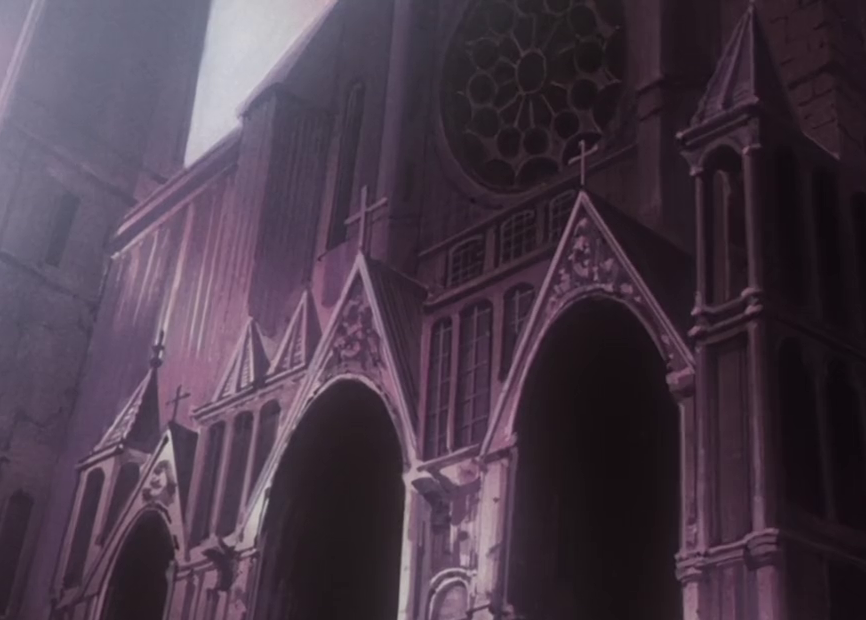
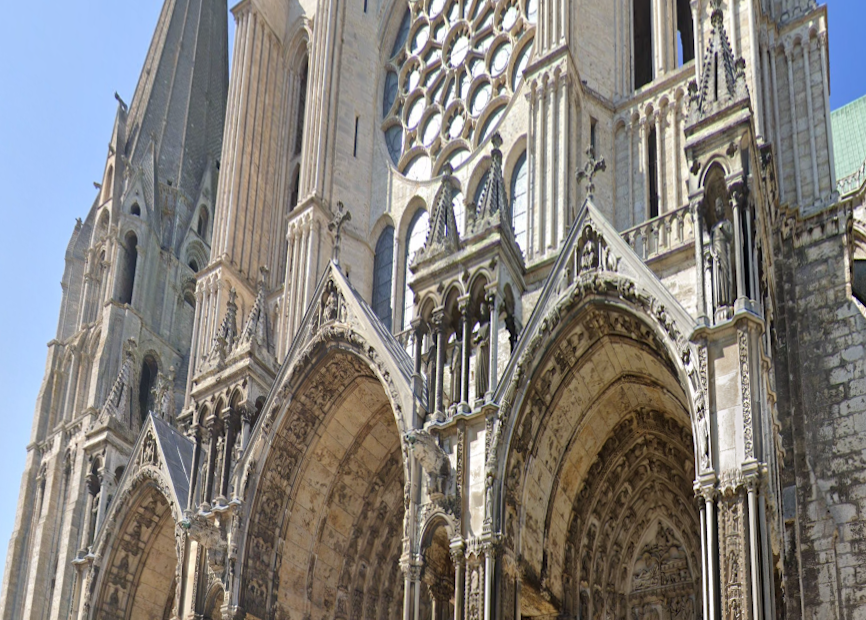
Despite the discrepancies between this background and that of the two-steepled facade seen previously, and that you’ve got the steeple clearly at the end of a long nave rather than directly abutting it, it’s heavily implied this is the main entrance of the Martian church in the western main facade. Spike’s clearly not supposed to have gone round the side, from what follows.
I initially thought the above BG may have been referenced from this photograph, as it is widely printed and the SE angle buttress built into the porch is clearly visible to copy.
However, the more I looked at the sequence, even if they mix up the south and west entrances, I did start to wonder if someone on the team working on Bebop actually went to Chartres and took their own reference photos. 4 I mean, it was made in 1997!5 Do you know how few pictures were on the internet then?
As we follow on to the establishing shots of the interior using stained glass you might see what I mean…
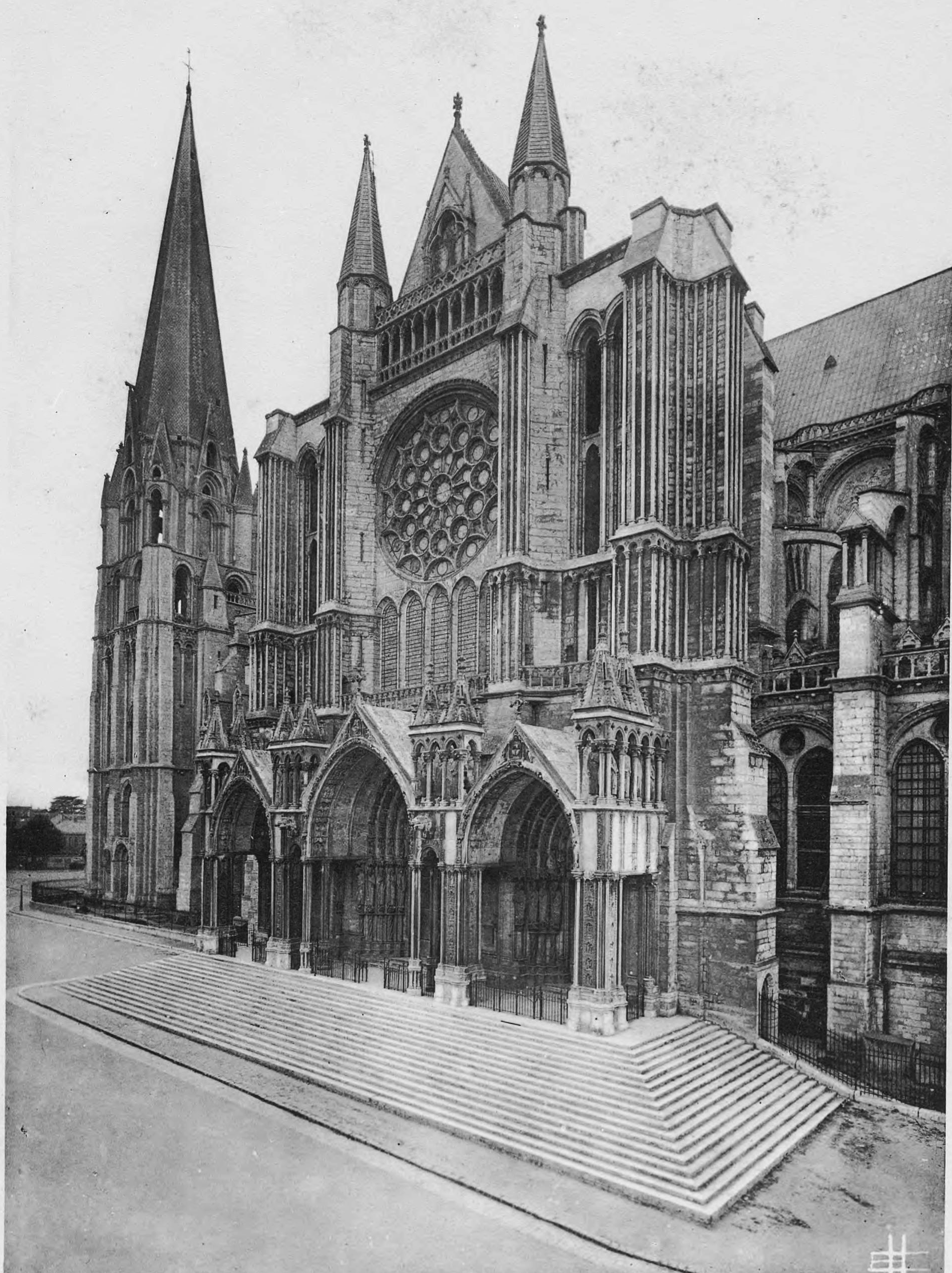
Etienne Houvet, 1928. From archive.org
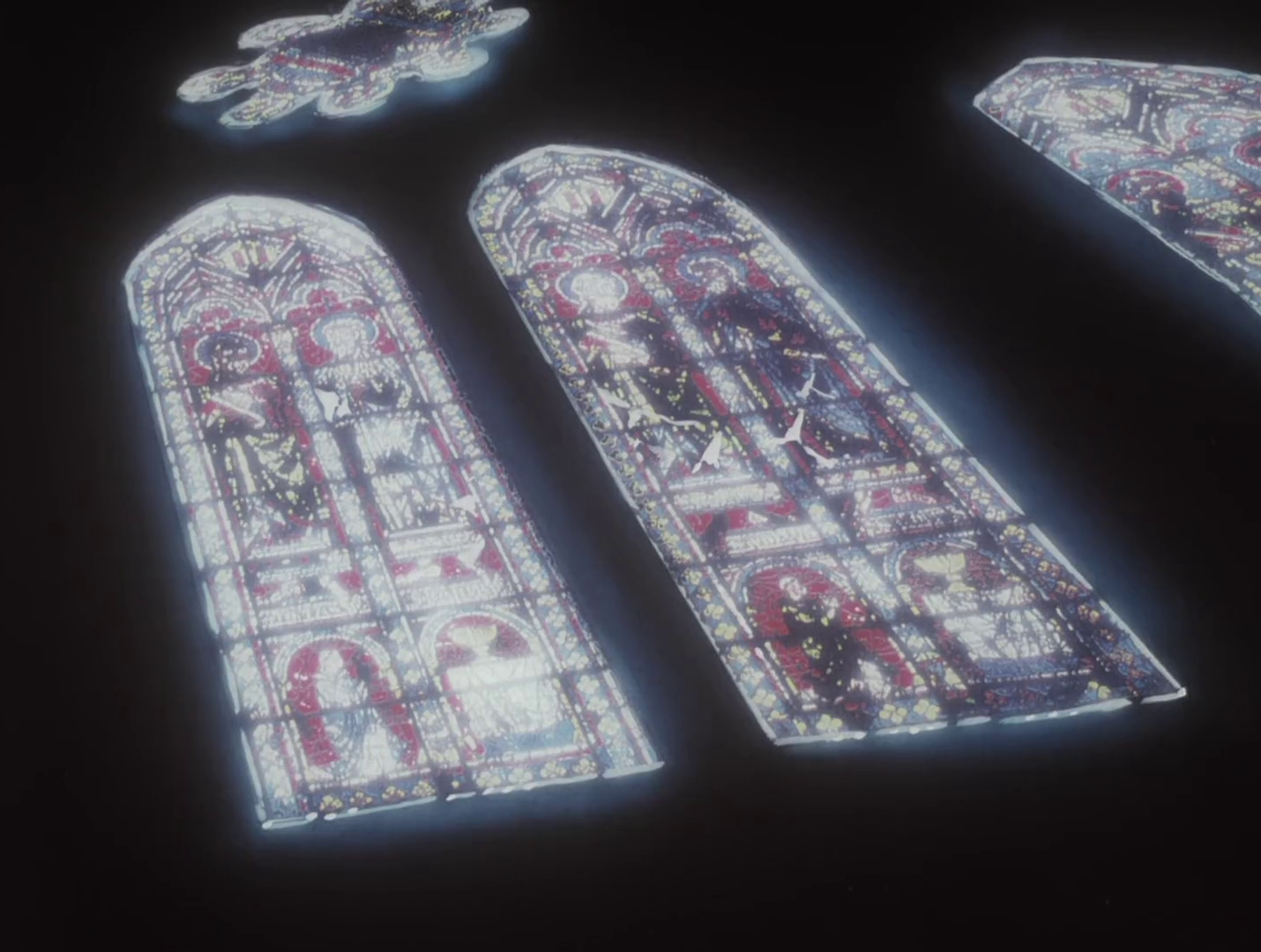
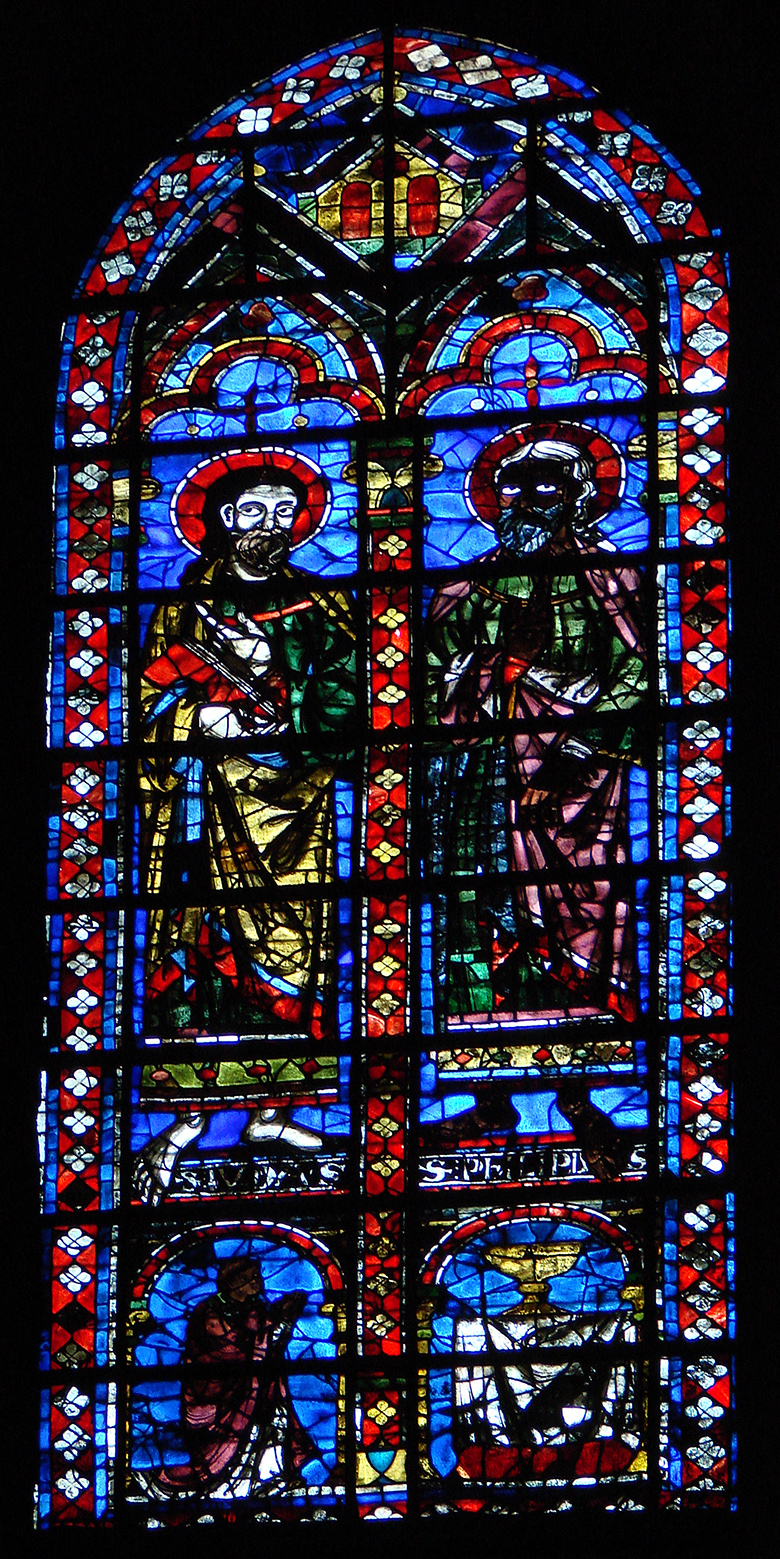
Both of the two successive shots of the medieval glass are taken from the clerestory of the north transept of Chartres. The first shot, above (three seconds long) is based on the northernmost window of the eastern clerestory, also including part of the left light of the next bay.6 The repetition of designs in the figures I initially assumed was the BG department cutting corners but no, it genuinely is what the medieval windows look like: it was actually the medieval artists who were being lazy!7
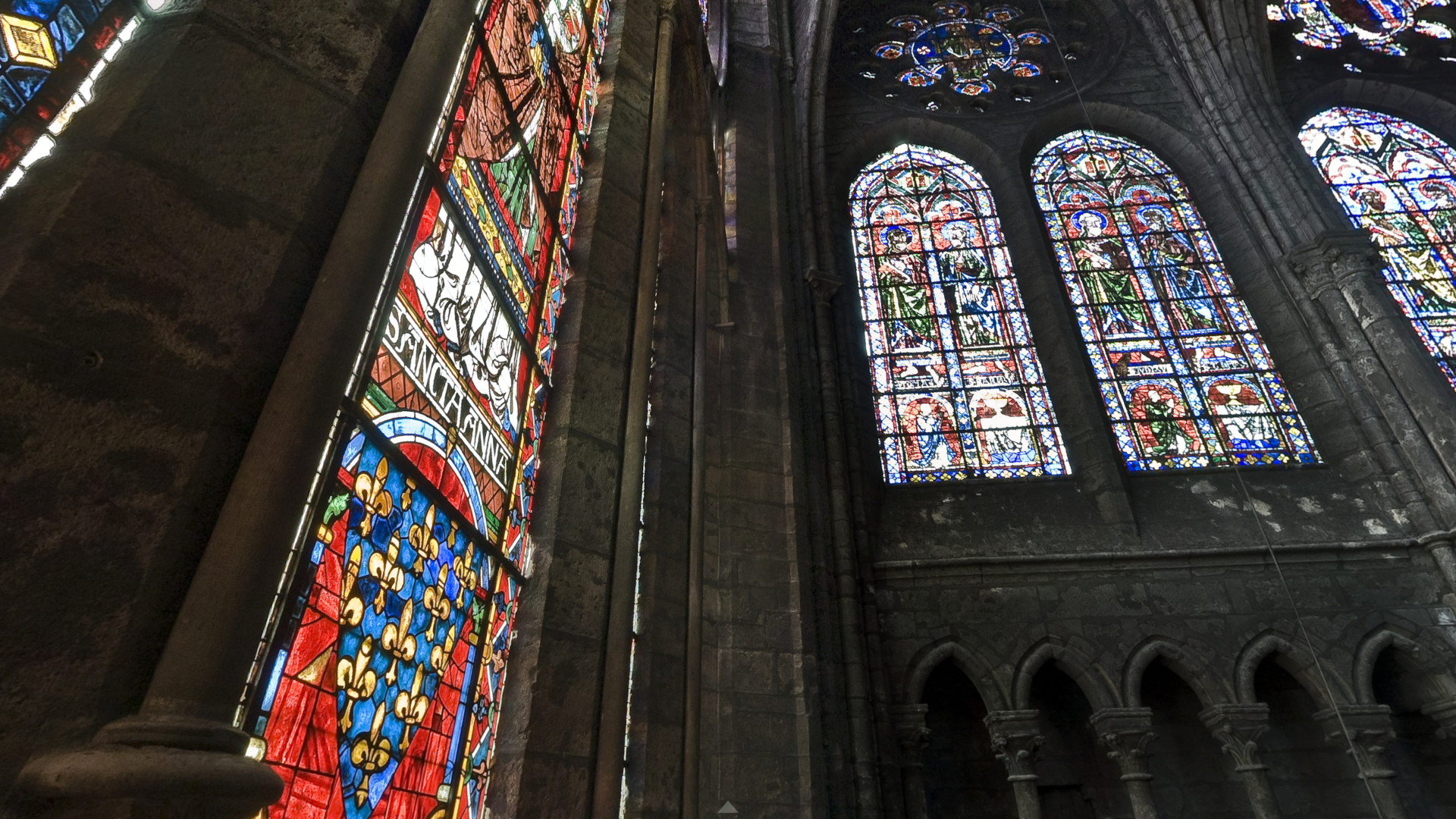
The next stained glass shot (again, three seconds) is of the lancets of under the north rose window, the titulus of Saint Anne (“SANCTA ANNA”) reproduced above the arms of France. The blue cloak of Solomon in the adjacent lancet is also represented.
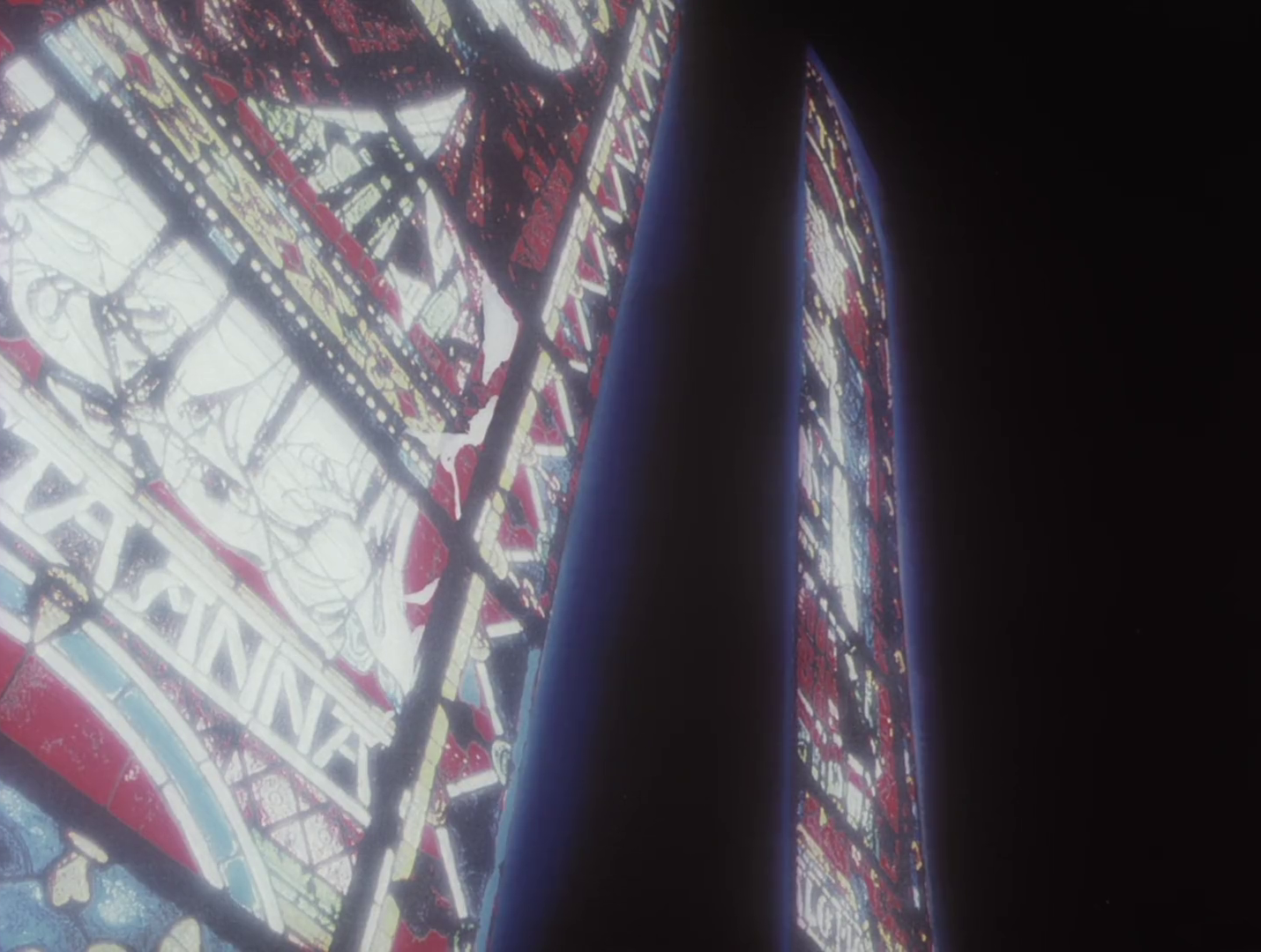
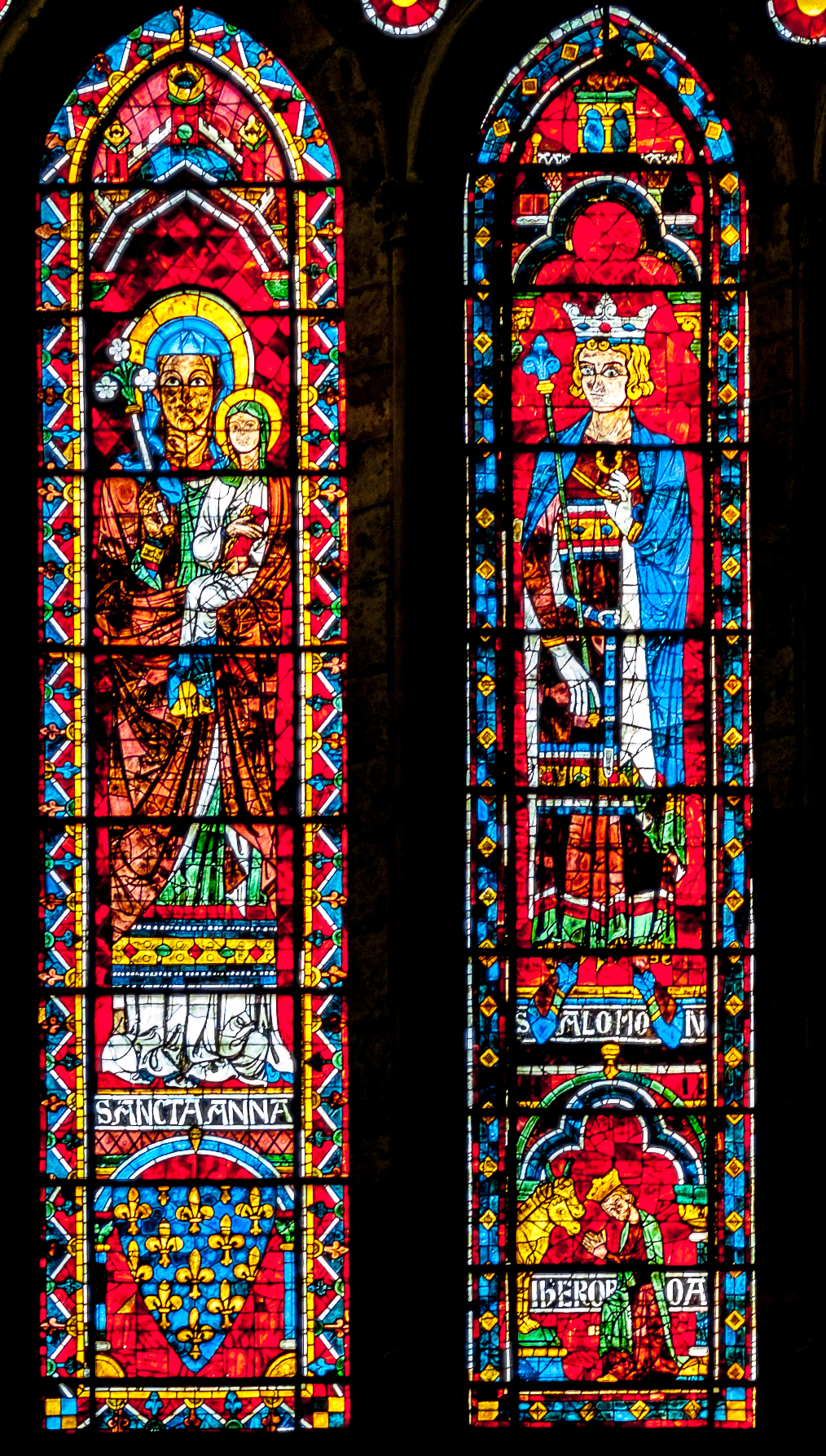
If you look at what the above looks like from the sill of the south transepts at triforium level, along with the other windows in the previous shot, you can see it’s crazily accurate to both. I’d love to know where they got the reference material for this standing on the triforium level view. Or as I say, if someone from the staff actually went there themselves.
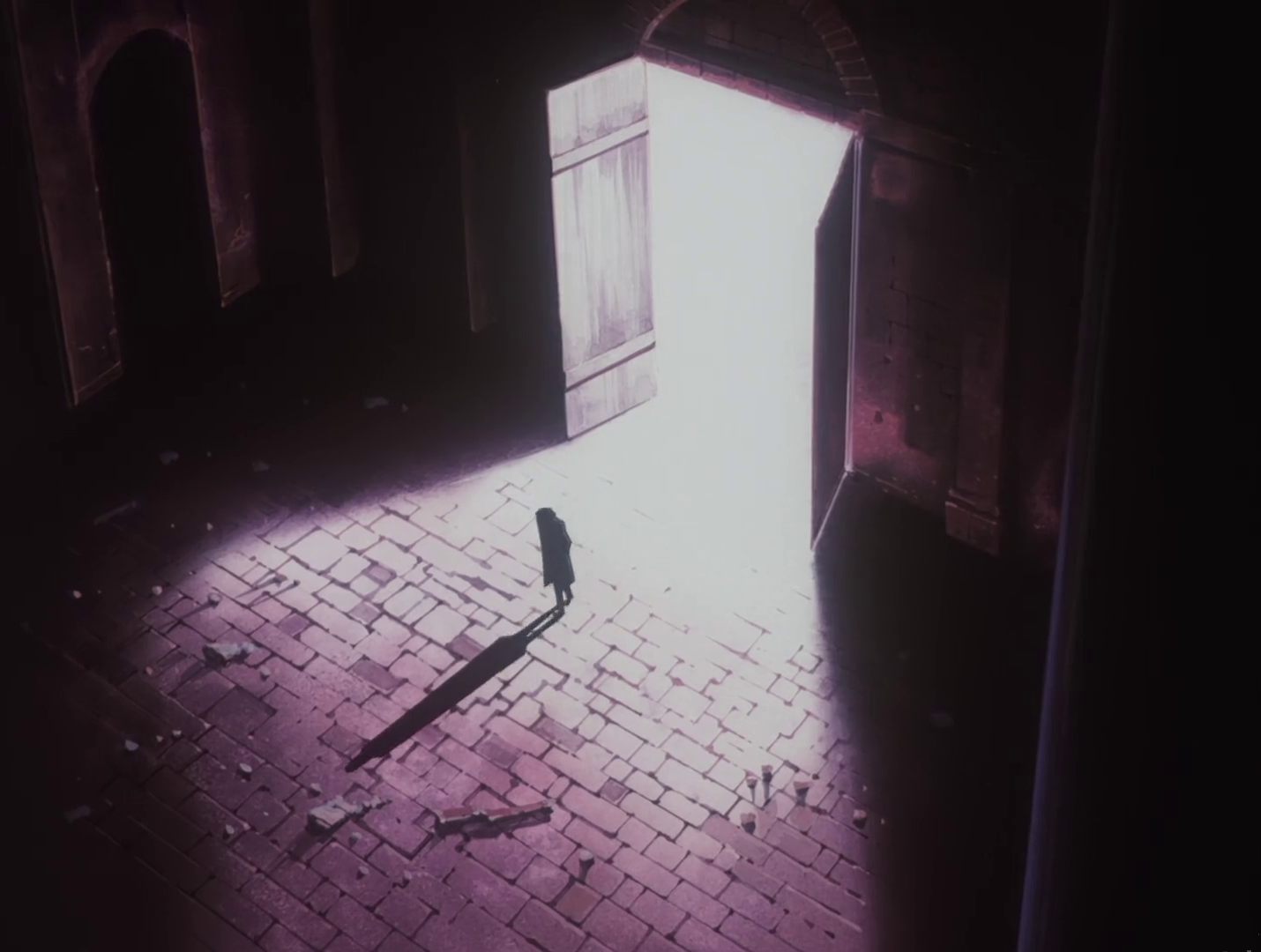
Then Spike enters the church. Contributing to the presumed intention that Spike has entered through the west door of the church directly into the main vessel of the nave, this references the very unusual internal west end of Chartres, which is basically a monumental twelfth-century westwork built on to an eleventh-century basilica, the latter of which has been totally replaced. The responds either side of the door give it away,8 although the rounded arch into the south tower also looks right, as well as the relieving arch at the back of the tympanum. Again, this is really surprising how close it is to Chartres. It’s only a nerd like me who would ever notice this.
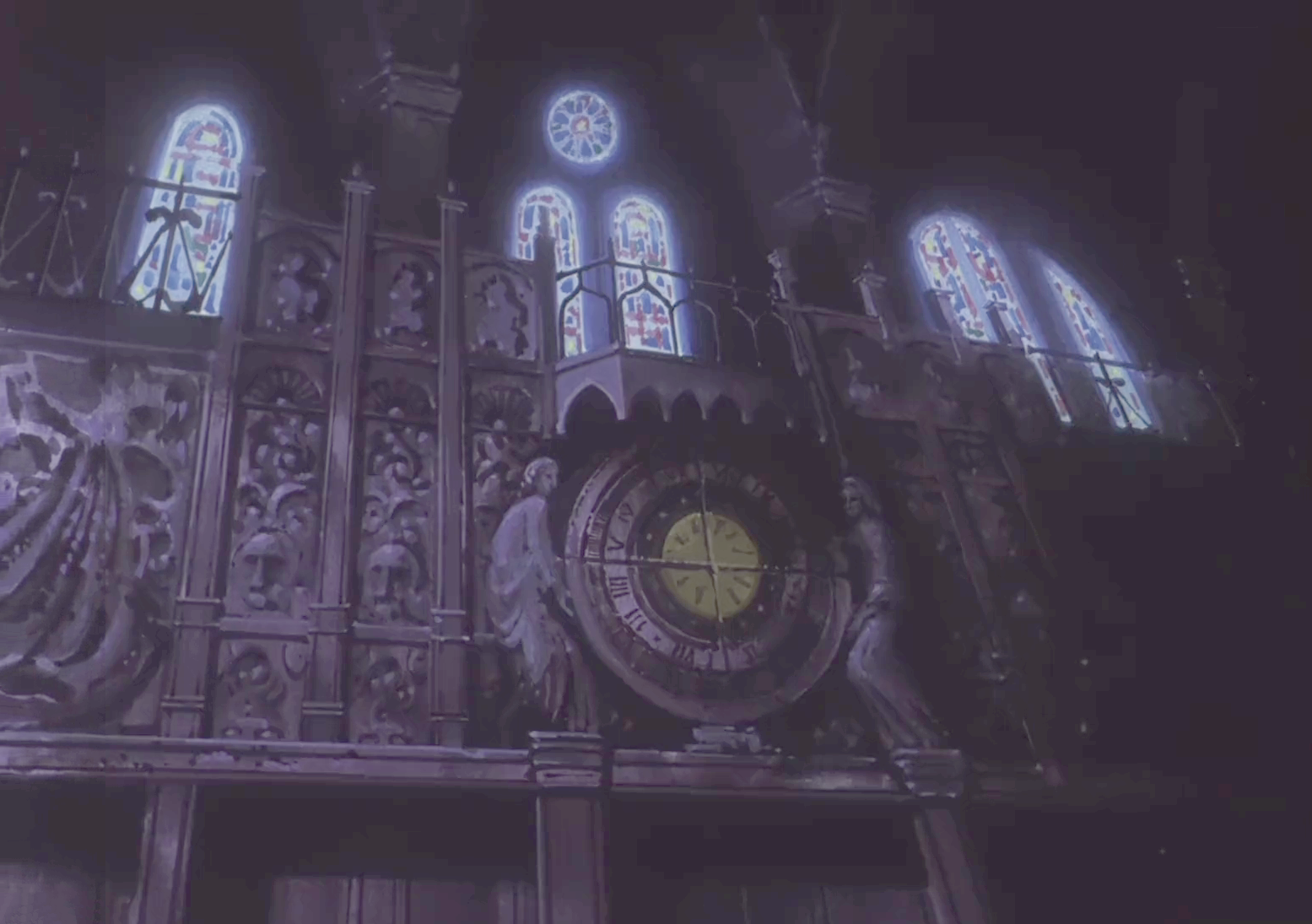
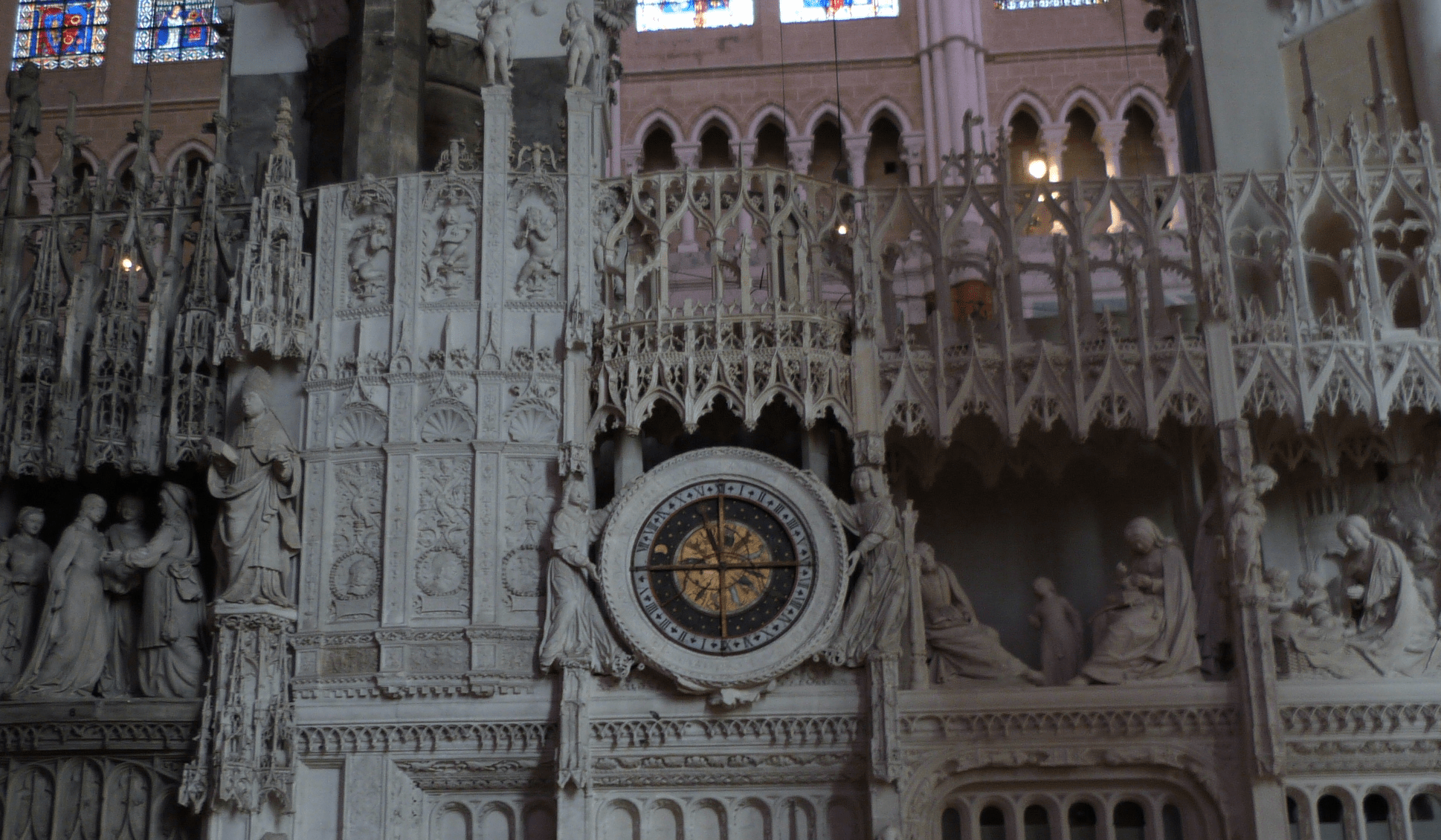
Then a shot of something undeniably, unmistakably, and clearly utterly deliberately Chartres is this of astronomical clock, part of the early sixteenth-century masonry choir enclosure screen completed in 1528. Even the passages of all’Antica sculpture to the left are there, and clerestory of the east arm in the background makes sense as paired lancets with big oculi above. Here’s a comparison with my photo in 2016 because I’ve not managed to find any photographs in publications that might have been used c.1997.
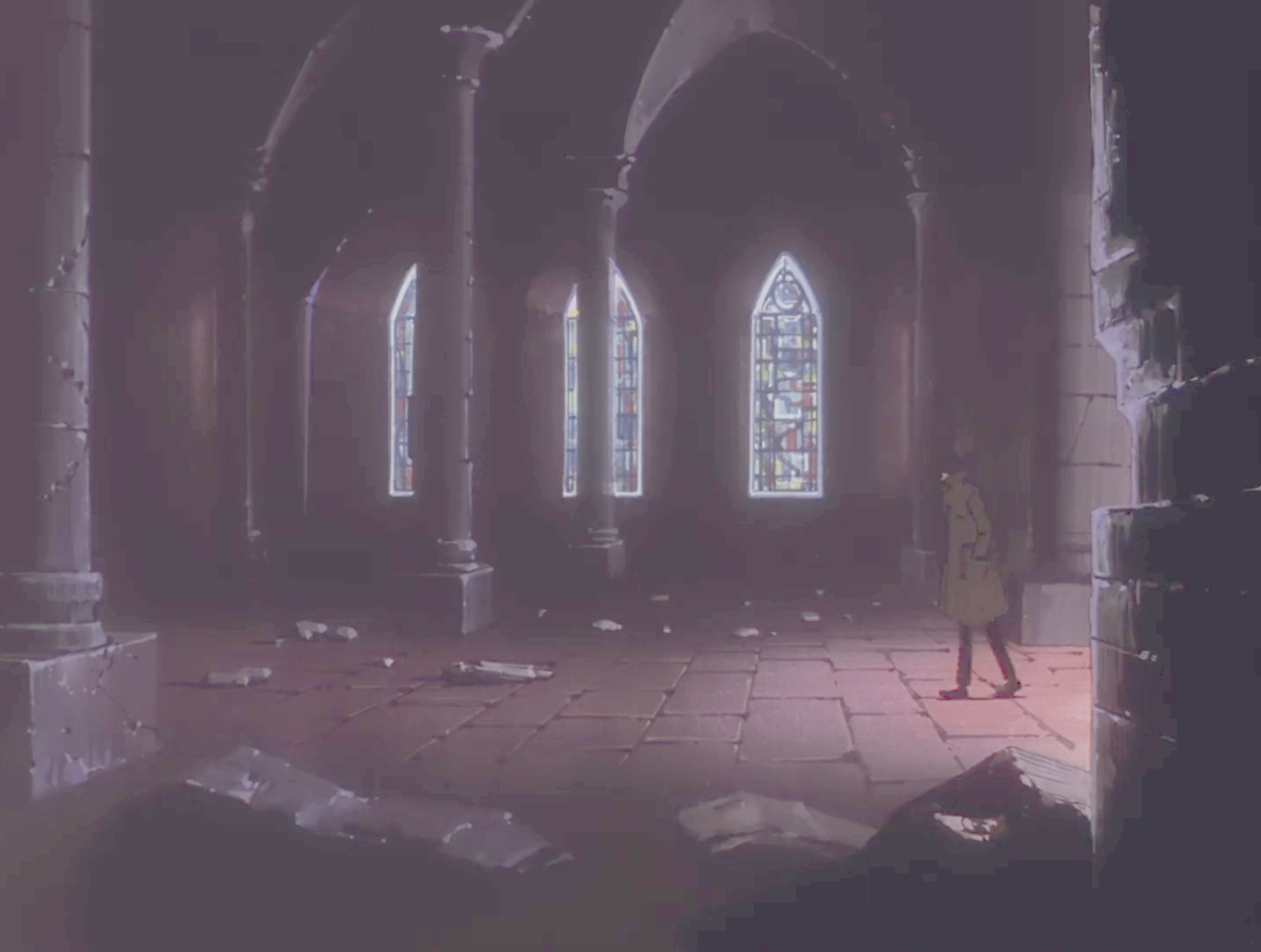
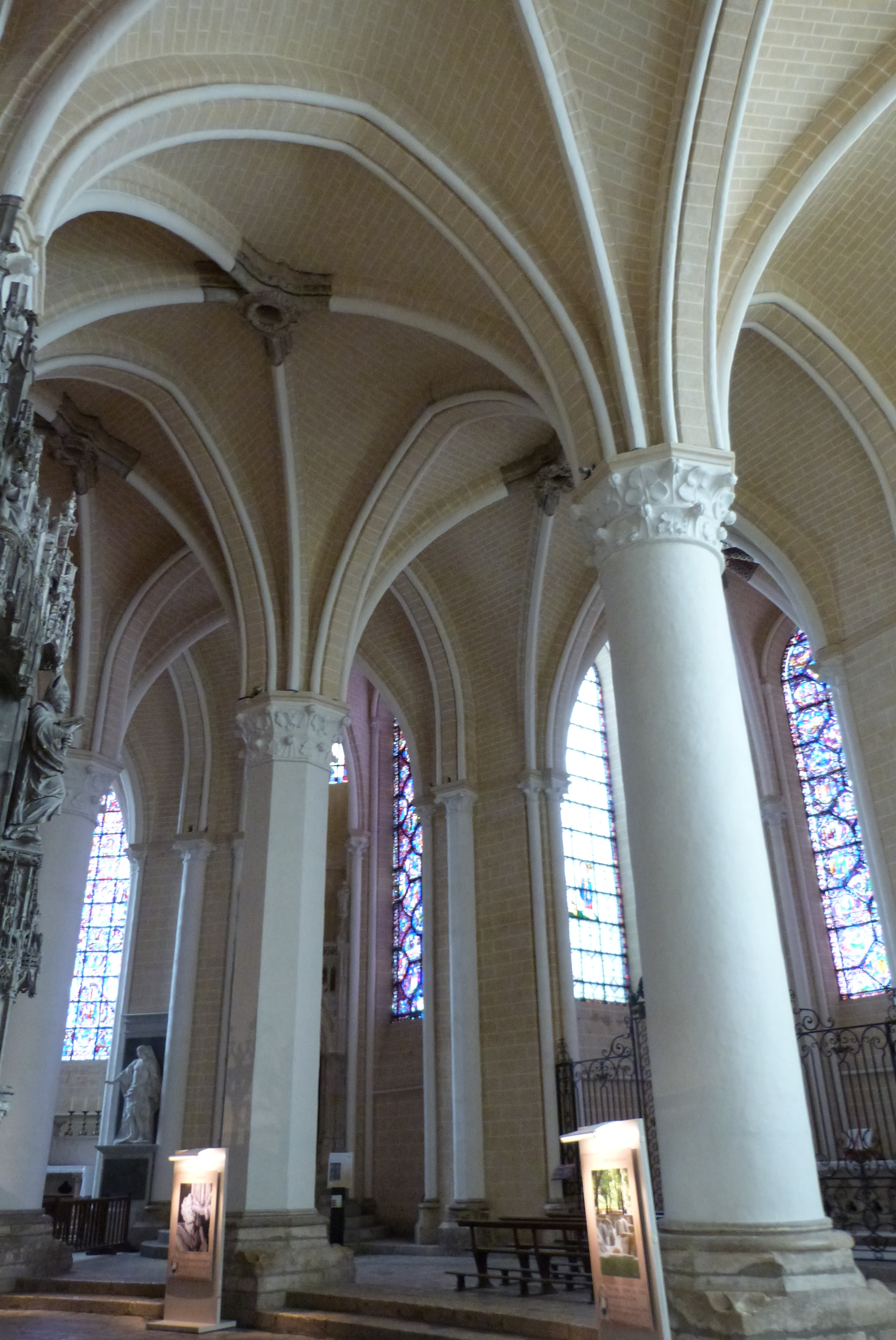
The next shot is odd, because basically it shows Spike walking through an empty chevet with a double ambulatory: that is, an arcade column in the immediate foreground, another arcade beyond, then the ambulatory column supporting the two sets of aisle vaults, and then the outer chapel windows. You’d never find a photo of Chartres looking like this, basically because of the stone choir screen we’ve seen above that would block the through-view of all the columns, but some BG artist seems to have understood its space in the abstract. Well except that the arcade columns should be composite piers, and some of the ambulatory ones are octagonal but whatever. It’s a French great church, that’s for sure! There’s not a double ambulatory in all of Igirisu,9 so it’s kind of a sore point even Mars got one eventually.
Next, a panning shot of standing figure sculptures on an internal screen.
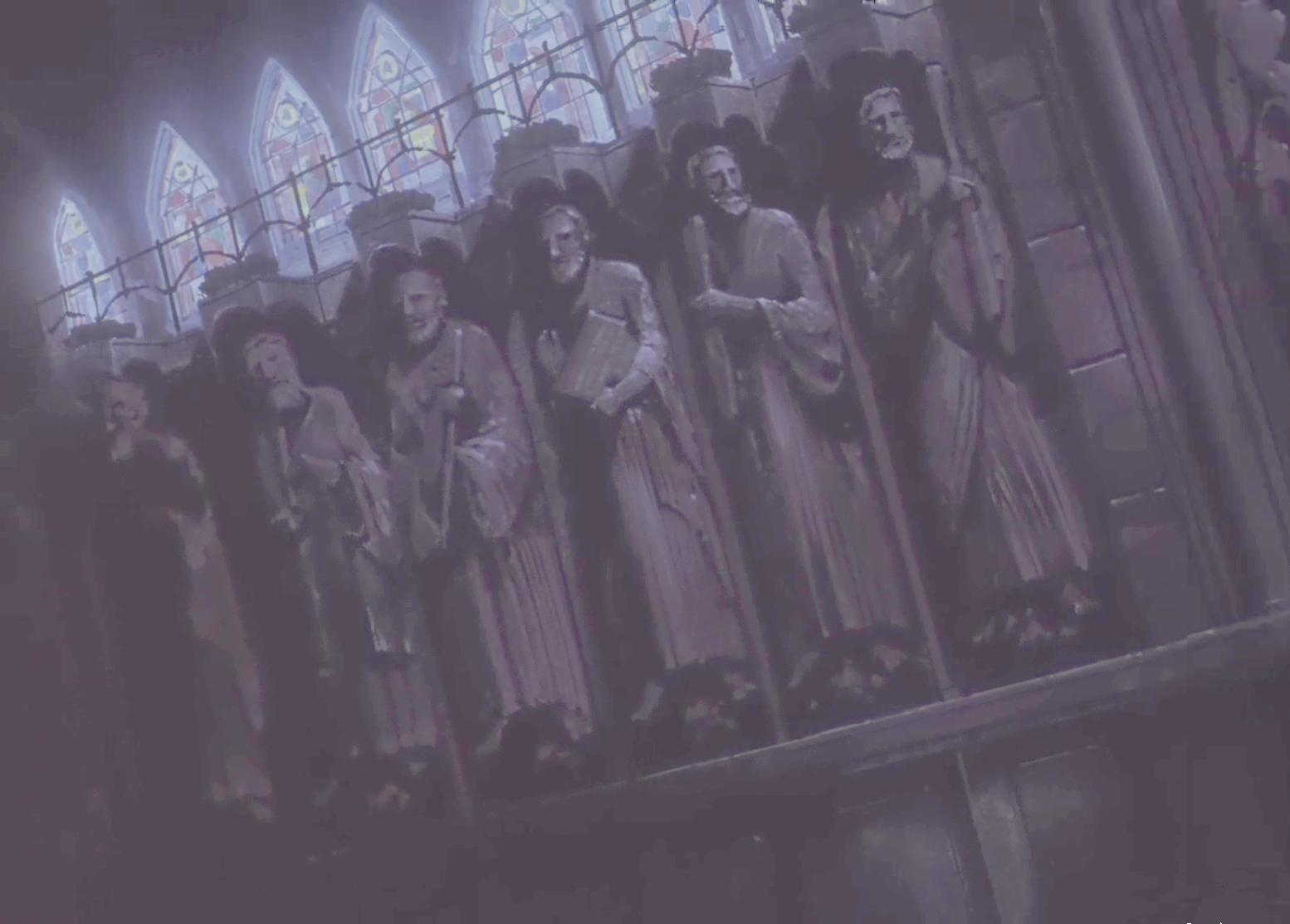
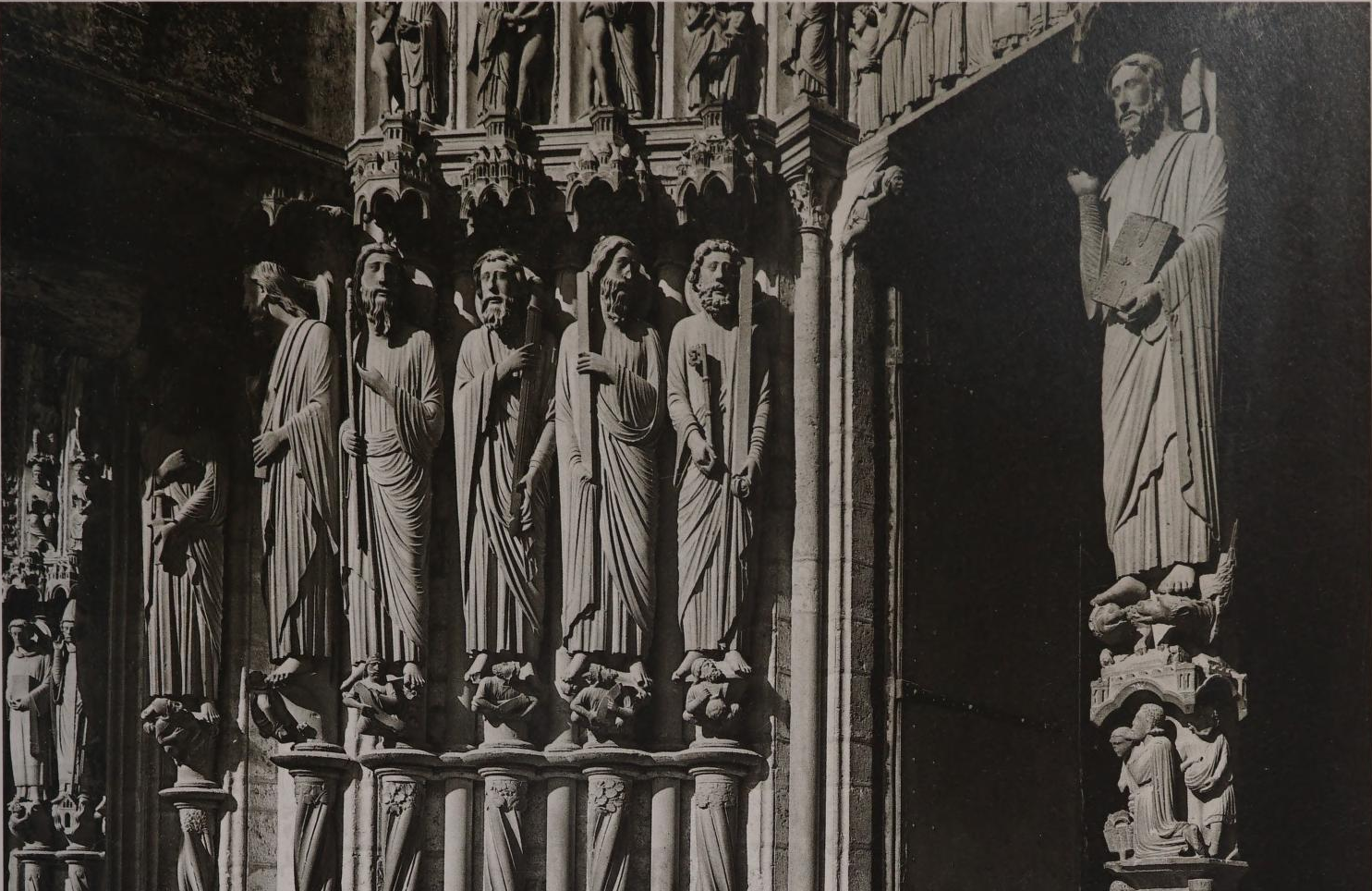
Mixed about and simplified a fair bit, but I’m pretty sure these figures are copied from the jamb apostles of the south transept central portal (Christ on the trumeau in the centre, holding the book, probably mixed in too). Certainly their conservational, slightly agitated positions seem to serve as the inspiration.
Spike moves up the church past some aisle windows that go behind the aisle columns as we follow him up the church. These look pretty generic and abstracted, not sure if they were going for a modern glass look or that’s just what it looks like when you abstract medieval windows as a BG artist that you’re only going to see on screen for a second at most.
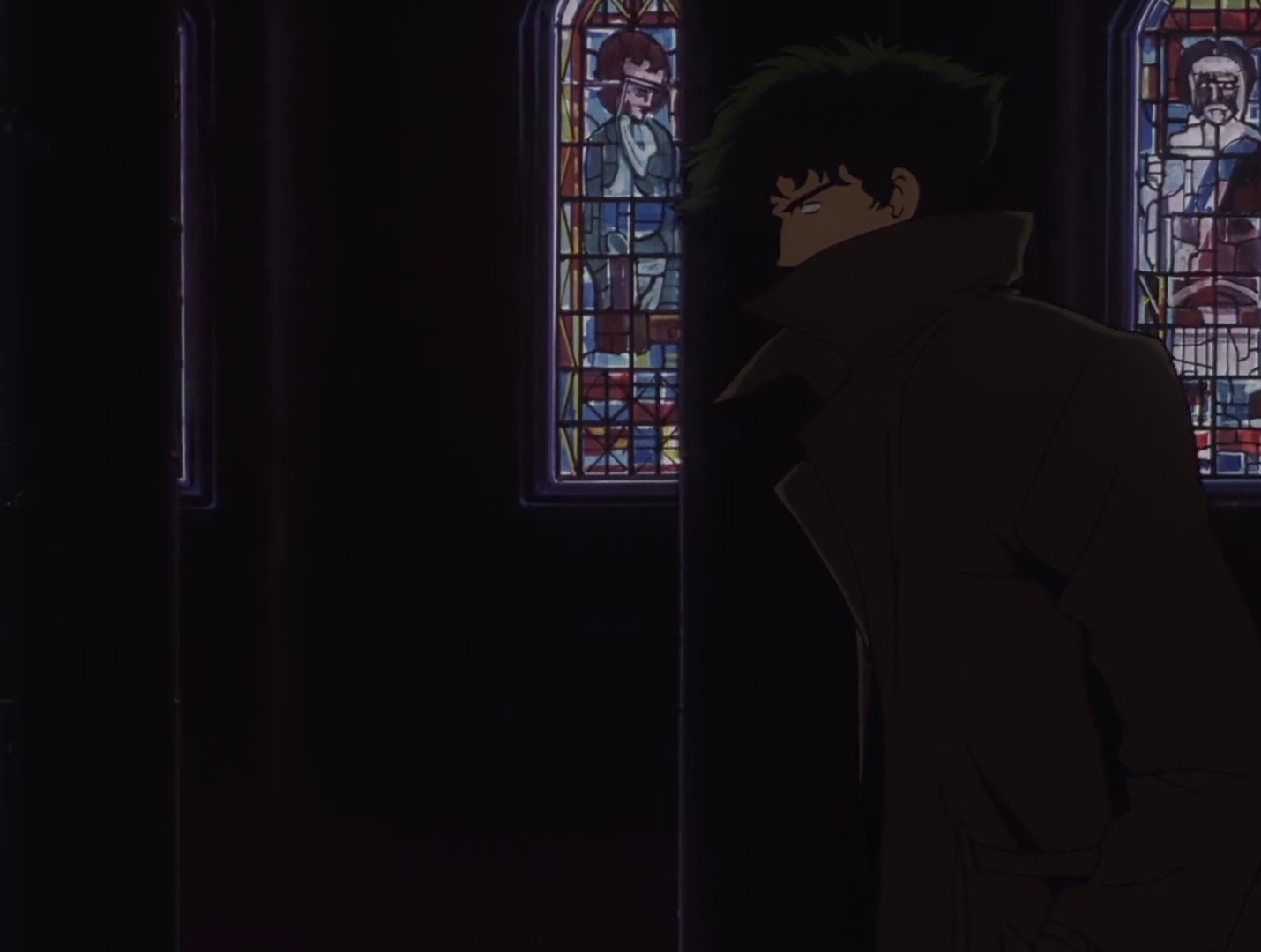
(If you blow these screenshots out with brightness levels there’s not really anything else to see, it really is just black ink, so I’ve left them as is. Turn up your monitors but I assure you there’s nothing more to see, at least in the video source I used)
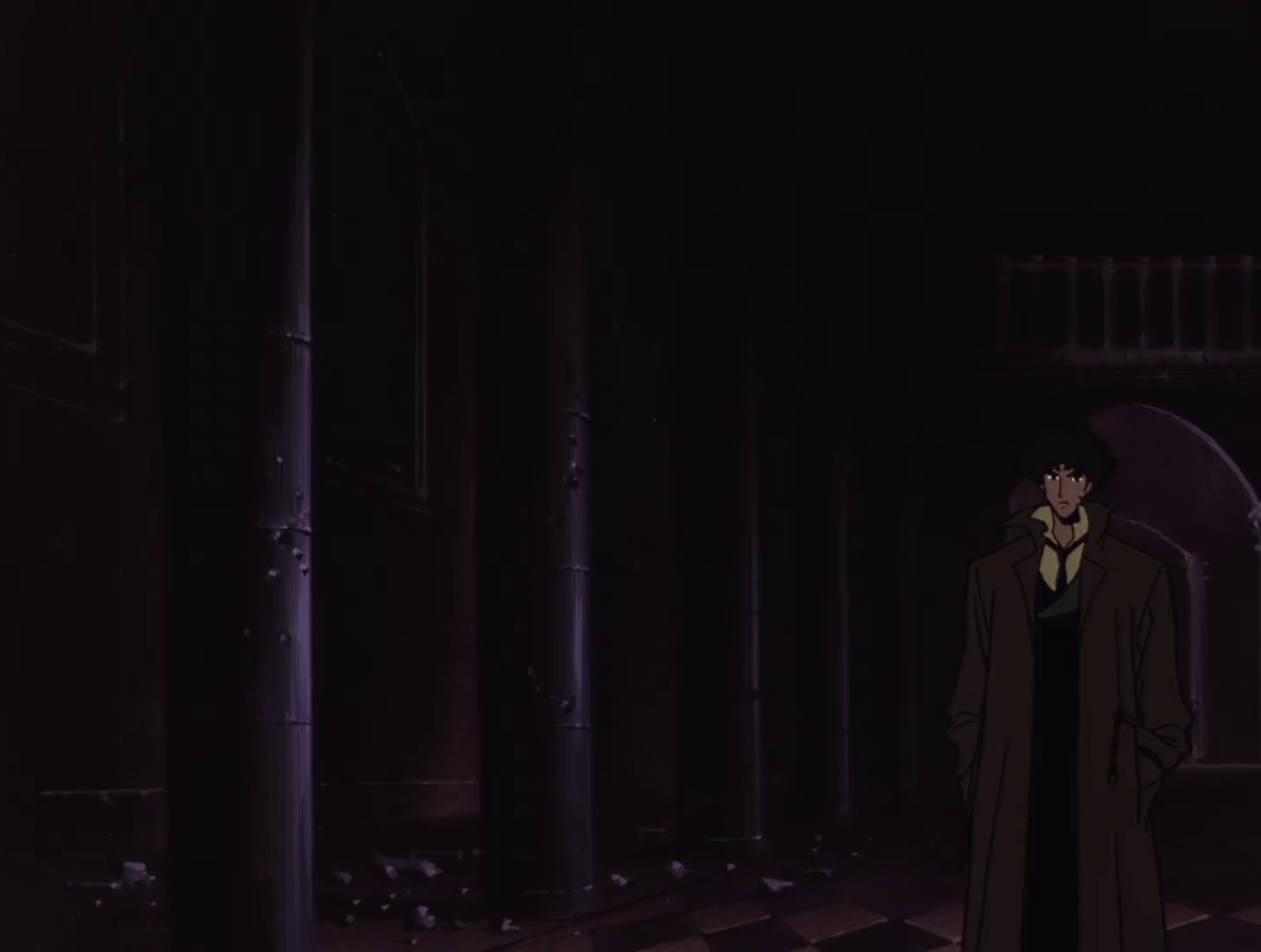
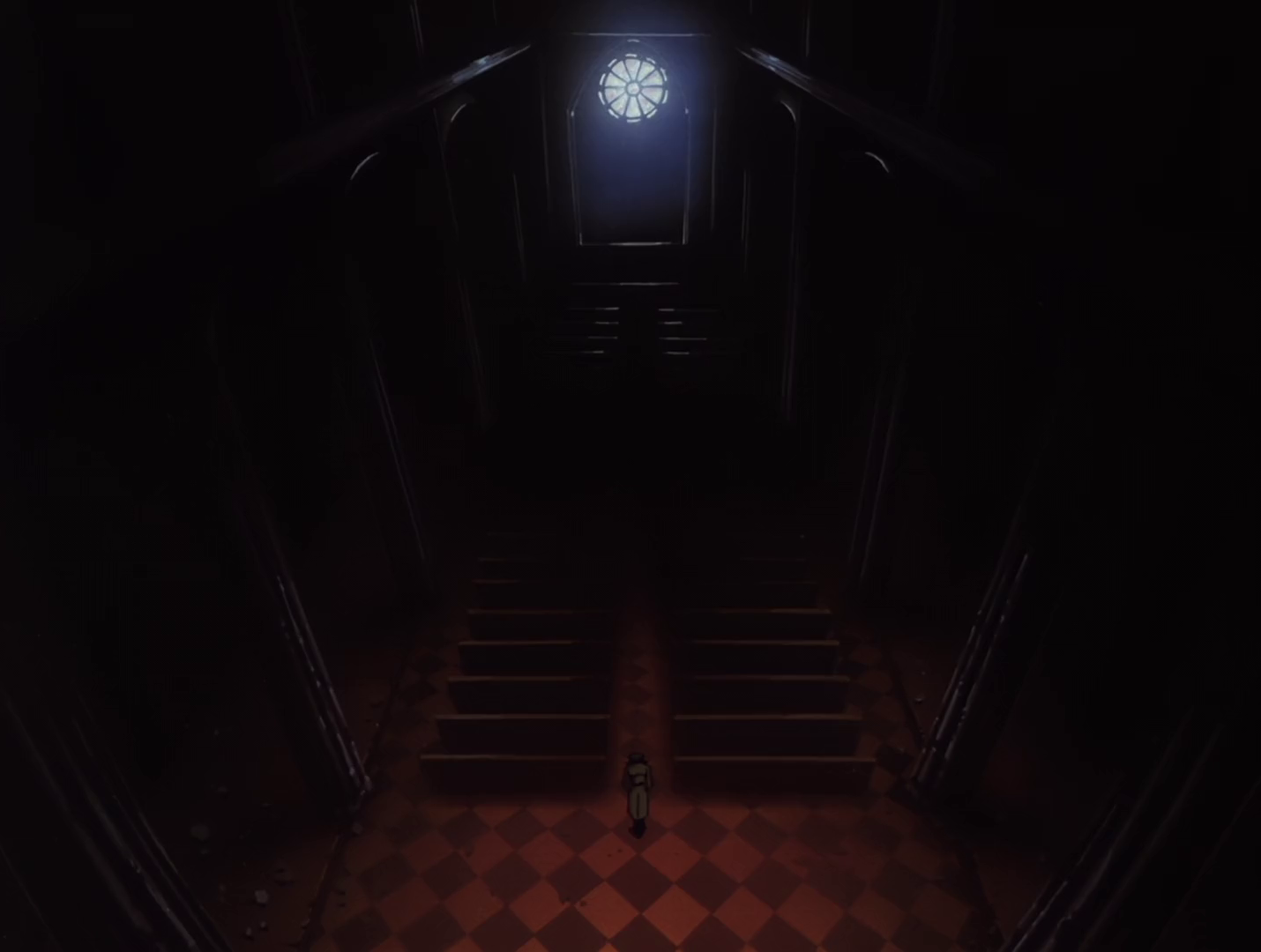
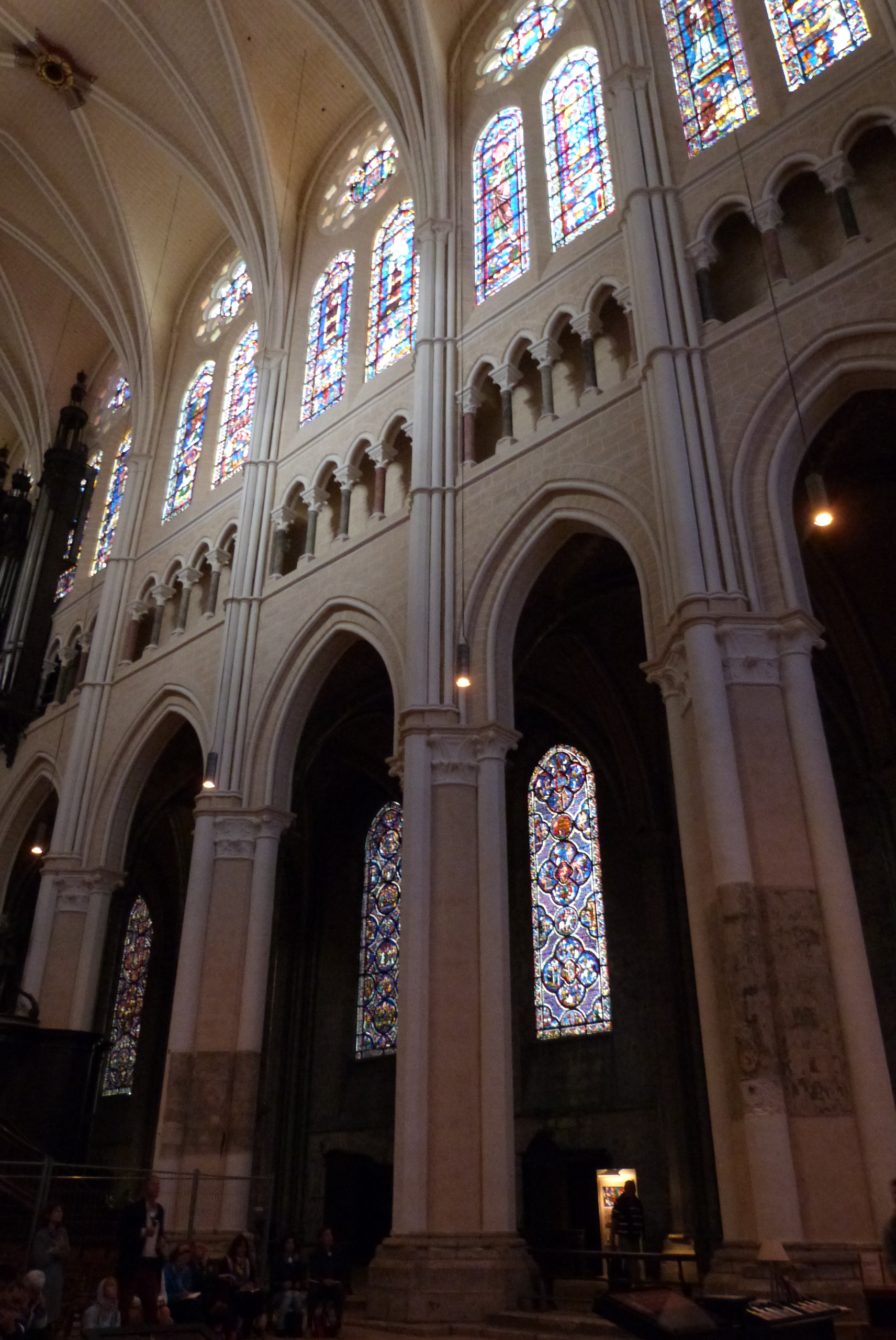
Amid the pews (and another rose window beyond, presumably the east window: we get a better shot of it later), Spike approaches his nemesis Vicious. The nave here is established as an aisled vessel (single side aisles, like Chartres) but with cylindrical columns: unlike Chartres nave where the arcades have composite piers, with shafts on the four angles (see right).
Then, very boldly, we get a full elevation of the church in this extremely cool shot of Spike facing Vicious across the pews. The scene direction could have avoided depicting the full space of the church, and although much of the detail is again obscured completely in inky shadow, it’s still an ambitious thing to do. As well as the striking geometry emphasising the standoff, we also get firmly shown the pews, which help us understand Spike’s movement in subsequent shots. It really pays off in the drama of the whole sequence.
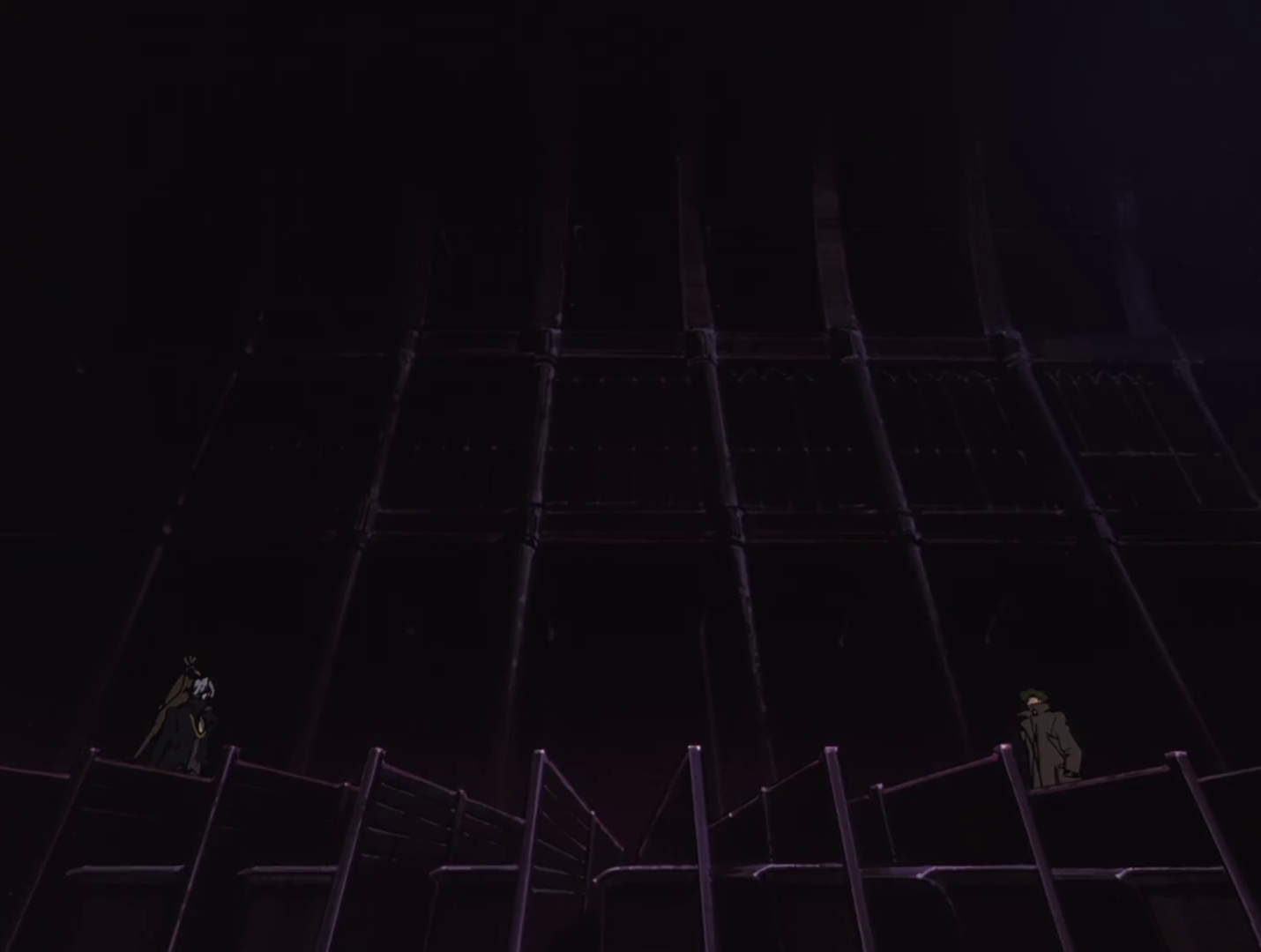
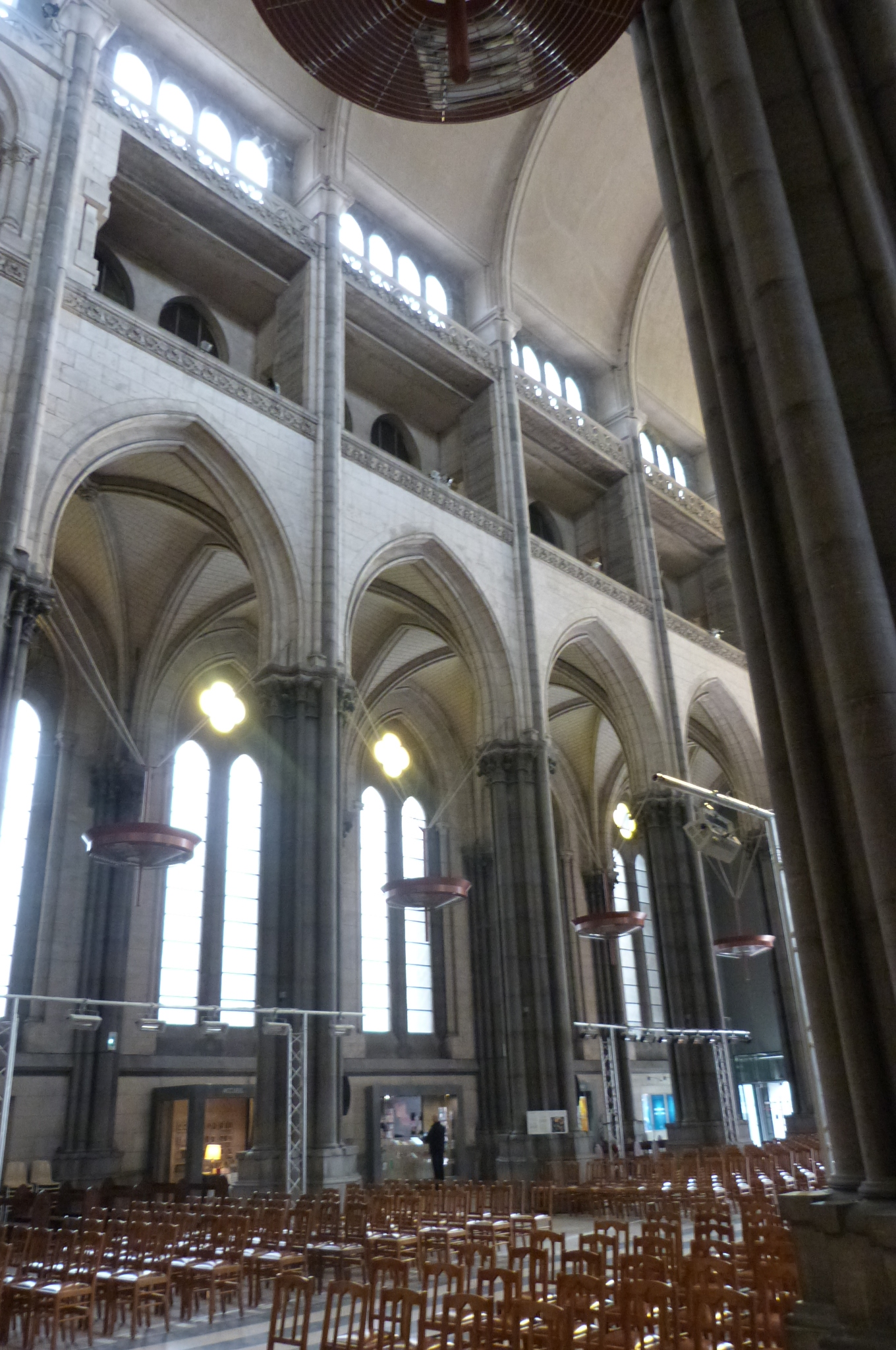
The elevation even cloaked in as much dark ink as it is, as you can see with the image above, looks nothing like Chartres’ elevation. It doesn’t even have a rib vault, but a pointed barrel with big transverse arches. The great plate-tracery clerestory is entirely absent. It manages instead to look like the unfinished and slightly embarrassing cathedral at Lille, although I think this is a coincidence for what happens if you strip back a great-church elevation to its bare essentials.
Vicious and Spike face off with cylindrical columns behind them, also transverse arches of the aisle vaults.
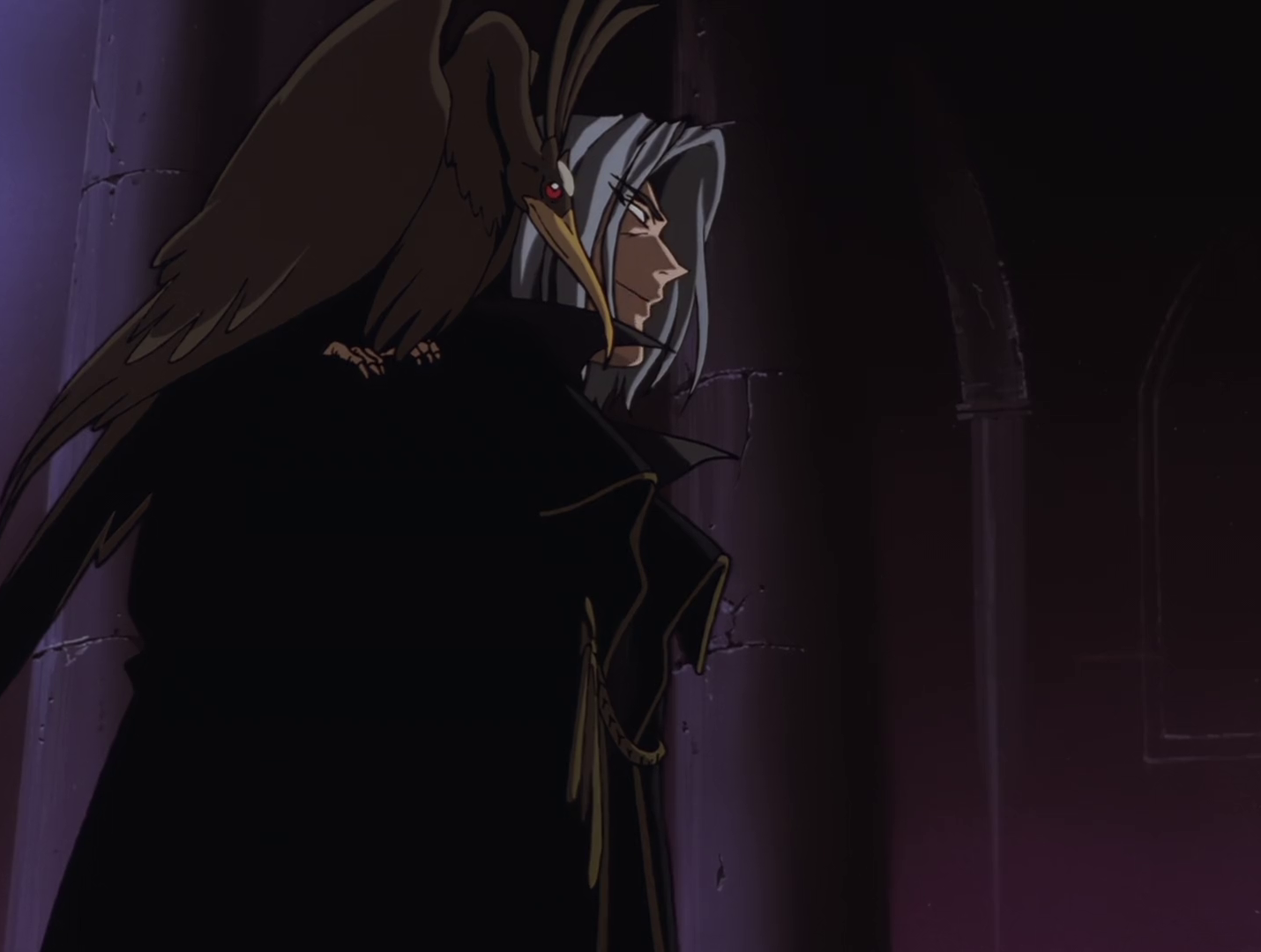
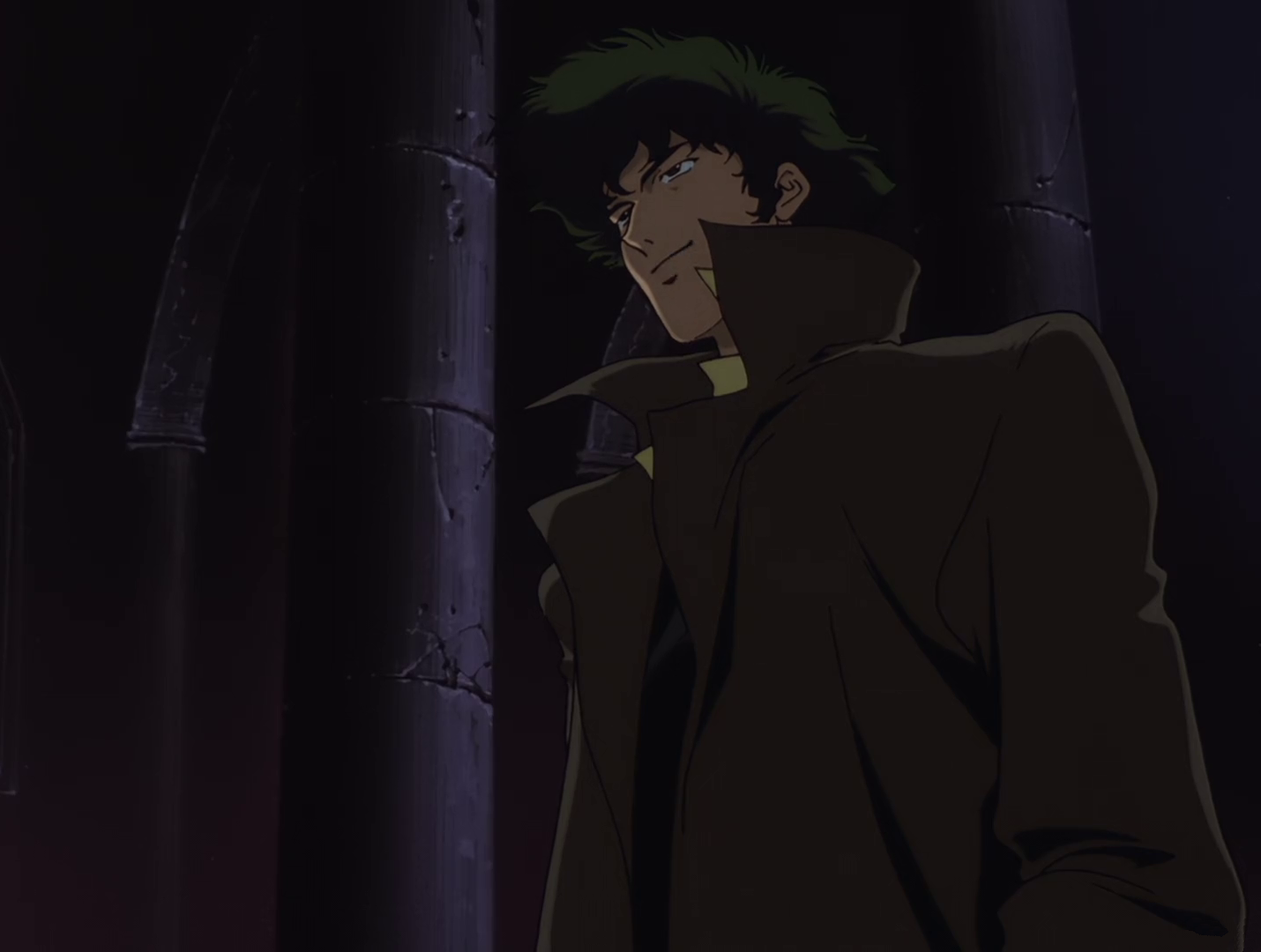
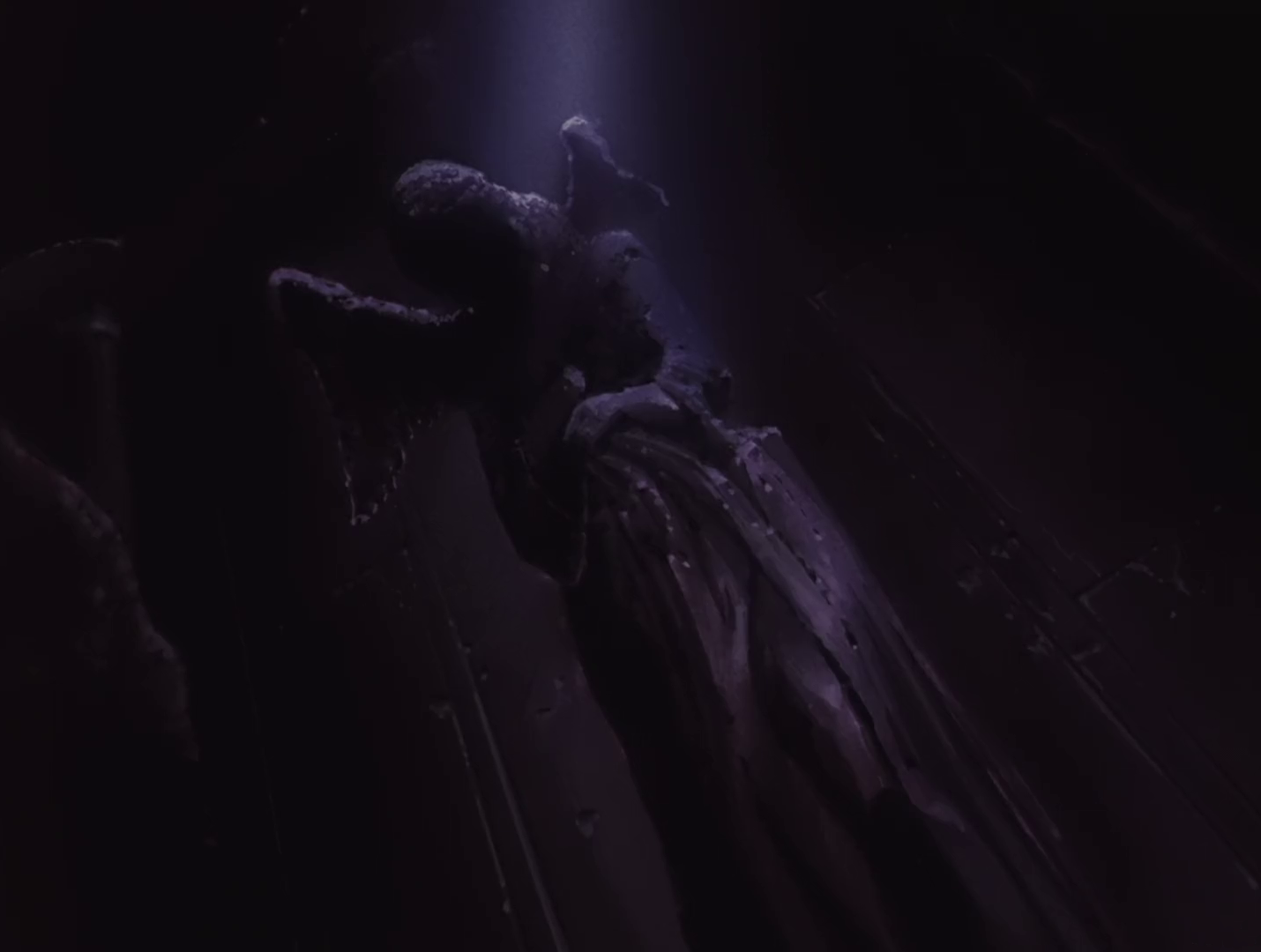
Then there’s a shot of this apparently weeping angel sculpture, clasping its drapery, looking down. It could be based off something Real, possibly an Entombment group: but also might be any sort of modern stuff you’d see in a cemetery. I’m including it here because I looked at every frame of this sequence and I don’t want to pretend I didn’t have a bash thinking about it.
Spike then turns to shoot a henchman holding Faye in the aisle to his left and hits him clean through the head, splattering blood over her face (hence why this wasn’t broadcast on TV Tokyo at 18:00). Notice the rose window behind Vicious and his bird, presumably the eastern/altar end of the building, is different to the roses we’ve seen on the outside shots. It has a central roundel, followed by 12 radiating lights, syncopated to, rather than aligned with, the outer register of 12 semi-circles.
Chartres on Earth, of course, does not have an eastern rose, because it has a curved apse and ambulatory with radiating chapels. It’s not Laon!
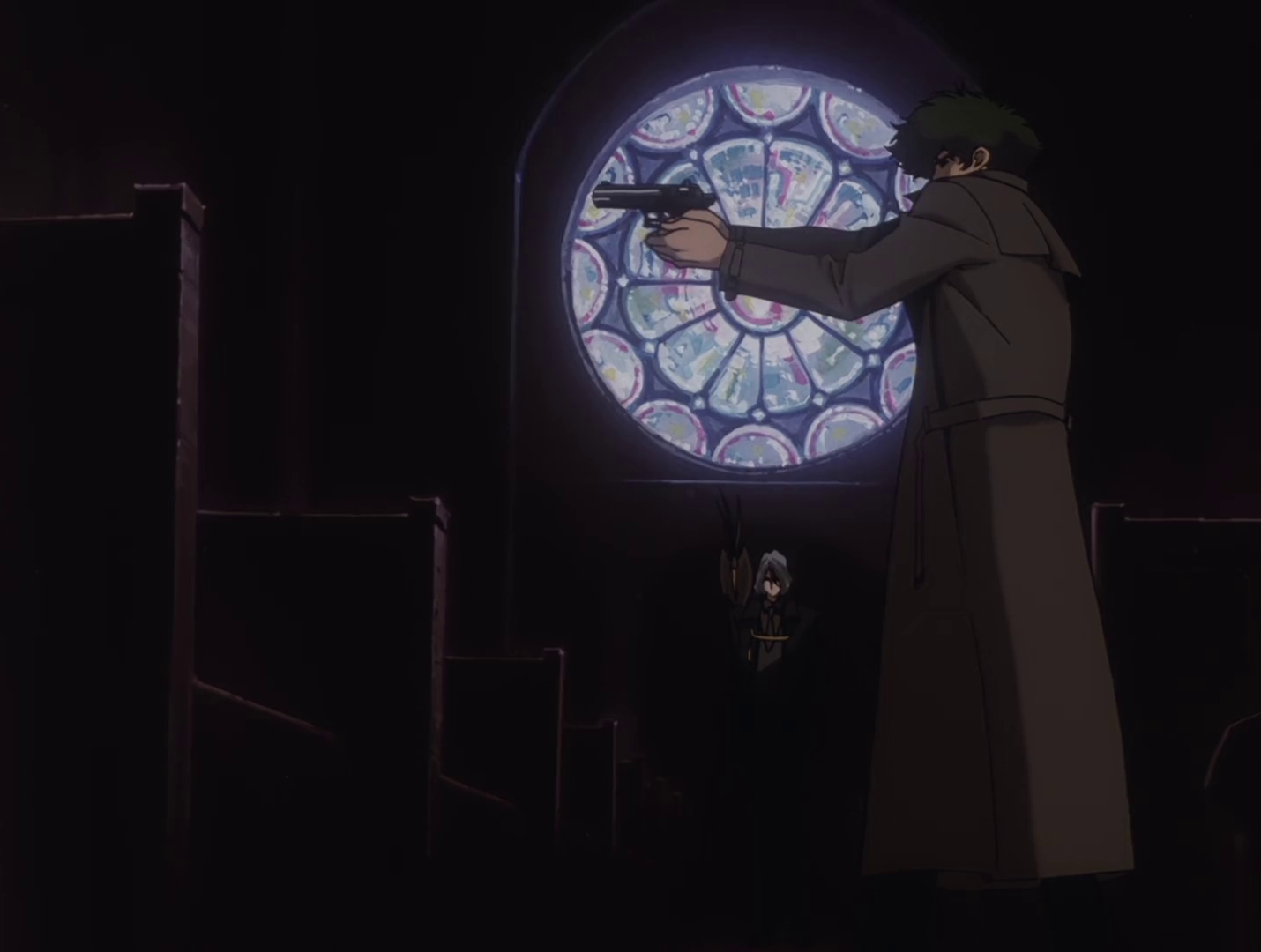
Then we see a henchman in the balcony which is quickly established as an important location in the unfolding drama (Chartres does not have a balcony in the aisles of course, the triforium is navigable but it would be quite a squeeze between the columns and there is absolutely no safety rail).
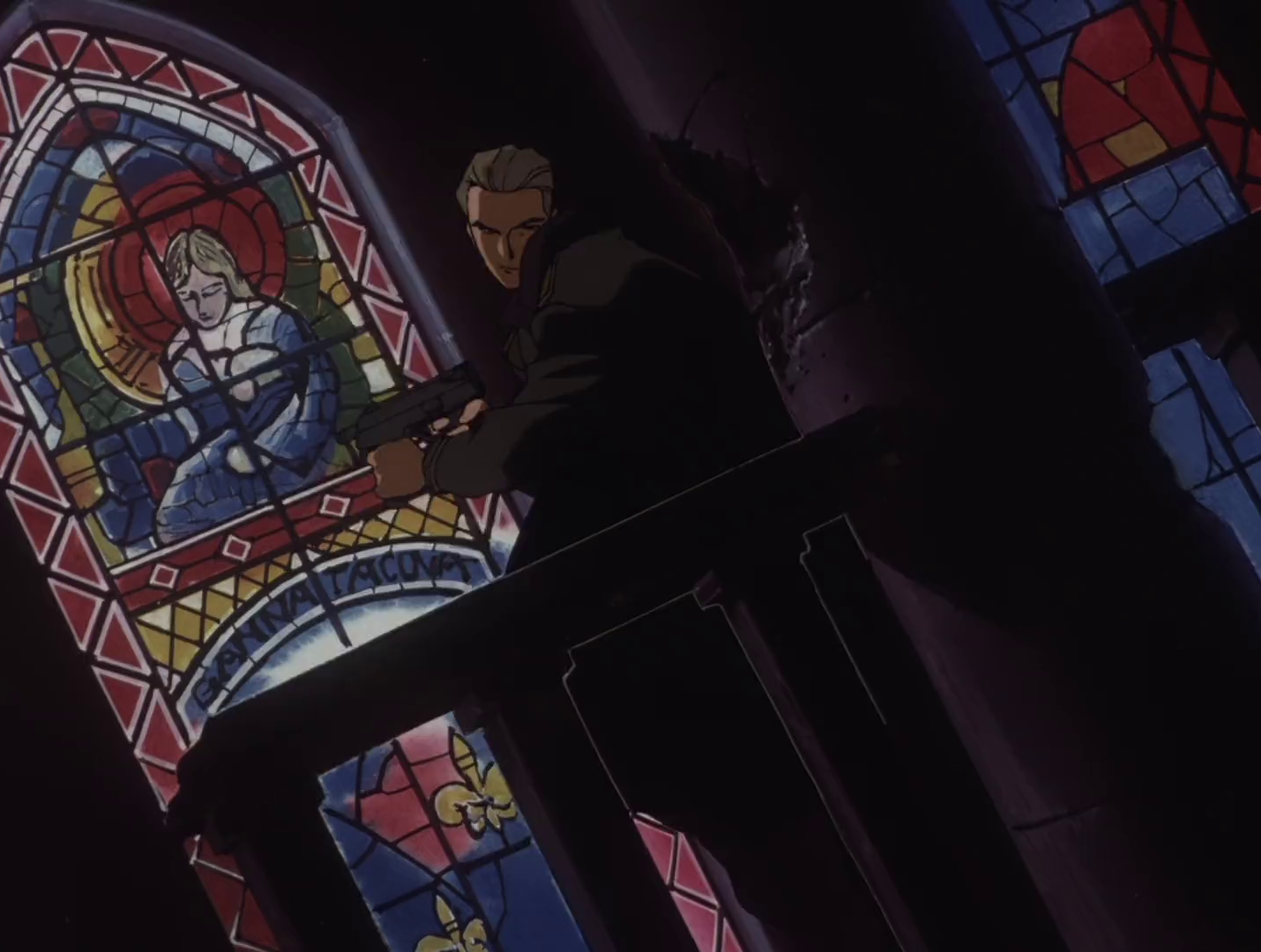
The window I think is just completely made up by the BG artist, although notice the one fleur-de-lys of the French arms. I don’t know what the inscription that looks like “GANNATACOVA” could mean, I did think it might be the name of someone on the staff but couldn’t find any similarity. Guess it’s just nonsense, a mangling of “SANCTA” etc.
I just like this next shot and want to show it you because of the one frame when the gun fires exposes up the painted background with the aisle columns and balcony, as well as the pews which are painted on the cel. Really cool.
Also the pews really do add a great sense of direction to the scene on which way Spike is moving to face Vicious and his henchmen.
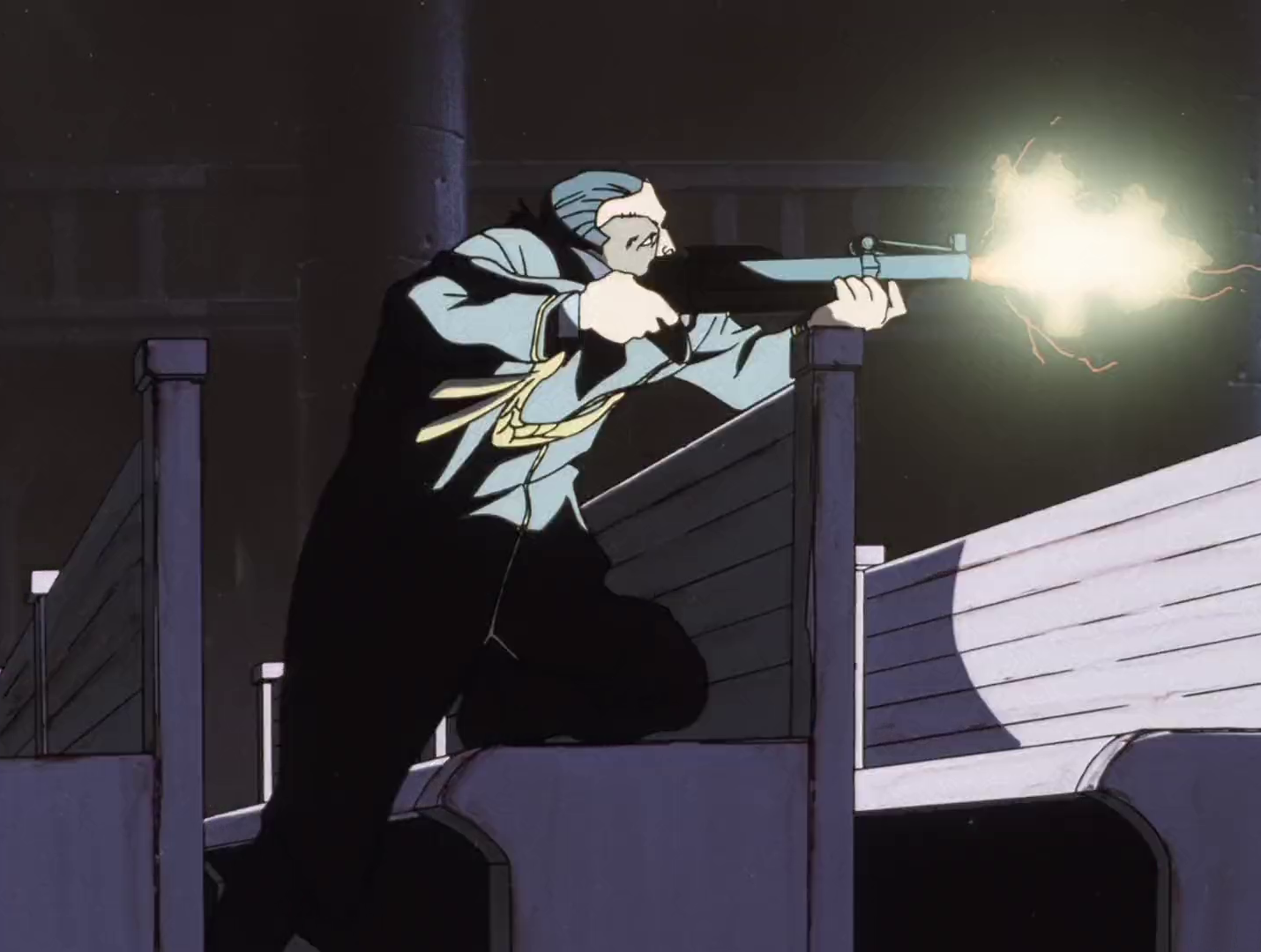
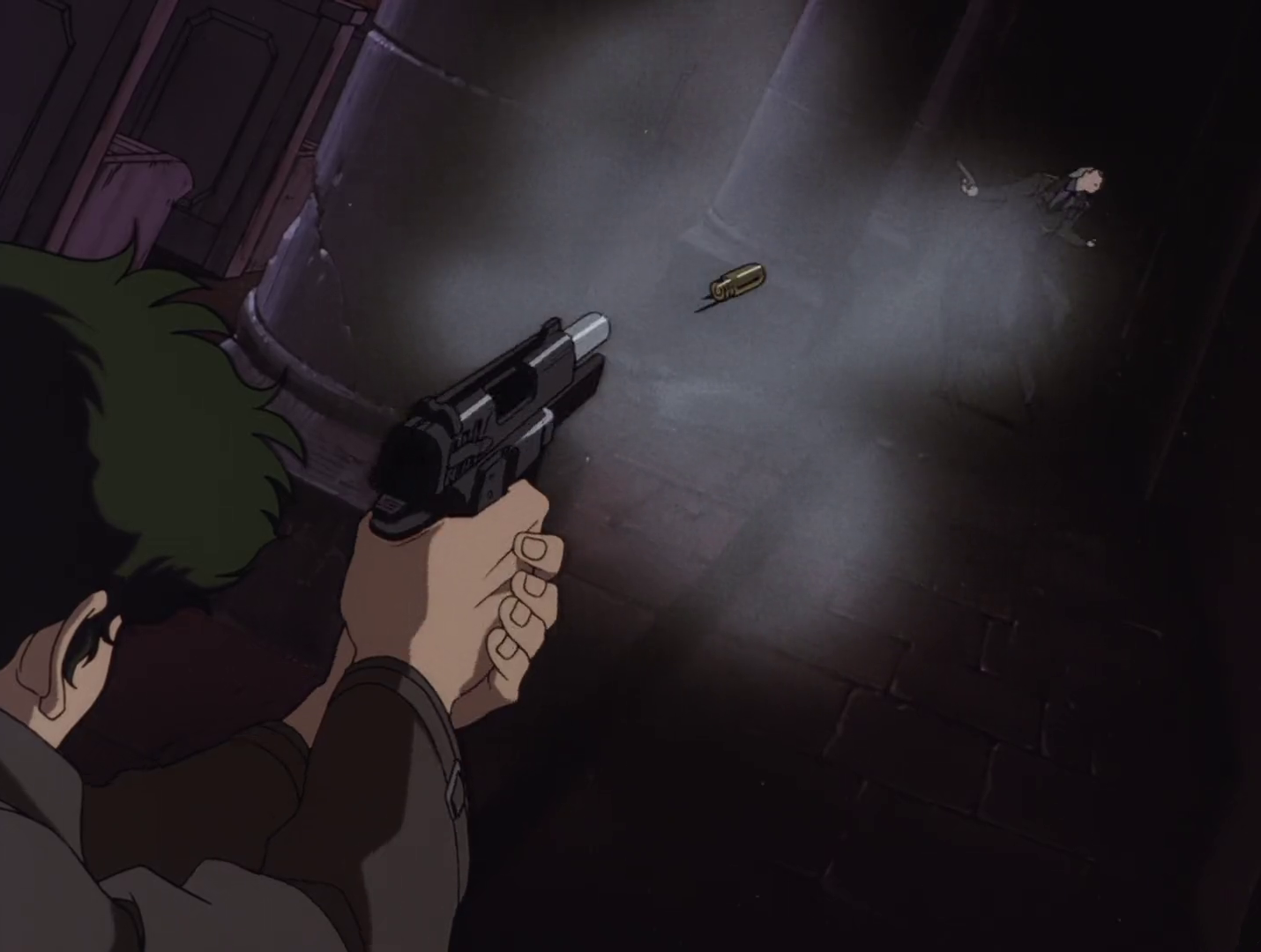
Because of this guy and his big gun, Spike thus avoids the pews and goes up the south aisle (again, assuming this church is in the northern hemisphere of Mars). This is also two frames (at 24fps) reused three times where you see the bullet come out of the gun. cool huh
This is a comp of Spike running up the south aisle past the arcade columns. That the comp doesn’t quite work and the column bases look twisted and weird together is actually testament to how it’s been considered that the background is clearly meant to evoke the “camera” turning a bit rather than apparently dollying along with Spike’s position.
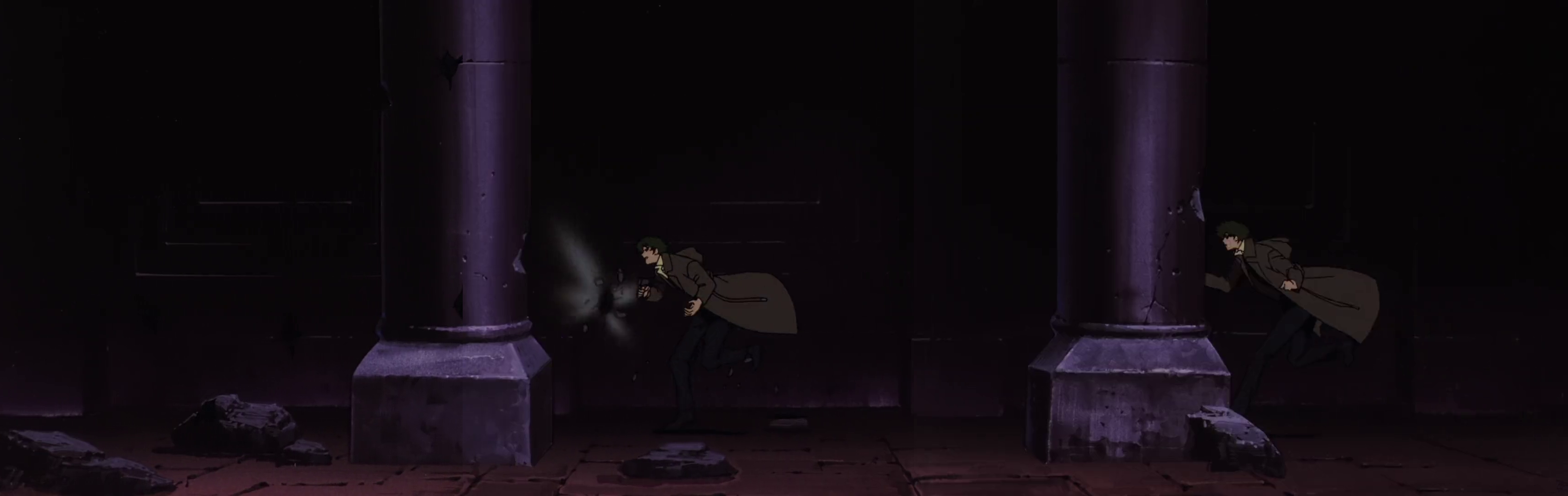
Hiding behind an arcade column, Spike throws a grenade into main vessel to solve the problem of guy with a big gun. Again just thought this bit was cool and I wanted to show you my screencaps. But that’s one way to get rid of your pews!!
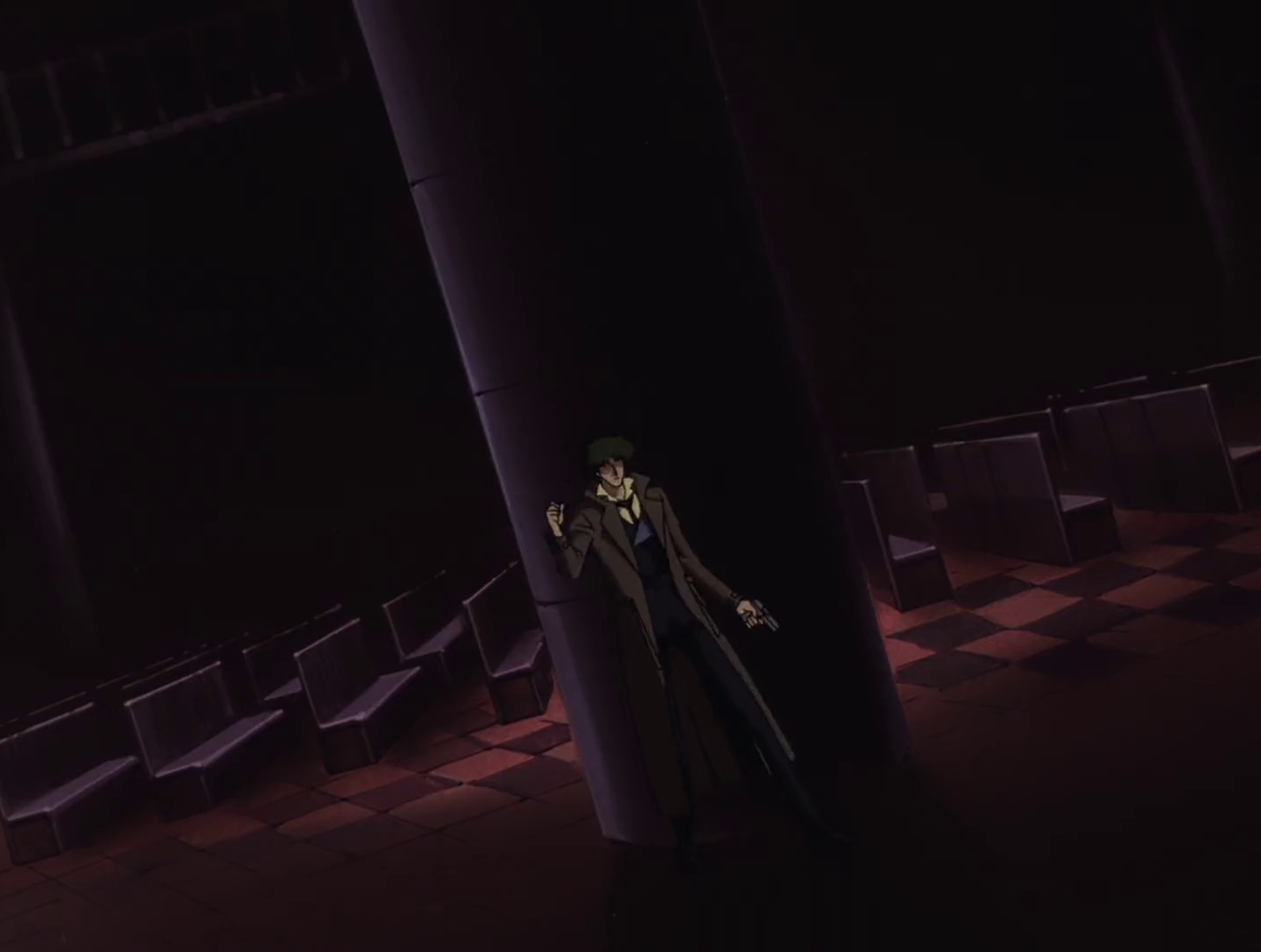
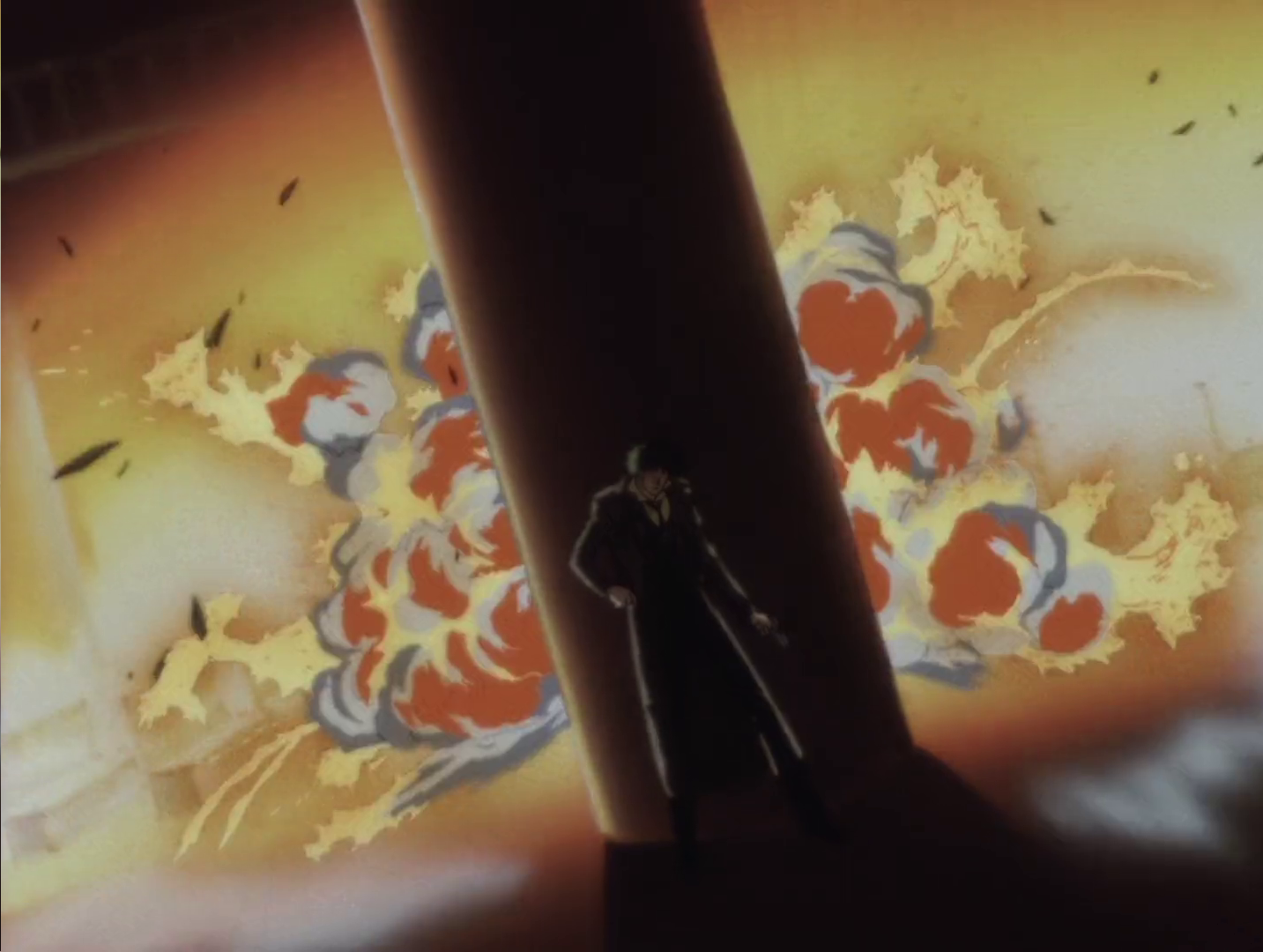
Faye, after some *ahem* character animation (someone else has made a GIF, I noticed), somewhat sheepishly, escapes in the evening dress she wore trying to grab her trap bounty, and we see the same BG art based off Chartres south porch again, so we get to enjoy that weird buttress a second time.
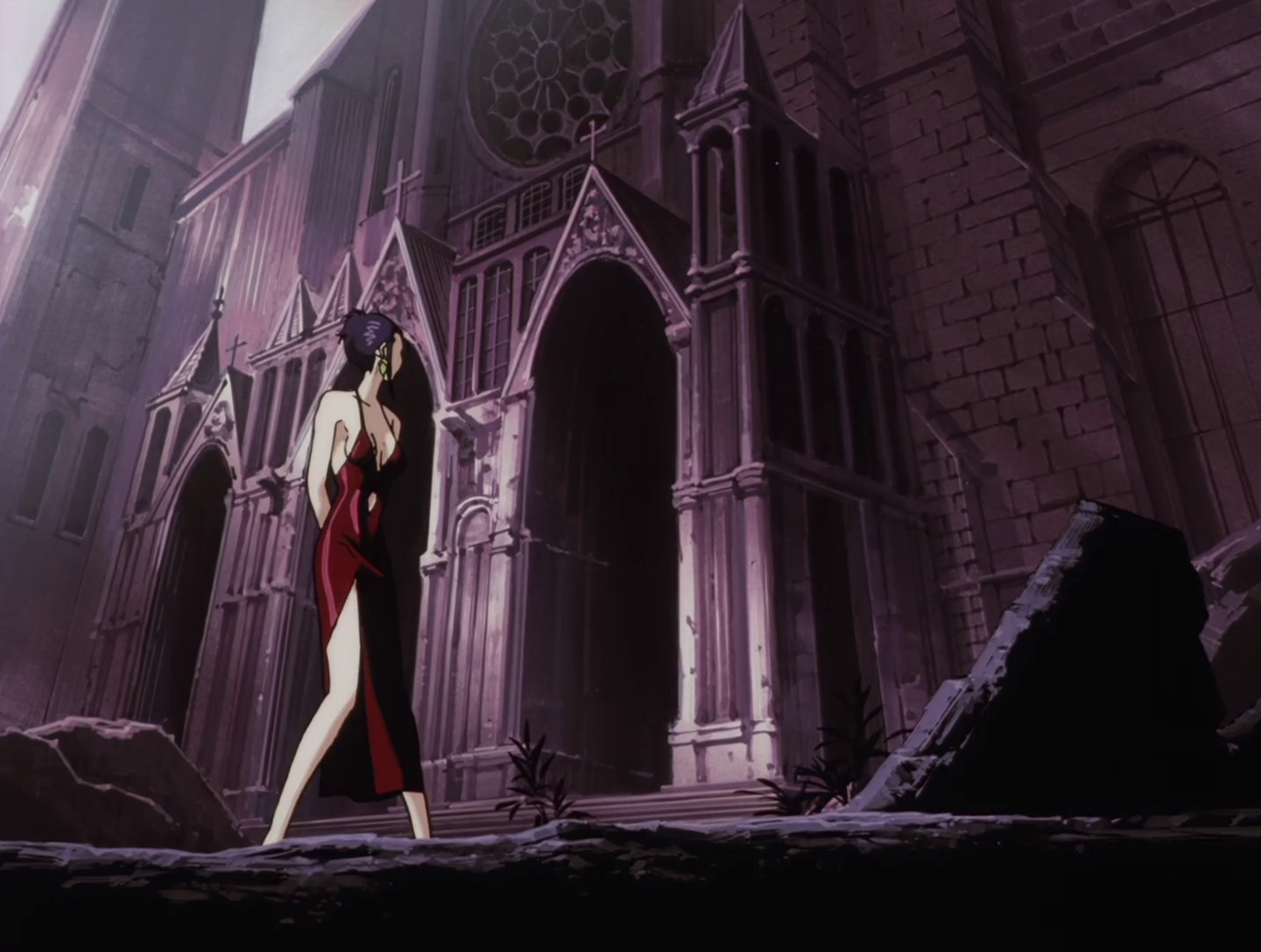
Just before she turns to her left to look back at the sound of Spike’s grenade going off, we see this arm of the building behind her right. It doesn’t really make sense topographically, and (except for that one shot of the elevation) it’s also is the only bit of the whole sequence where nothing looks anything like anything at Chartres. Is it based on anything specific? uhhh.. maybe…? I did try.
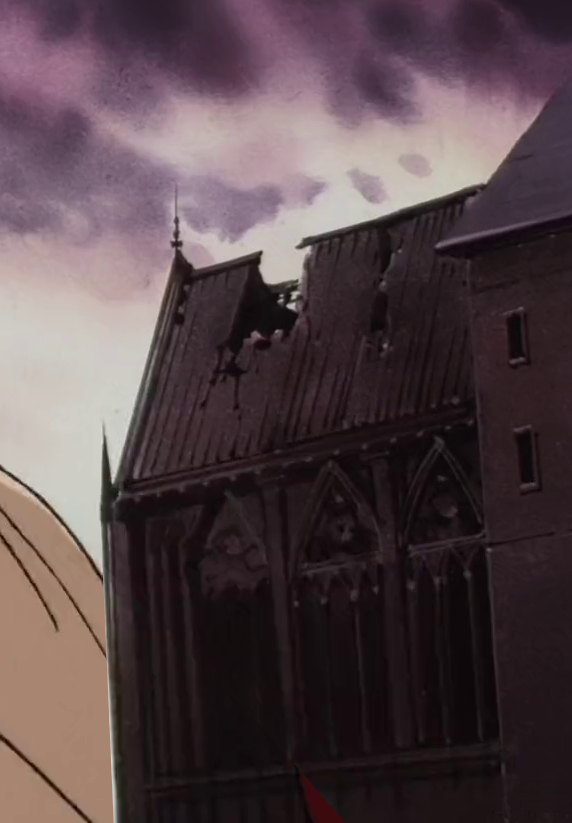
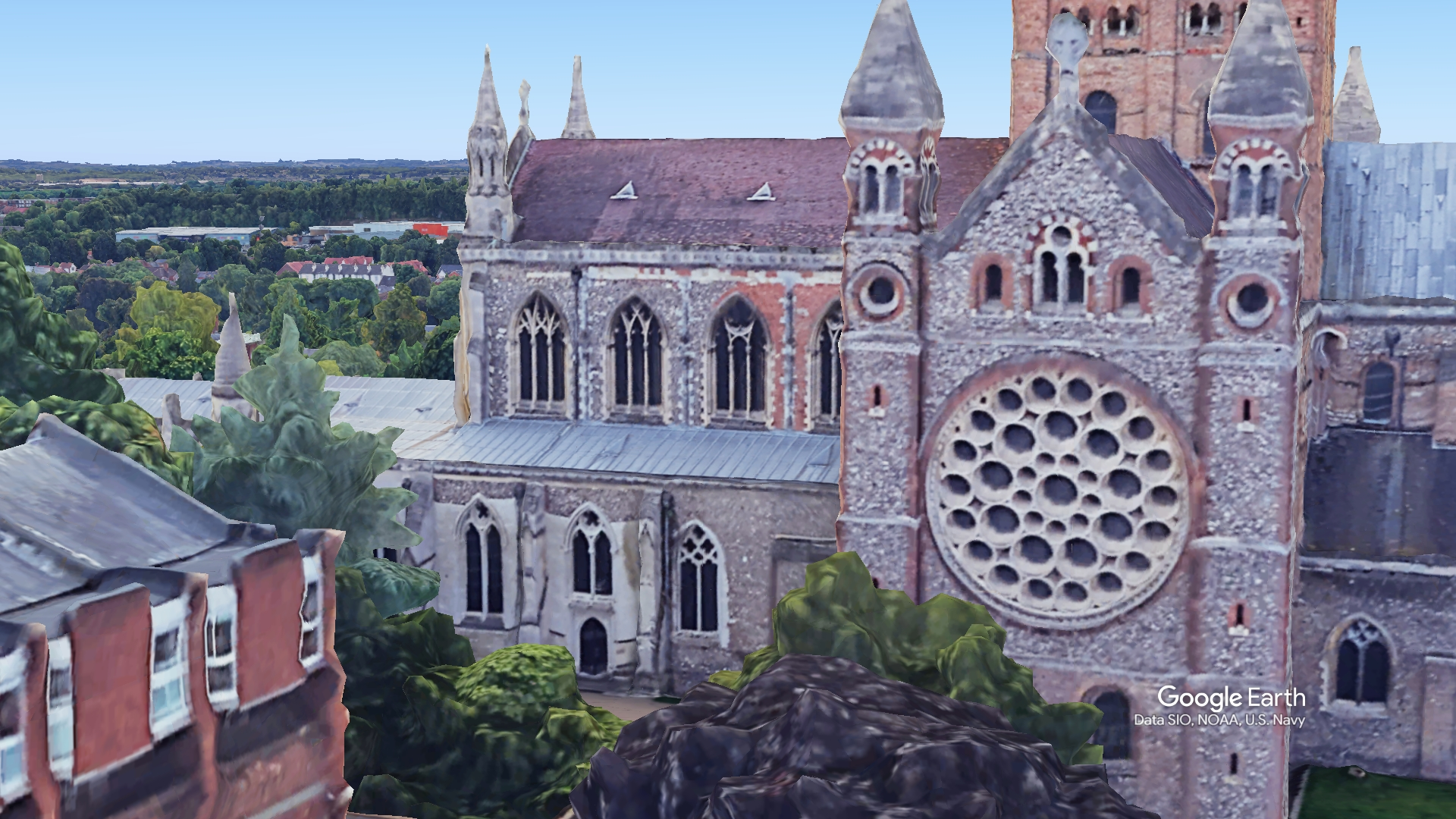
It’s a clerestory on a straight-ended vessel with a high-pitched roof and windows with three lights and what looks like a pointed trefoil in the head, with a plain stair turret in the foreground. Something like this view of the presbytery of St Albans Abbey, except the windows need to be closer to the high roof parapet. I mean it could be anywhere really. Let’s move on, there’s the really cool climax to come.
Spike then rushes to access the balcony that he’s been sniped from via a roomy stairwell the like of which you never get to gain access to the upper levels of a medieval church (but from the production sketches you can see reproduced below is intended as taking up the interior space of the north-west tower at the end of the north aisle). He gets hit by a bullet and there’s a quick flash over to the Bebop with his partner Jet Black pruning his beloved bonsai trees, when Faye calls him for help, and, grudgingly, he sets off to rescue his partner from the vengeful caper he’s wilfully got himself tied up in.
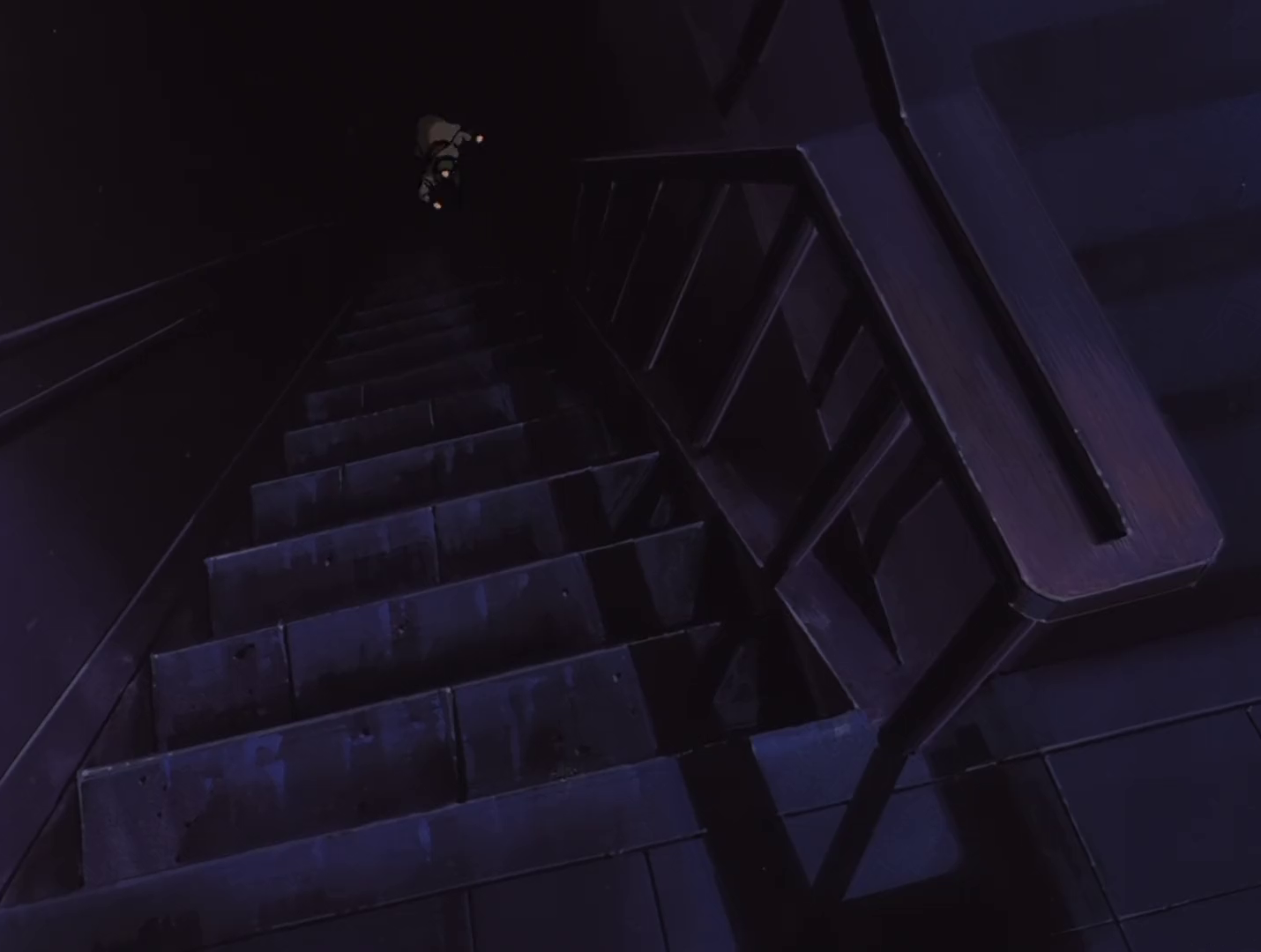
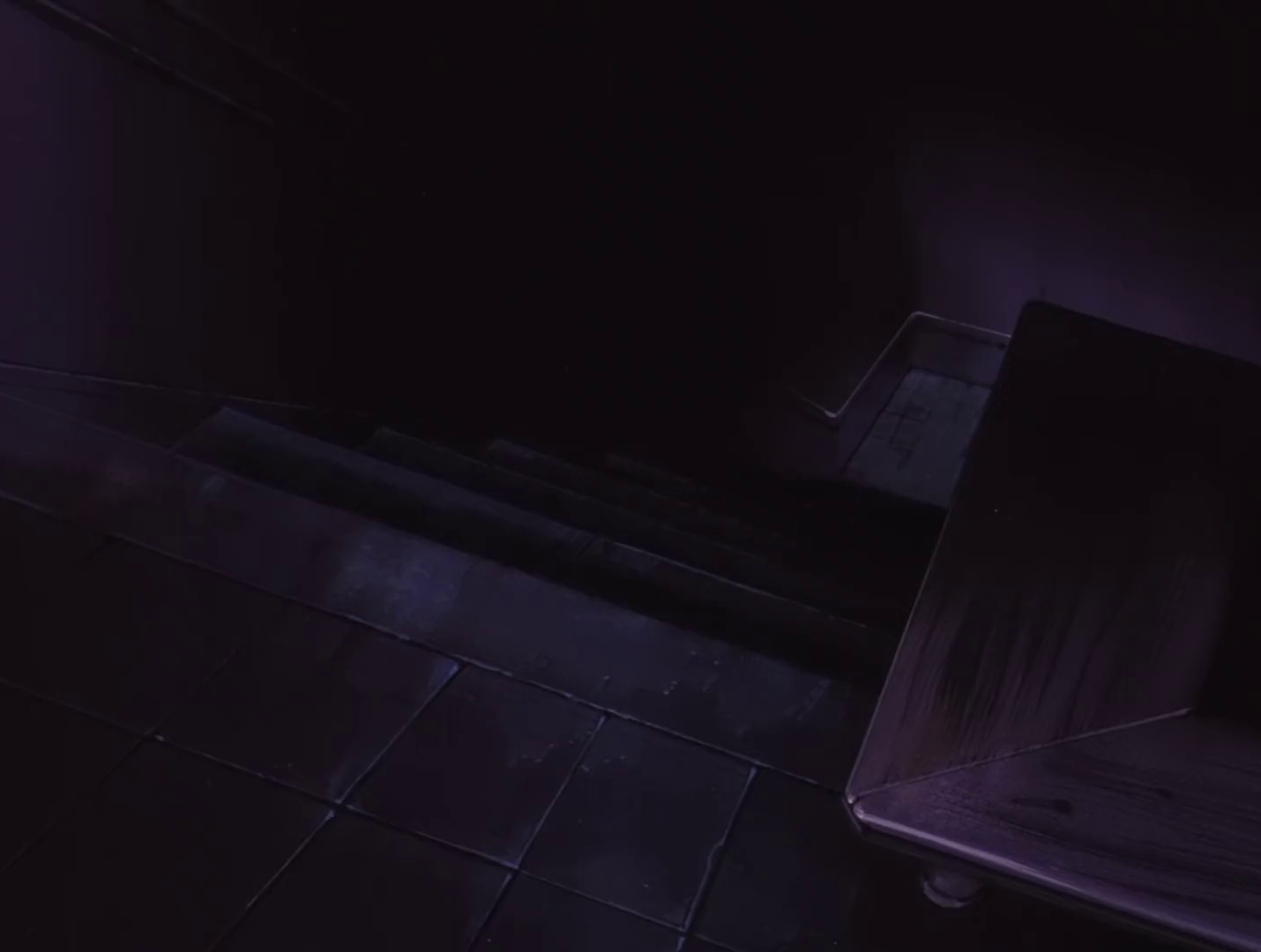
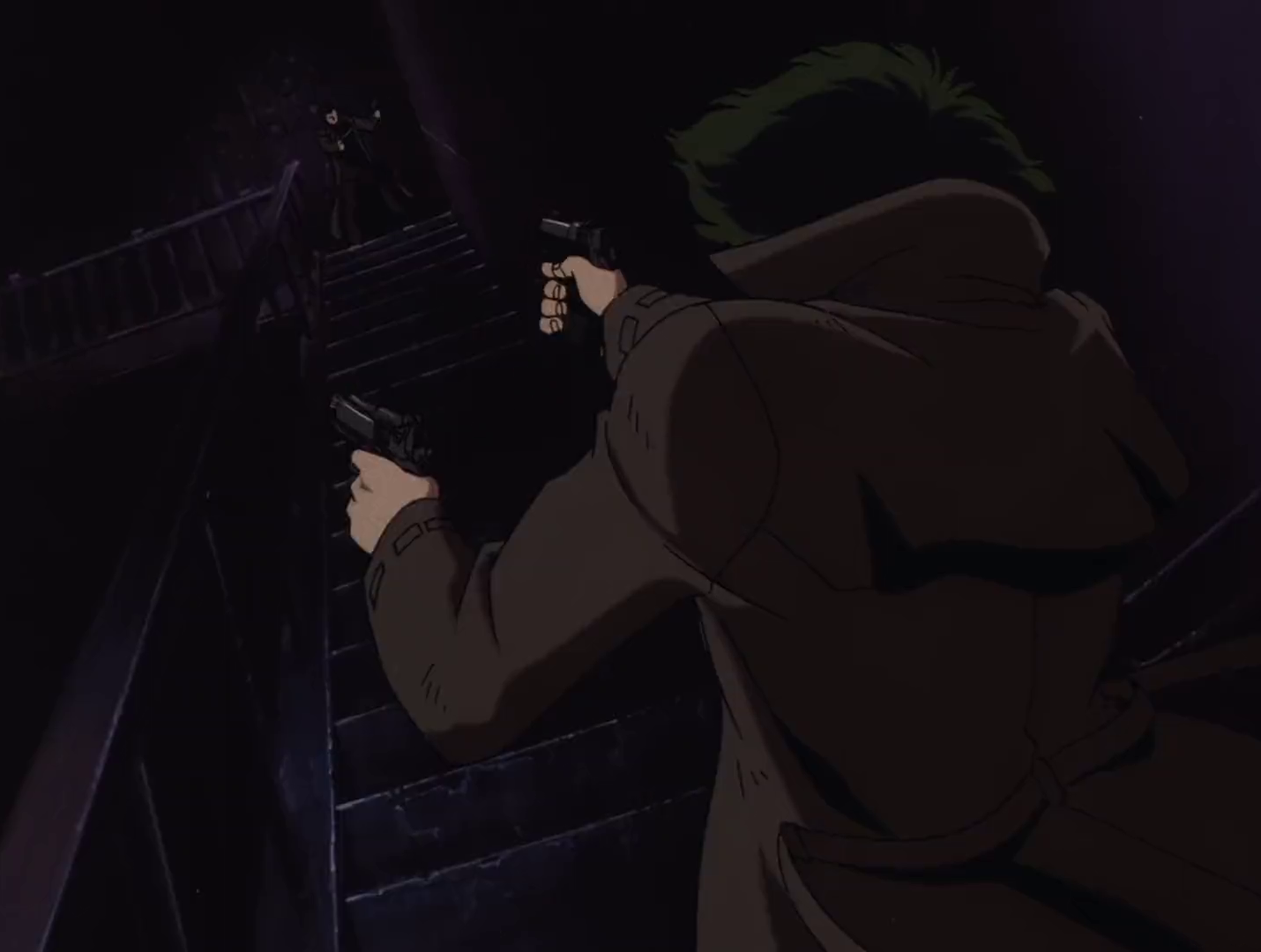
When Spike gets up to the gallery/balcony (whatever it is) we get a shot of Vicious’ feathered friend flapping off to go sit on a crucifix,10 with the background being a pointed passageway to the balcony before the rose window. This is the best view of it we get.
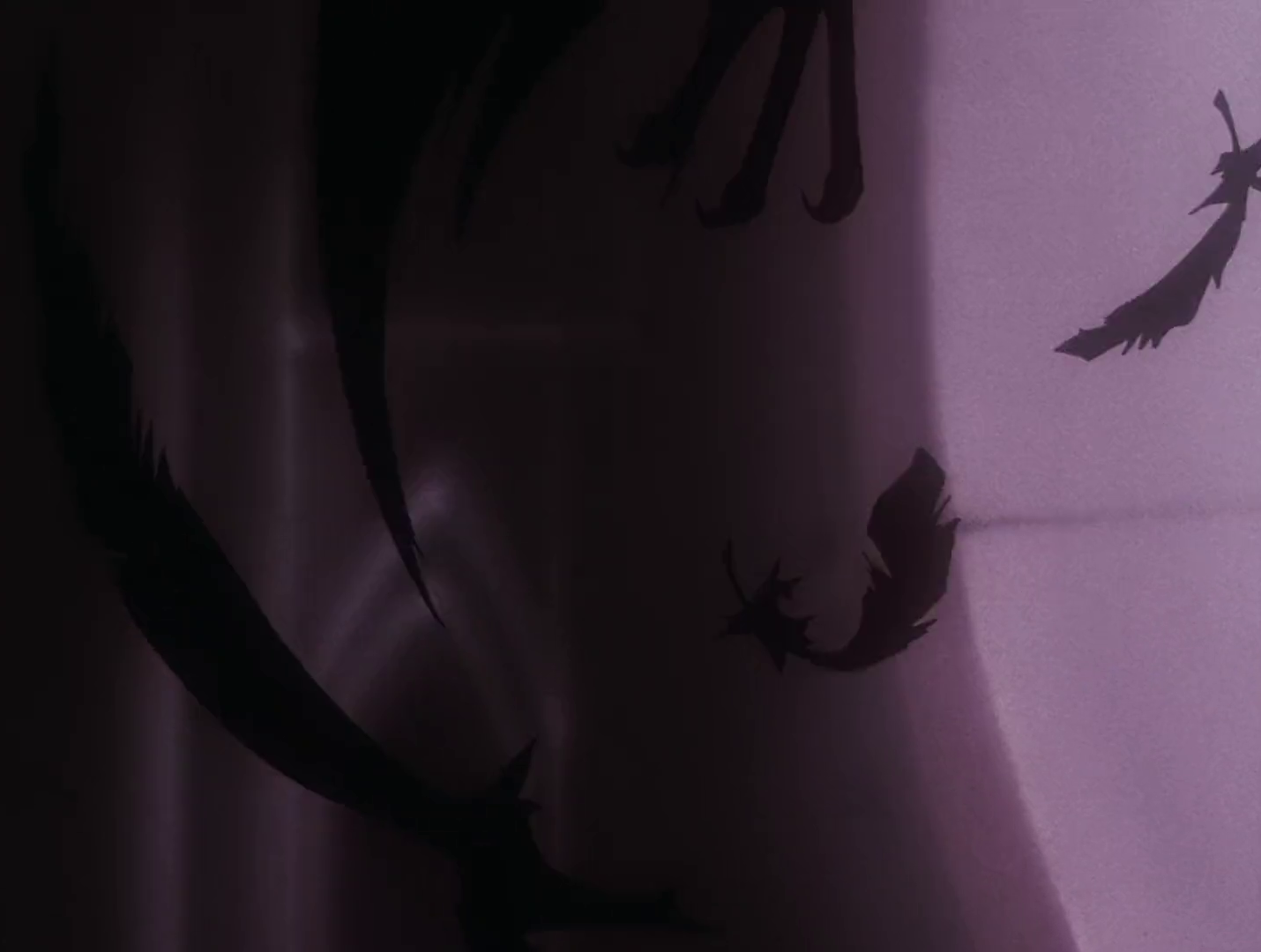
Spike then encounters his nemesis at a balcony underneath one of the rose windows of the Martian church: as said, heavily implied to be over west door which he entered through.
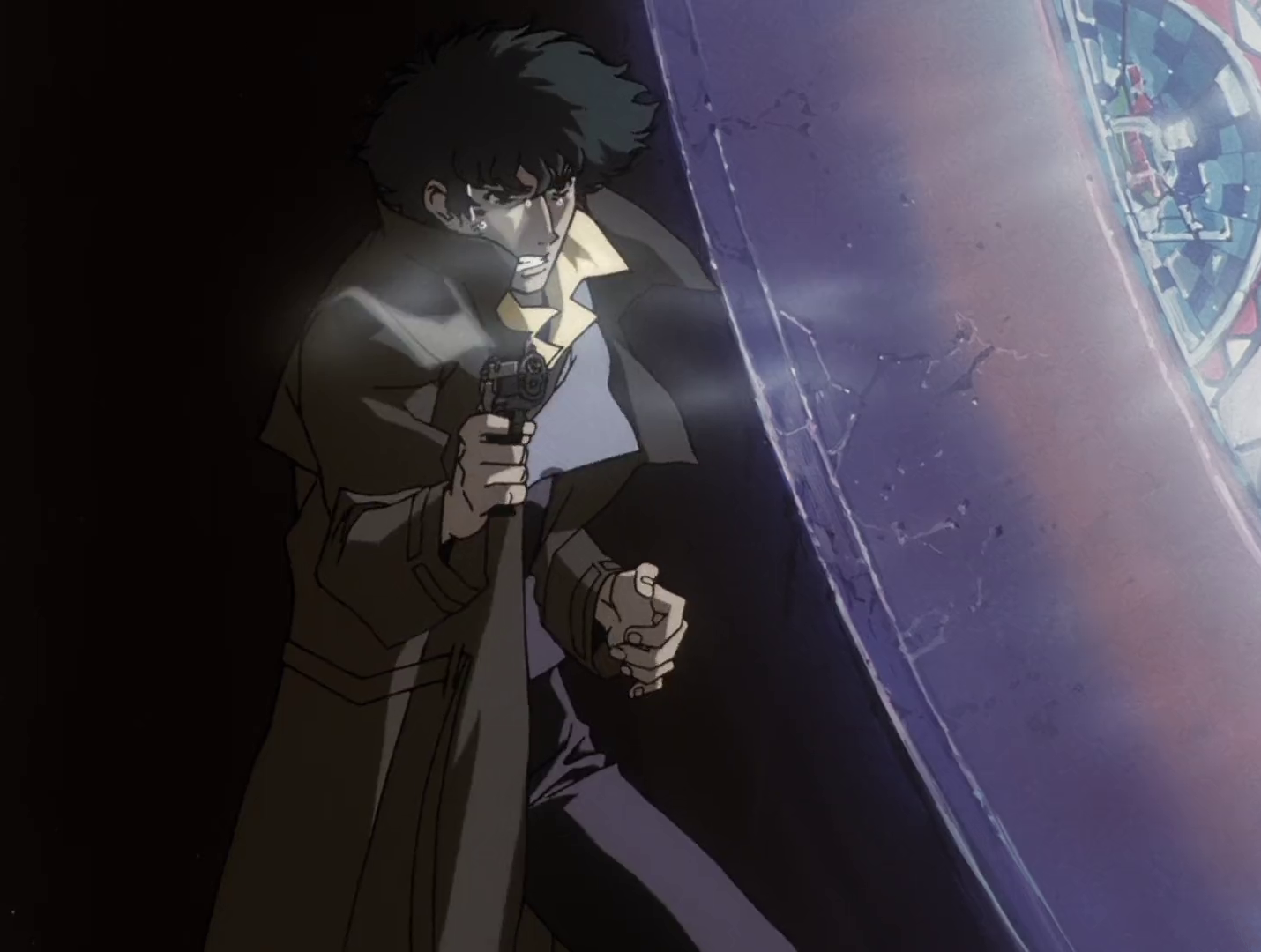
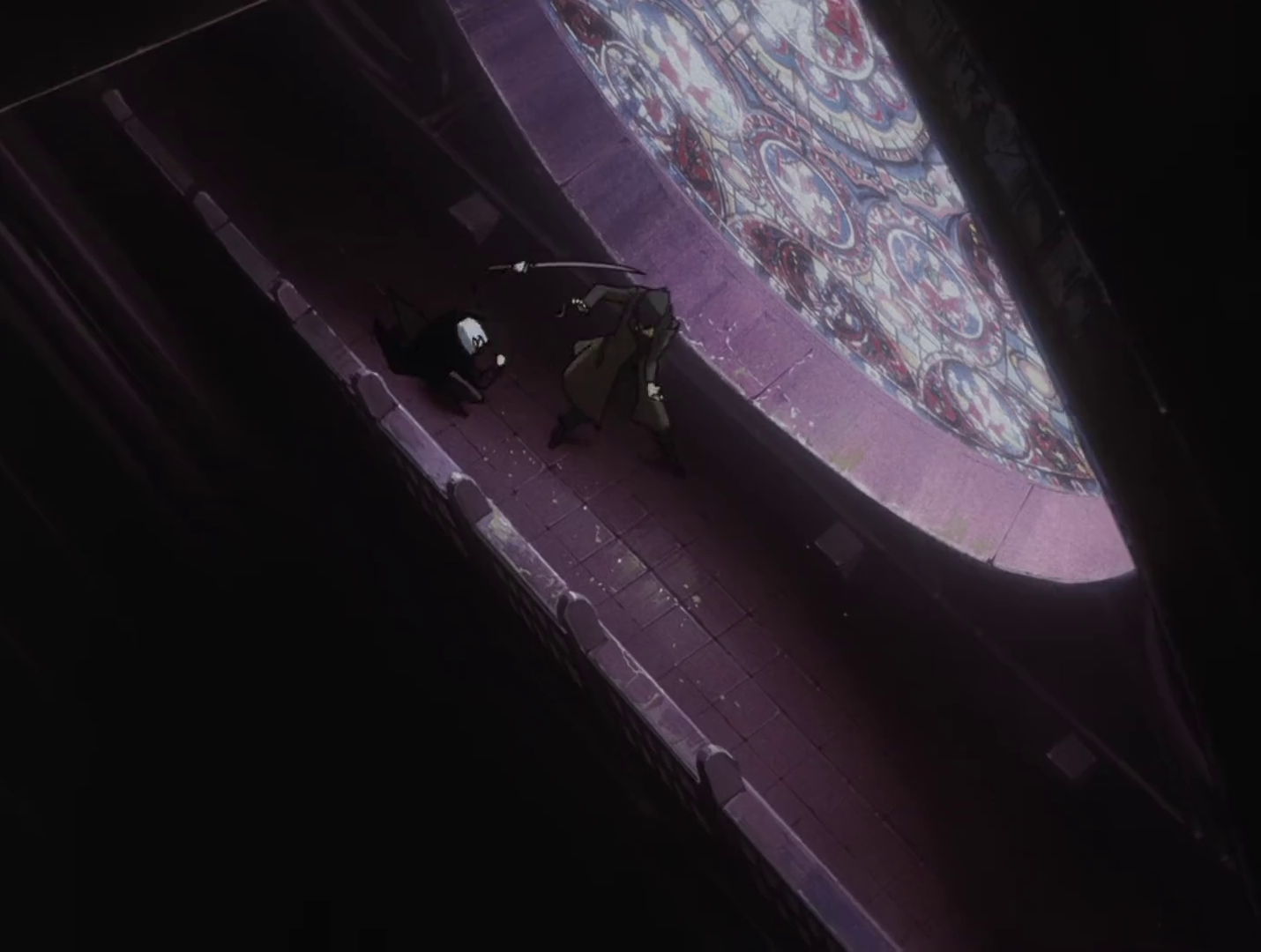
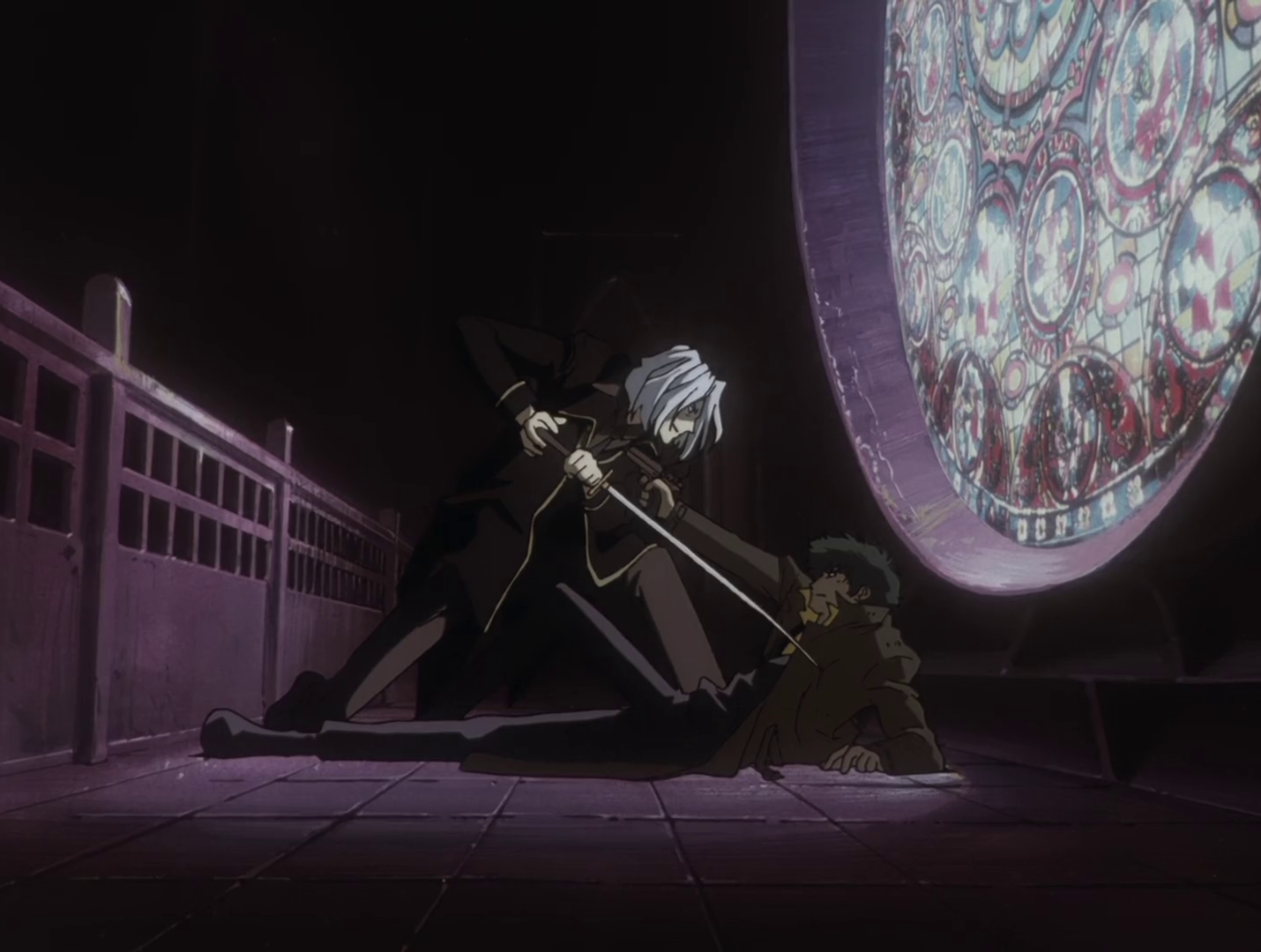
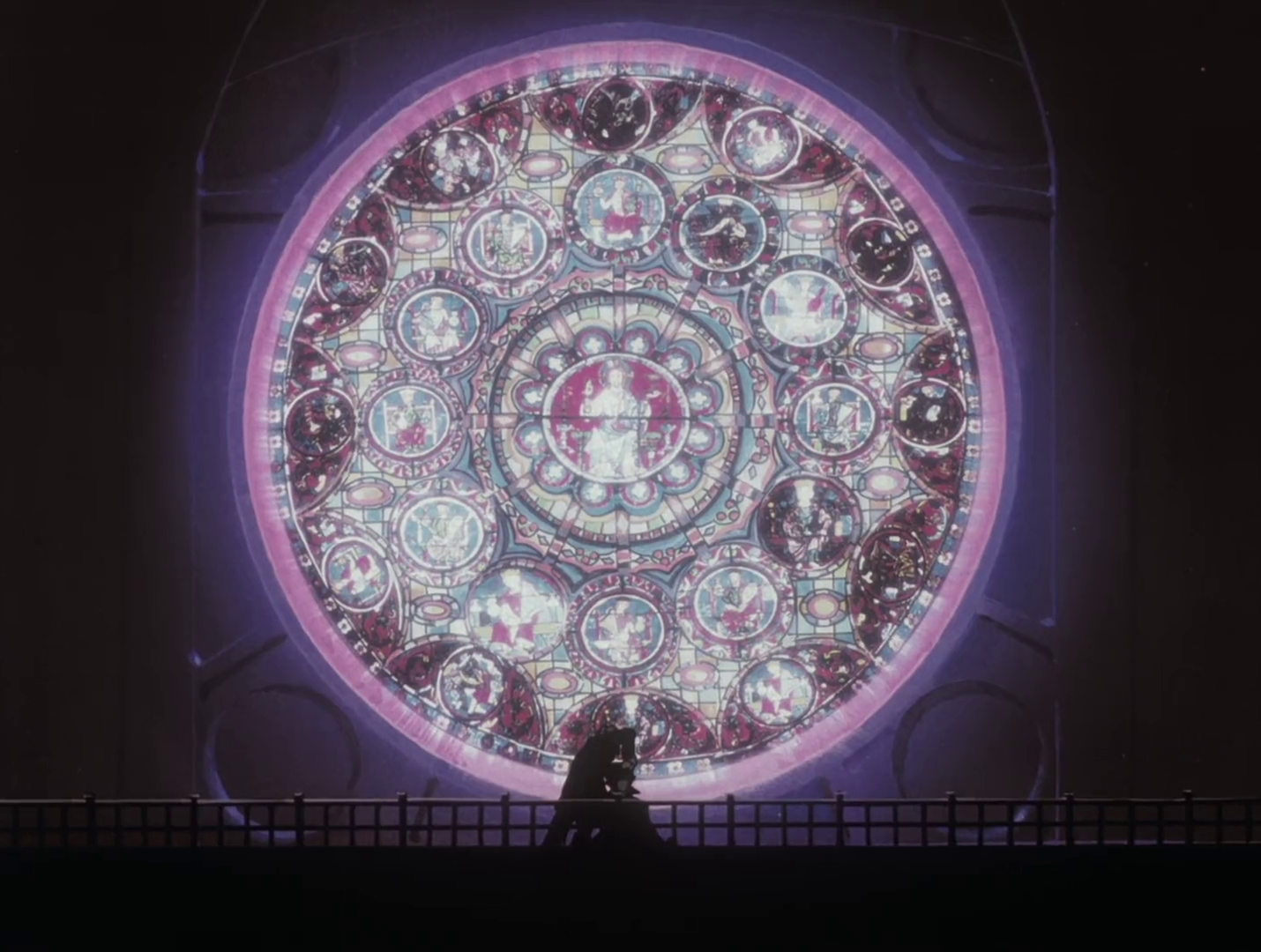
And then the money shot, where we see the general arrangement of the window (hesitate to use “tracery” as the whole thing is glazed as a consistent piece of leaded glass rather than set in a supporting stone frame) is the same as the rose windows we’ve seen from the outside.
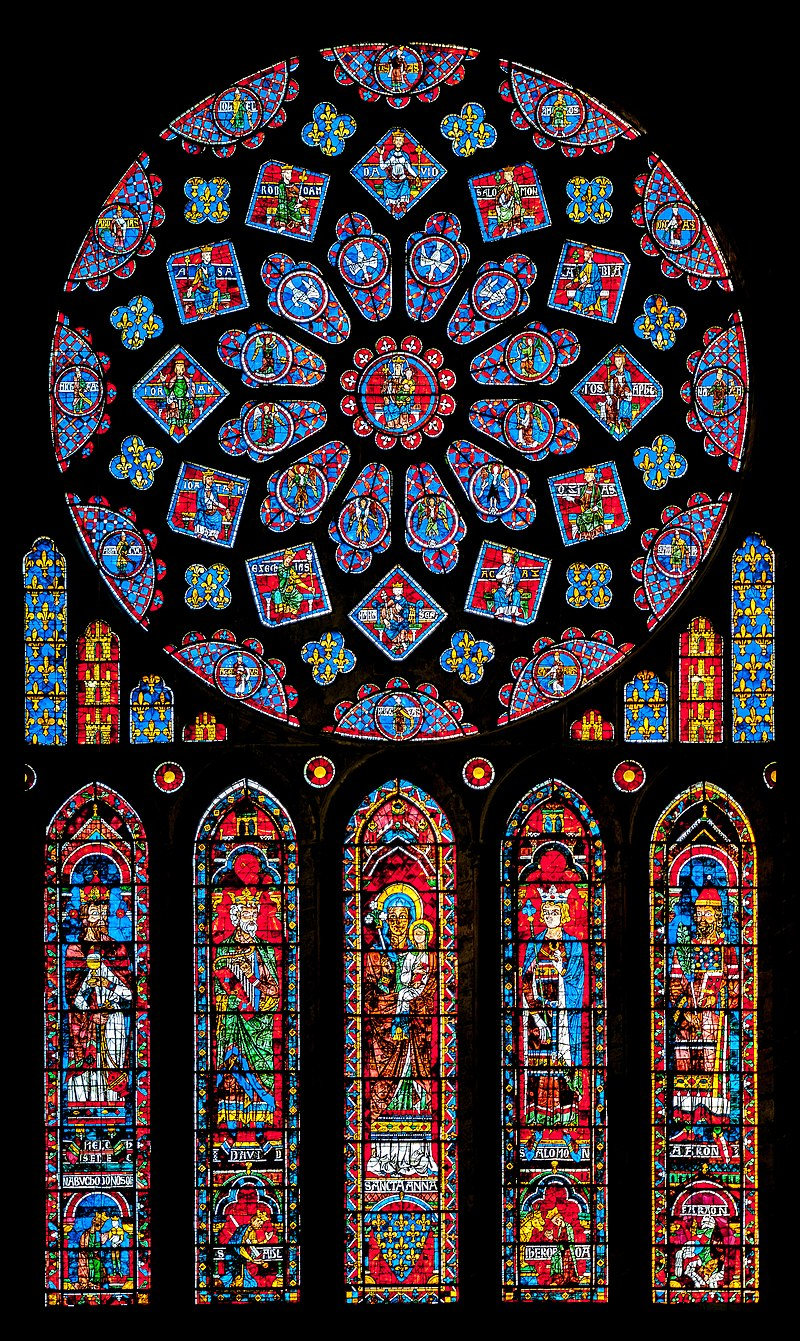
Short art history diversion! Chartres on Earth, like most French Gothic cathedrals,11 has three rose windows: north transept, west front, and south transept. All built after the 1194 fire, with the north (left below) is probably most recent, as it boldly uses squares rather than circles in the third register and pierces the bottom spandrels with trefoil-headed lights to dissolve wall to glazing in the burgeoning Rayonnant style. Its glass displays armorials to demonstrate that it was donated by Blanche of Castile, regent of France 1226-36 (we saw above the centre and inner right lancets in an establishing shot). The west rose (centre below) was the earliest, and is a more traditional wheel-window based on arcading and plate tracery, probably built in the 1210s, but over the original windows and glazing of the late 1140s west front. Remember that the establishing shot of the front of the Martian cathedral eschewed its pattern in favour of that of the south rose (right below) which dates to the early 1220s.
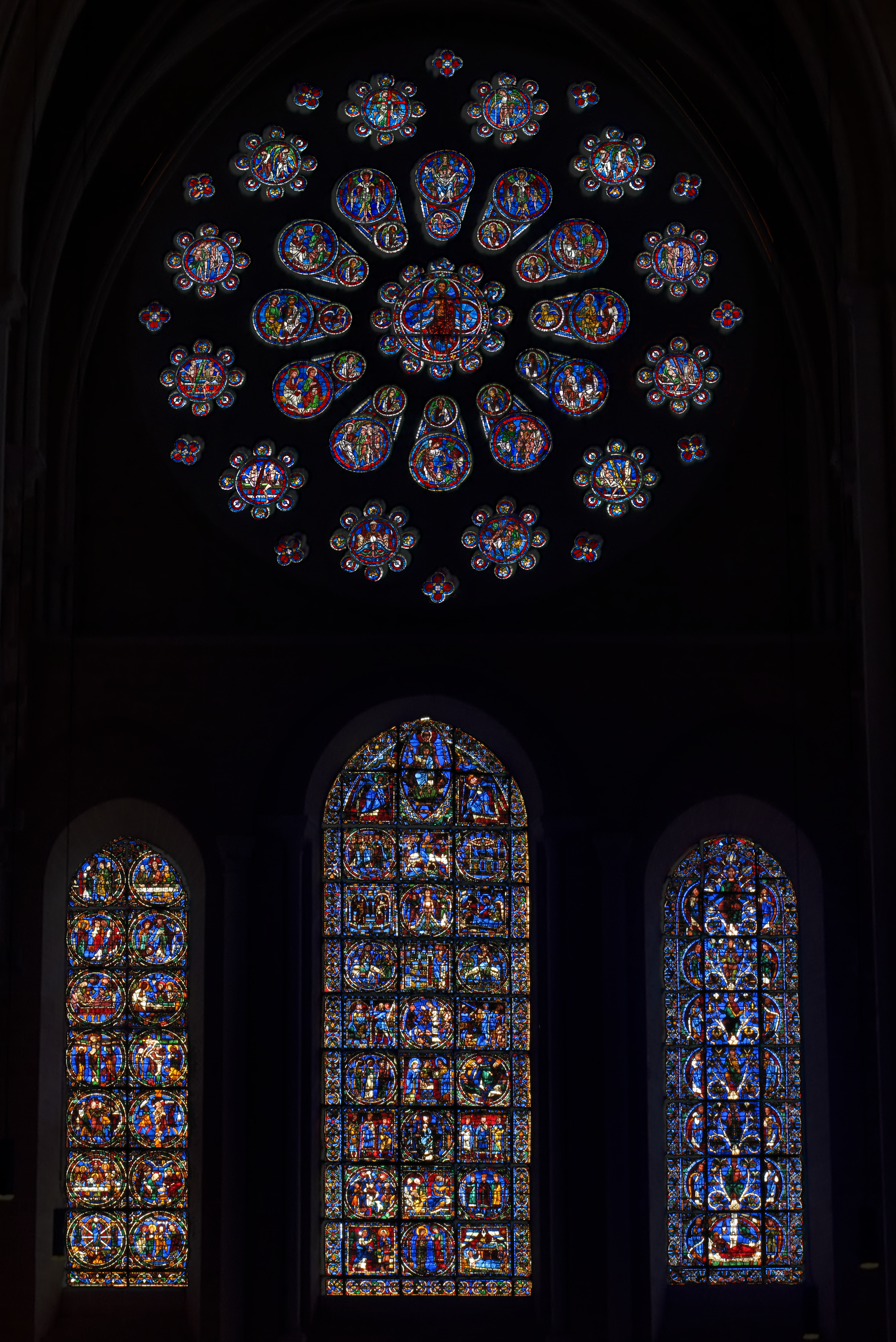
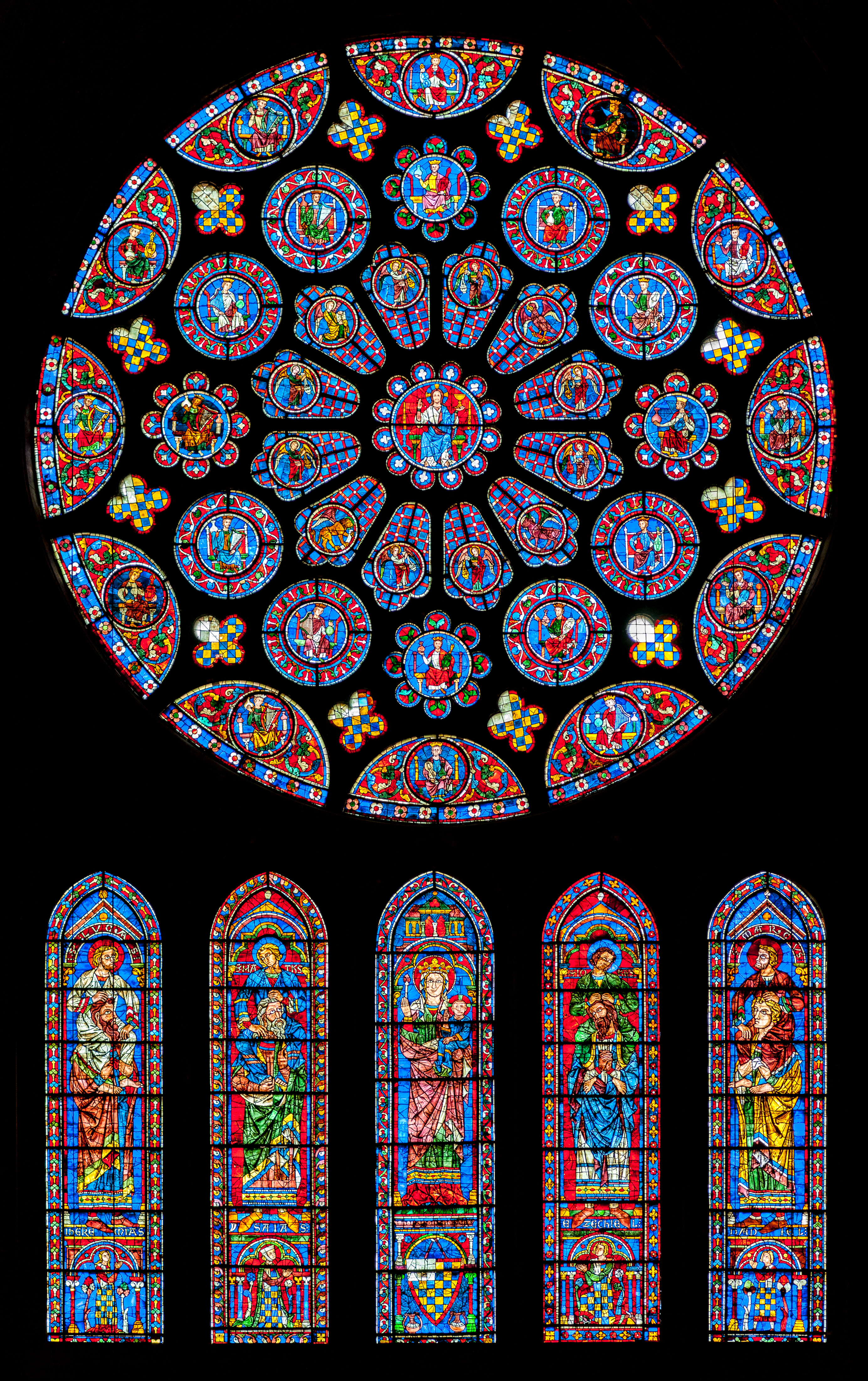
And yes, the window in the anime is unequivocally based on the Chartres south transept rose, the tracery design we’ve seen twice already on two BGs of the exterior of the church: 12 semicircles around the edge, aligned with an order of 12 circles. The pictorial glass is a relatively straightforward programme of imagery, based around the Apocalypse. The centre, with the enthroned Christ surrounded by 12 white quatrefoils is expanded to fill the space otherwise occupied by 12 trefoil-headed panels, containing eight censing angels and the four Evangelist symbols.
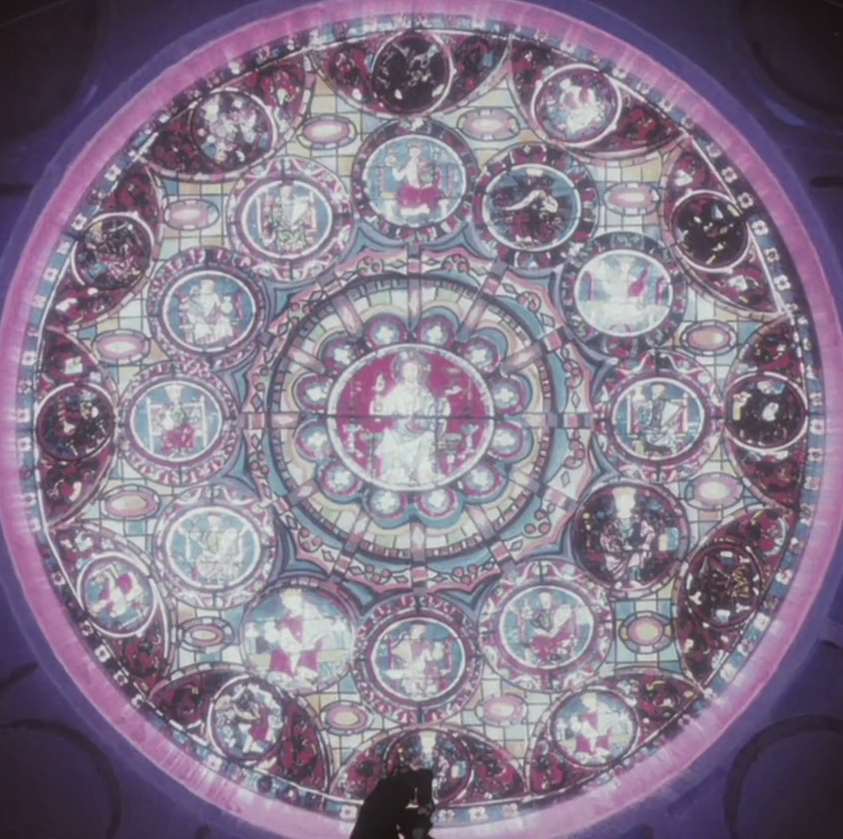
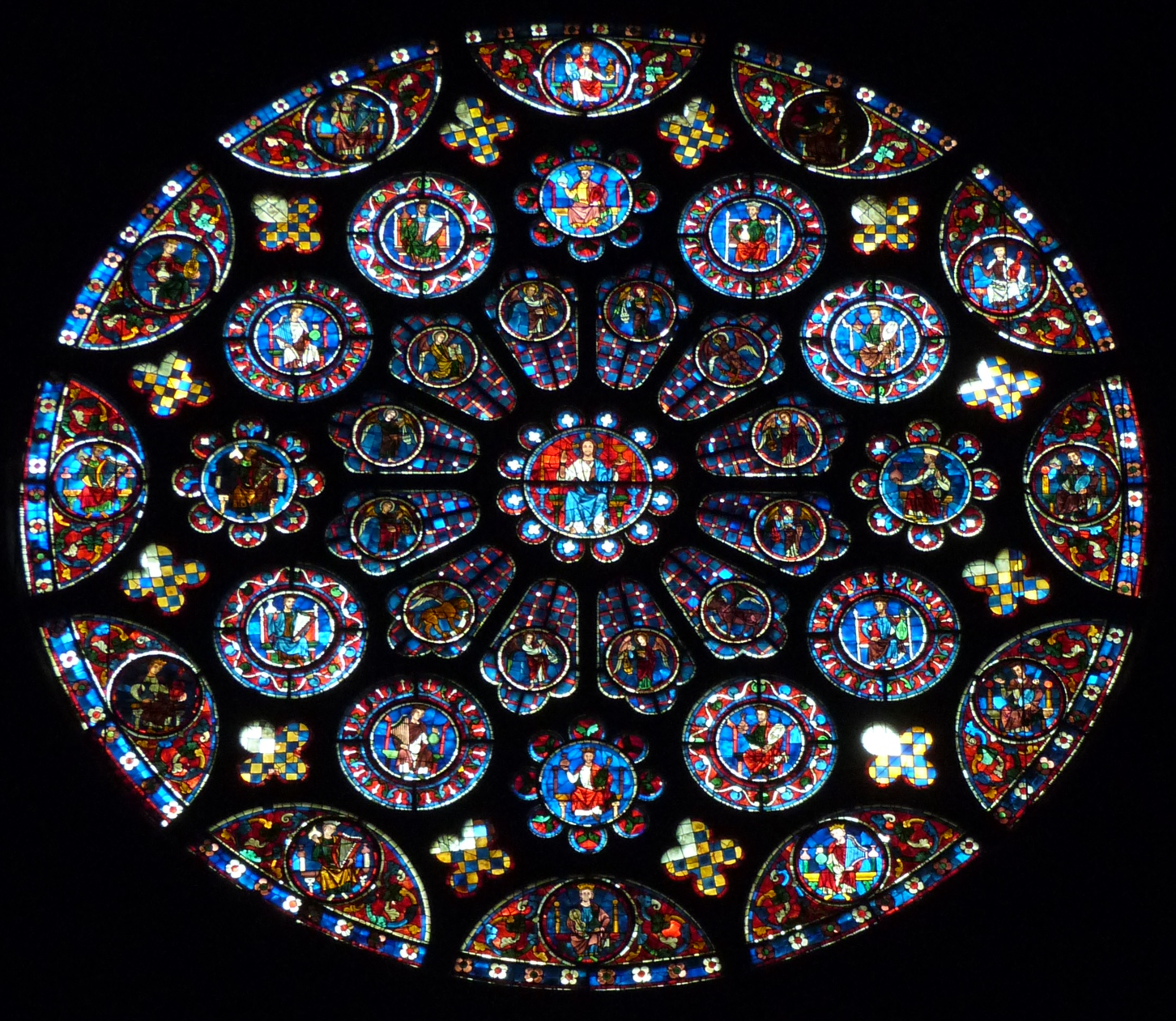
The outer two registers of the Chartres south rose are the twenty-four Elders of the Apocalypse, in the roundels and the semi-circles round the edge, and are imitated pretty closely in the BG, as you can see below. Although as said, the black spaces that are in reality stone tracery are changed to be fully glazed, making this a single continuous leaded window…
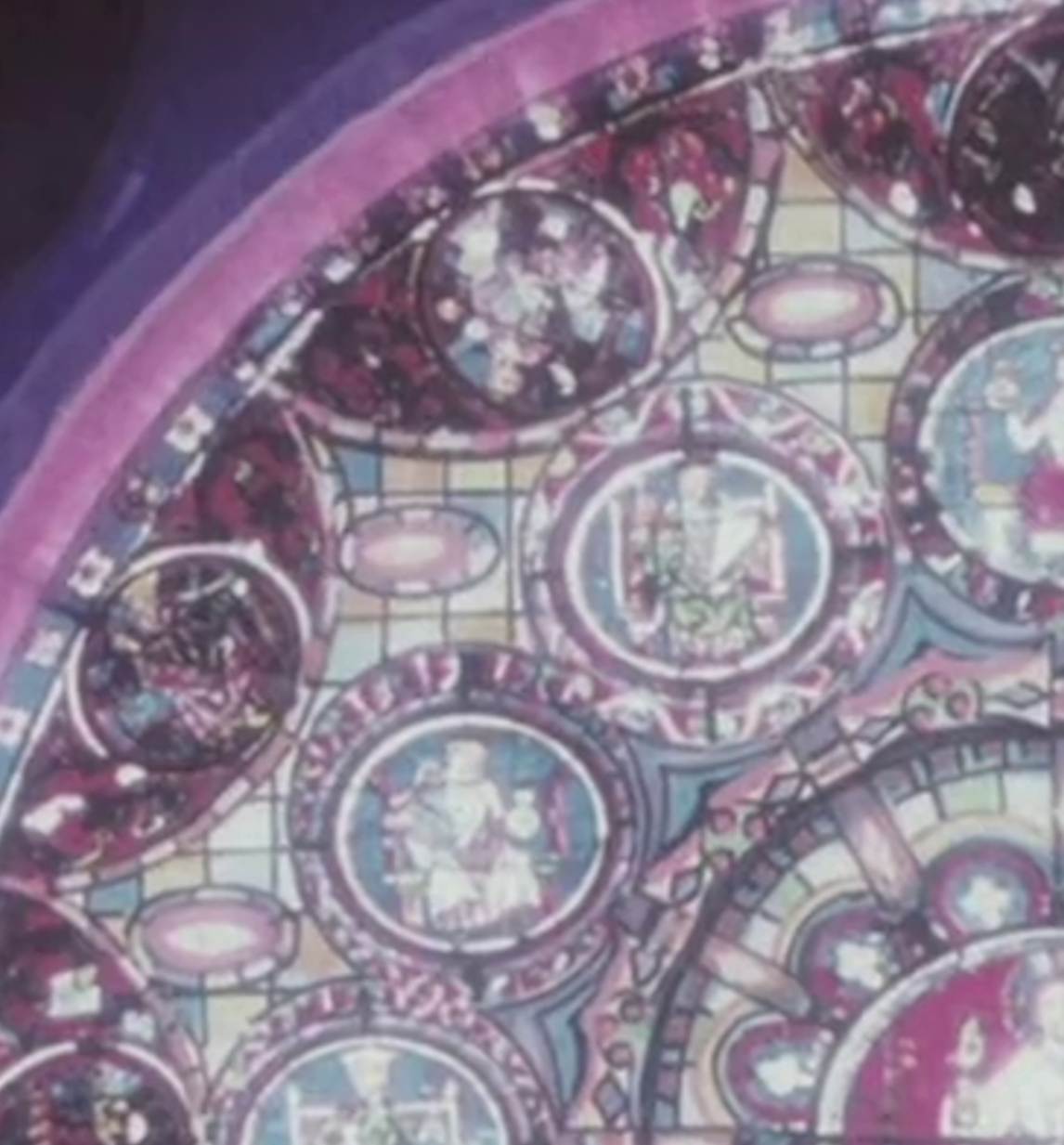
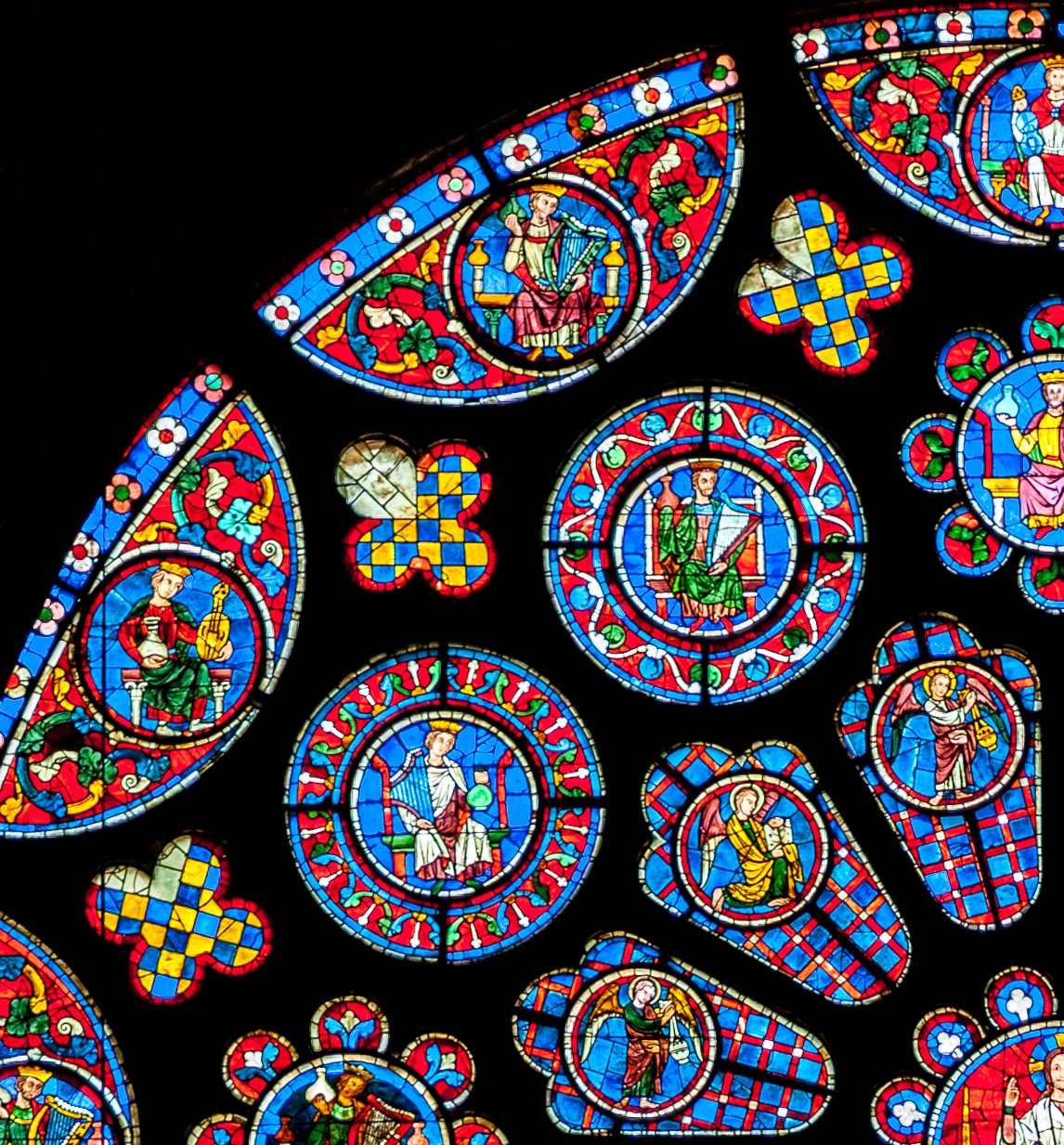
… hence why Vicious can grab Spike’s face like a wildman, and smash his head right through it.
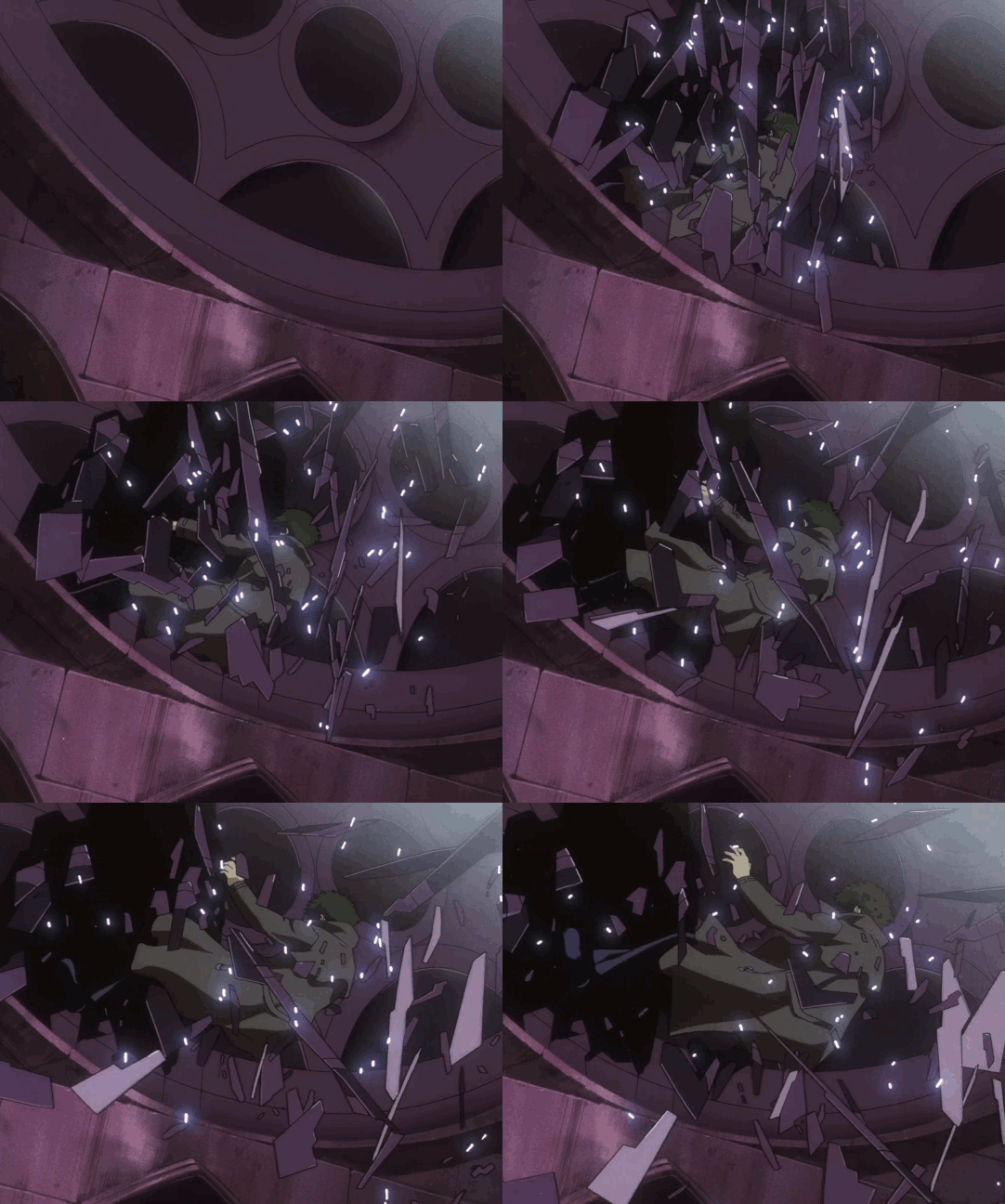
This is why the rose window tracery was changed in the initial scroll-up elevation of the west front: to keep it consistent with Spike going out through the front of the church. We can see the big chunky pinnacles of the actual Chartres south porch below (even though the one one we see, on the right side, was missed out on the BG). I mean, not that it matters. We don’t even see how Spike survives falling about 25 metres from the rose window sill,12 so we probably shouldn’t worry too much.
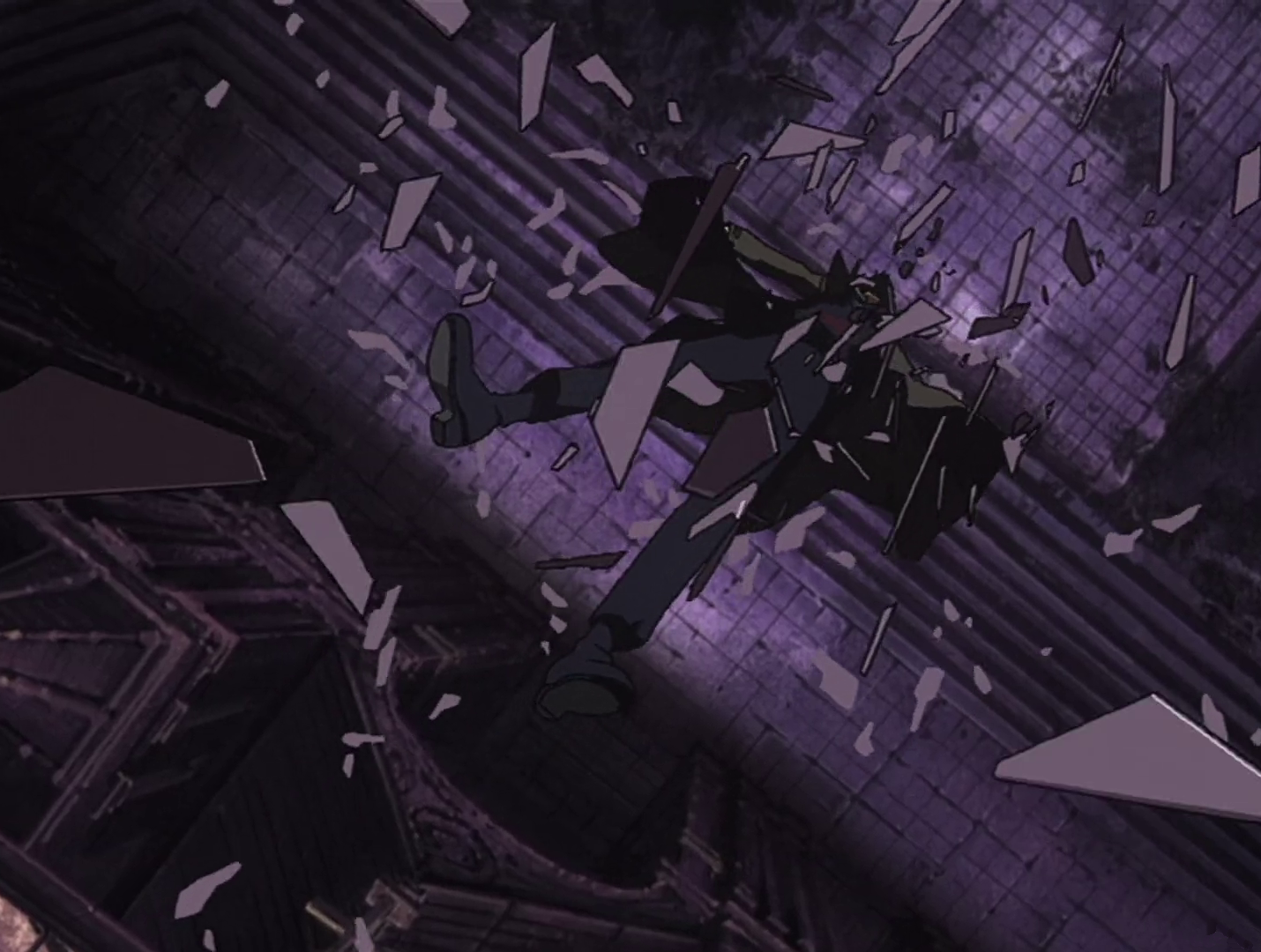
Of course before he fell, Spike threw an armed grenade onto the balcony. So the whole of that window gets blown out and probably every fragment melted beyond identification. But not Vicious, he comes back in episode 12 (“Jupiter Jazz, Part 1”).
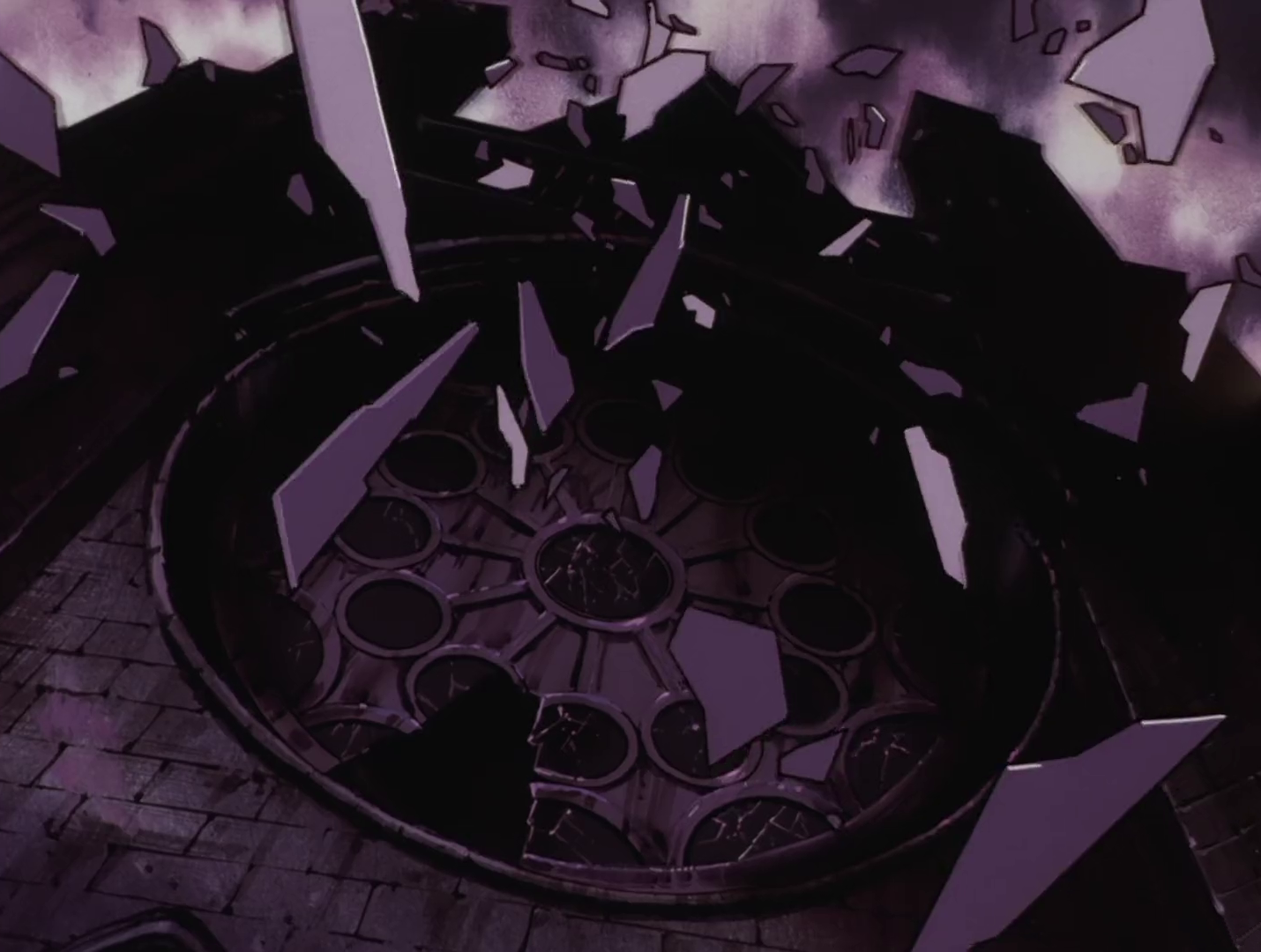
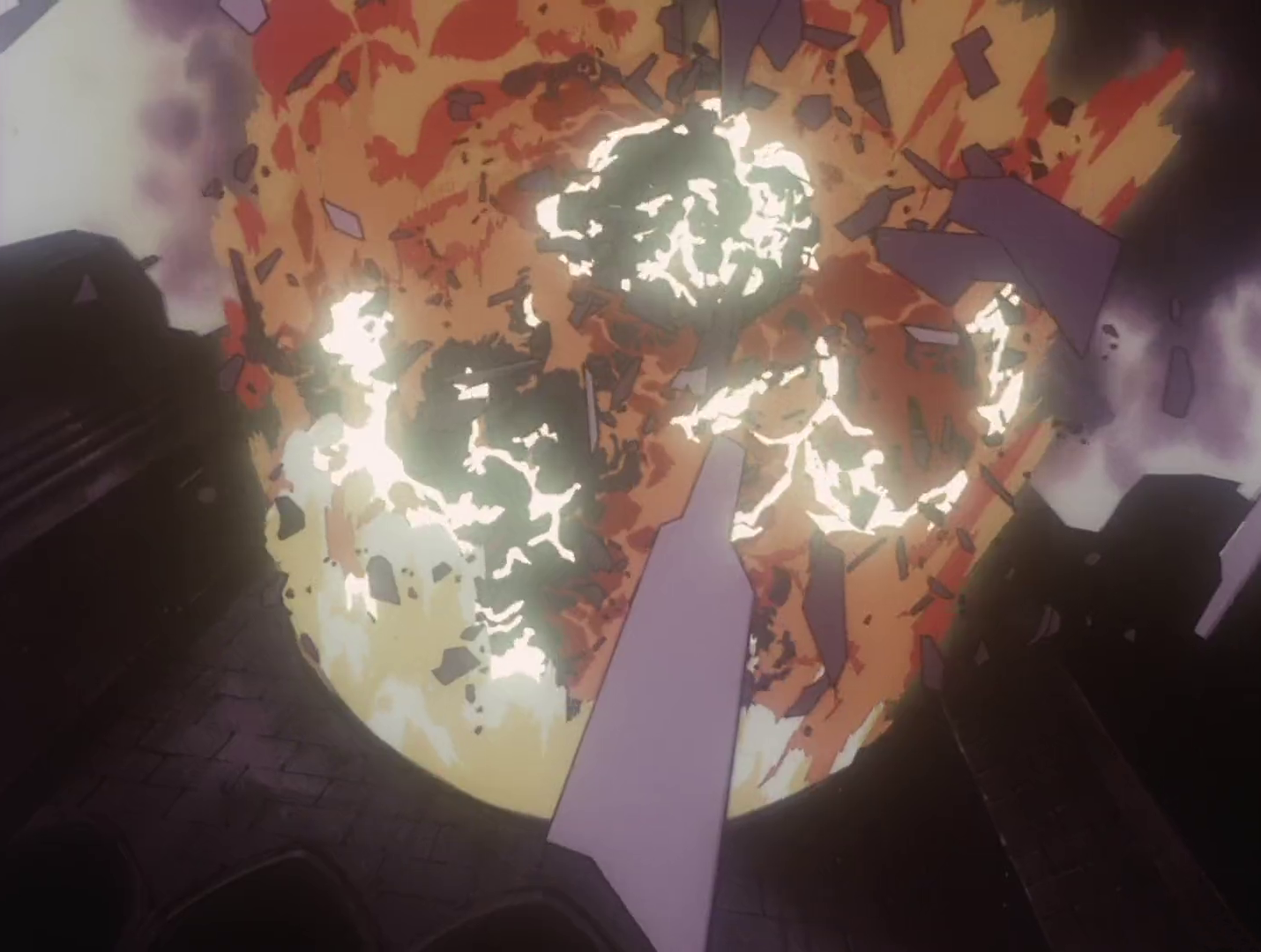
Oof! Let’s hope that wasn’t the actual glazing rescued from Earth and just some c.2050s Martian copy.
You might think the production drawings for the episode would help clear up the Chartres relationship.13
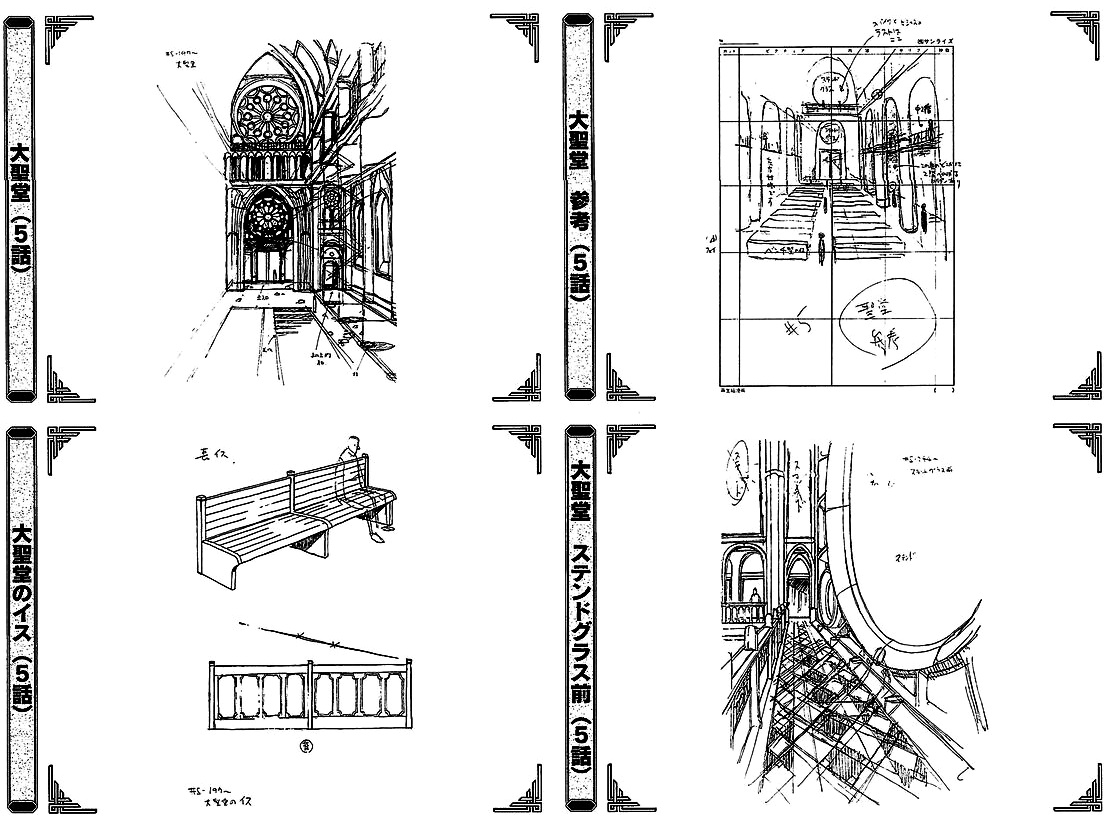
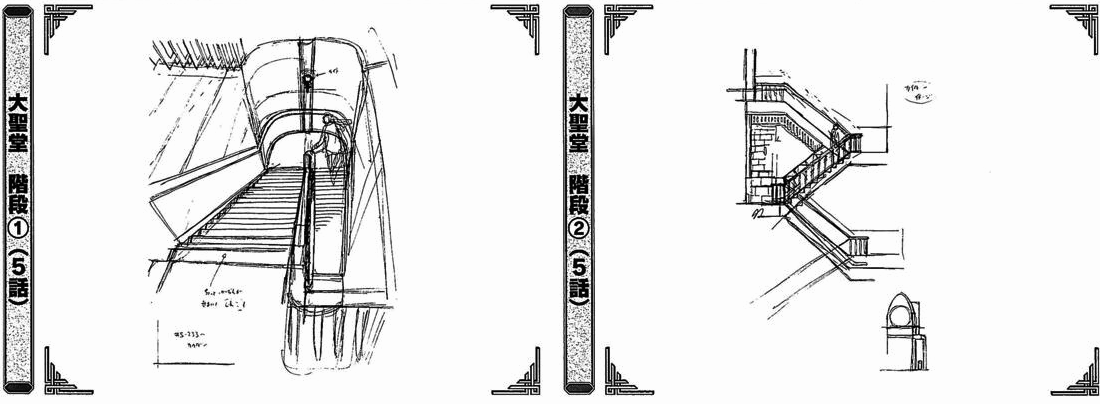
Alas, no, because, as interesting as they are (particularly the second sheet that lays out the action of the whole scene within the environment, the assault from the balcony, Spike running up the aisle and the final face-off in front of the rose) it’s not Chartres but…
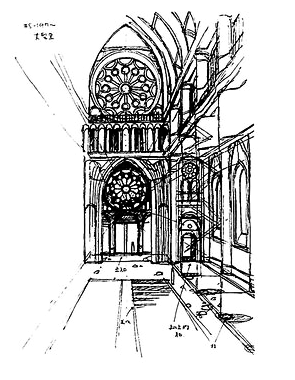
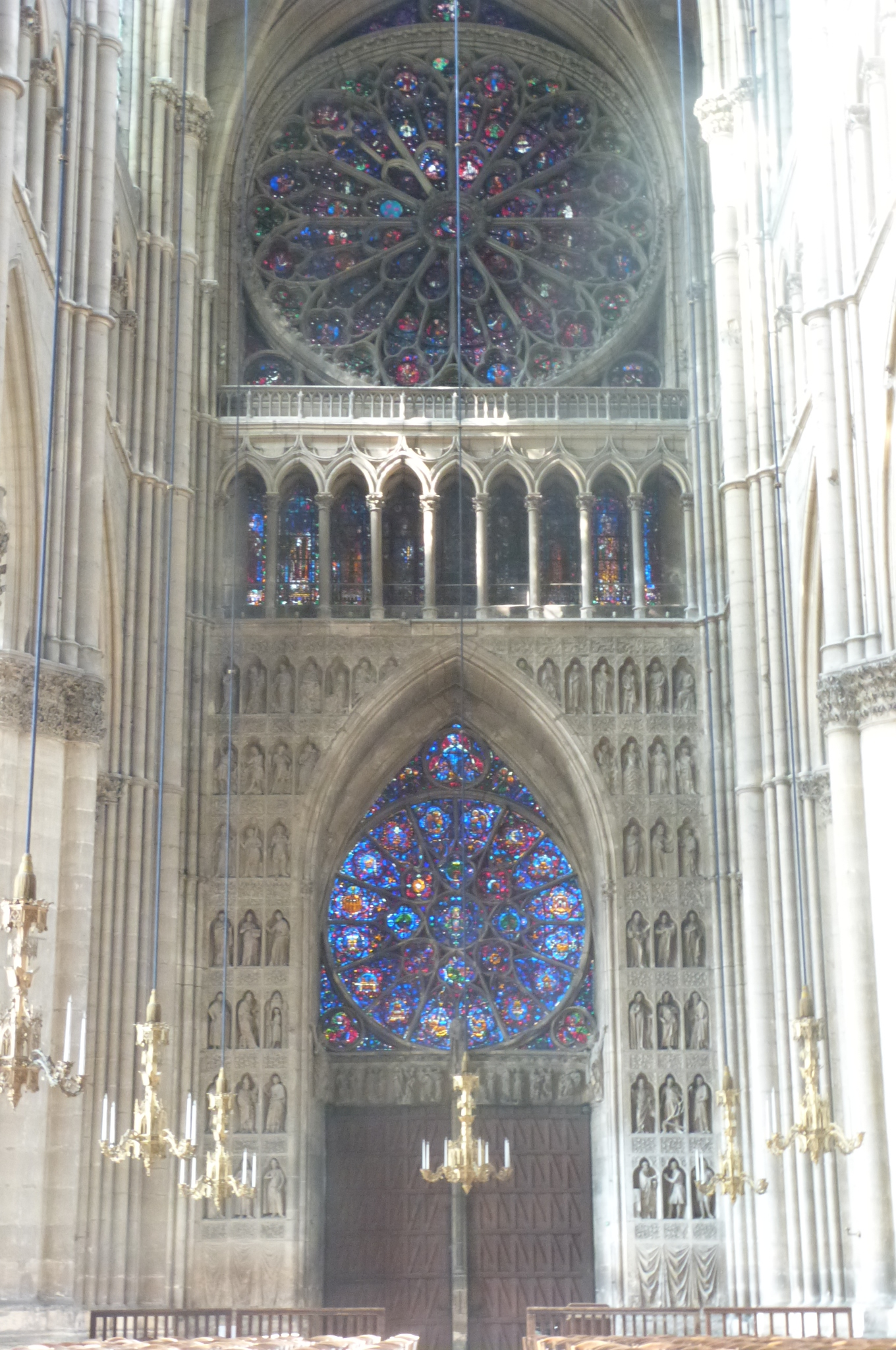
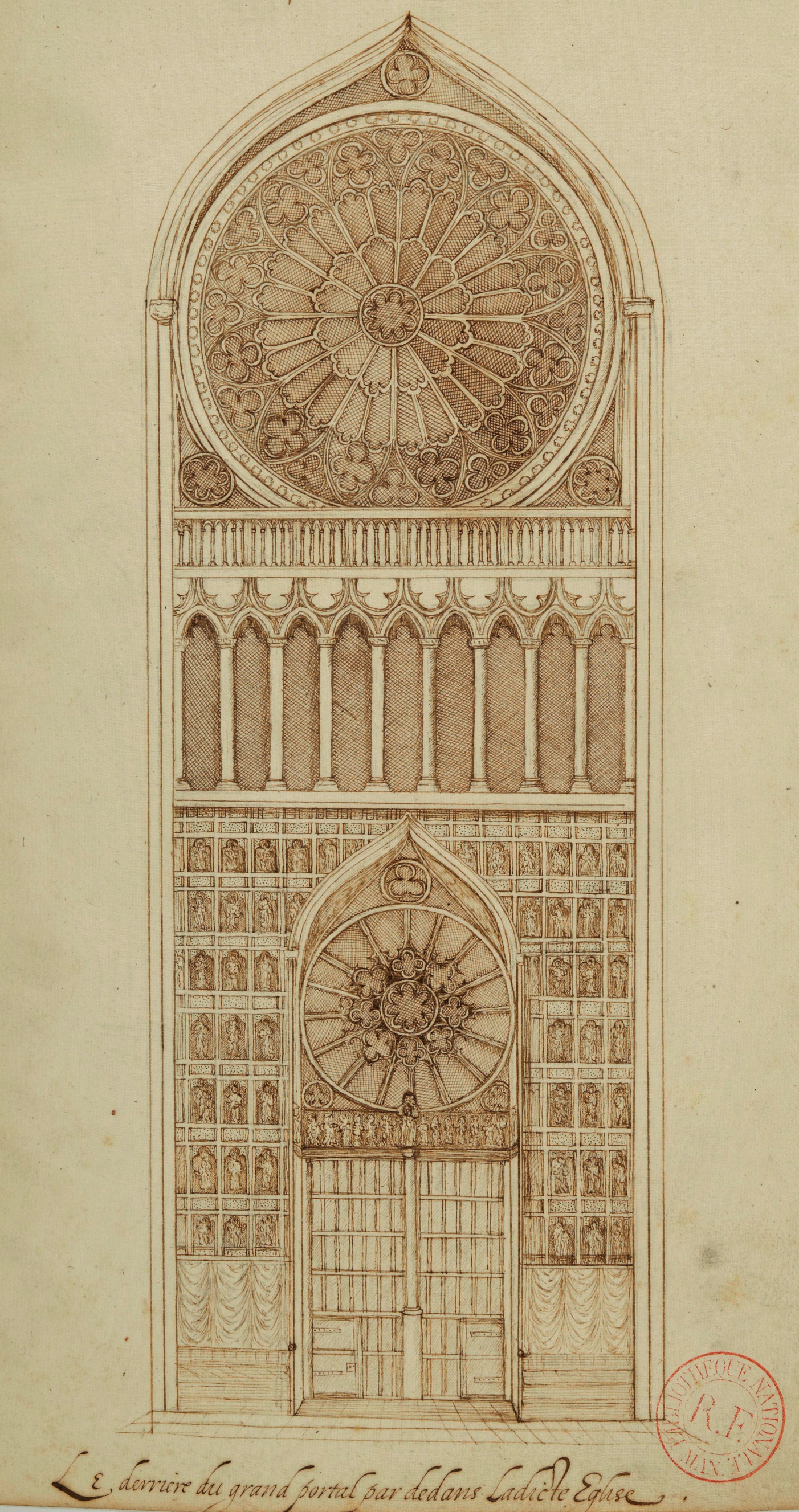
… glazed tympanum and triforium? That could only be Reims Cathedral! Although the design of the rose window is the Chartres south one: the 12 semi-circles aligned with an inner order of circles.14 So the decision to model the Martian cathedral so closely with Chartres does not seem to have been established from the outset, but arrived on during the production of the episode. Would love to see the full storyboards and layout (key animation/genga/原画)…
Addendum: the Netflix version’s rose window, and Paris
But hold on! We’re not done yet! I realised while making this, there was of course a Cowboy Bebop live-action adaption released on Netflix in November 2021, which I can’t bring myself to watch as it wasn’t well received by most accounts (also I’ve never had a Netflix password or watched anything on Netflix. so I don’t know how). And in its final episode of the run (probably ever, because it’s cancelled now), it does a version of the Vicious encounter in a big ol’ church, to the point of doing the rose-window fight as a shot-by-shot remake, so I suppose I need to look at it too. It is rather interesting in its sources, I promise.
I found enough footage and promotional images freely online of the scene to work it out. It’s quite interesting! But it’s not Chartrain…
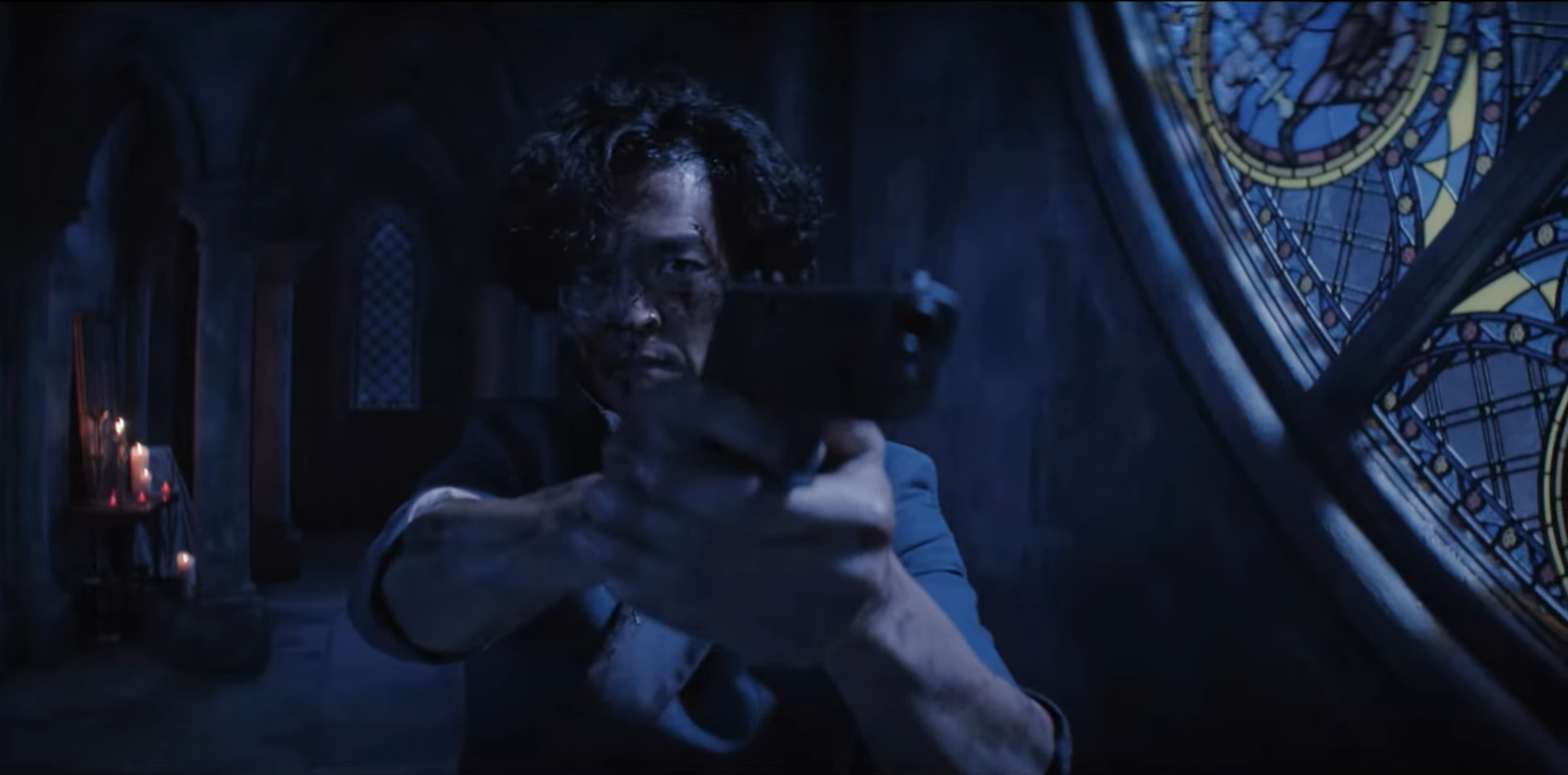
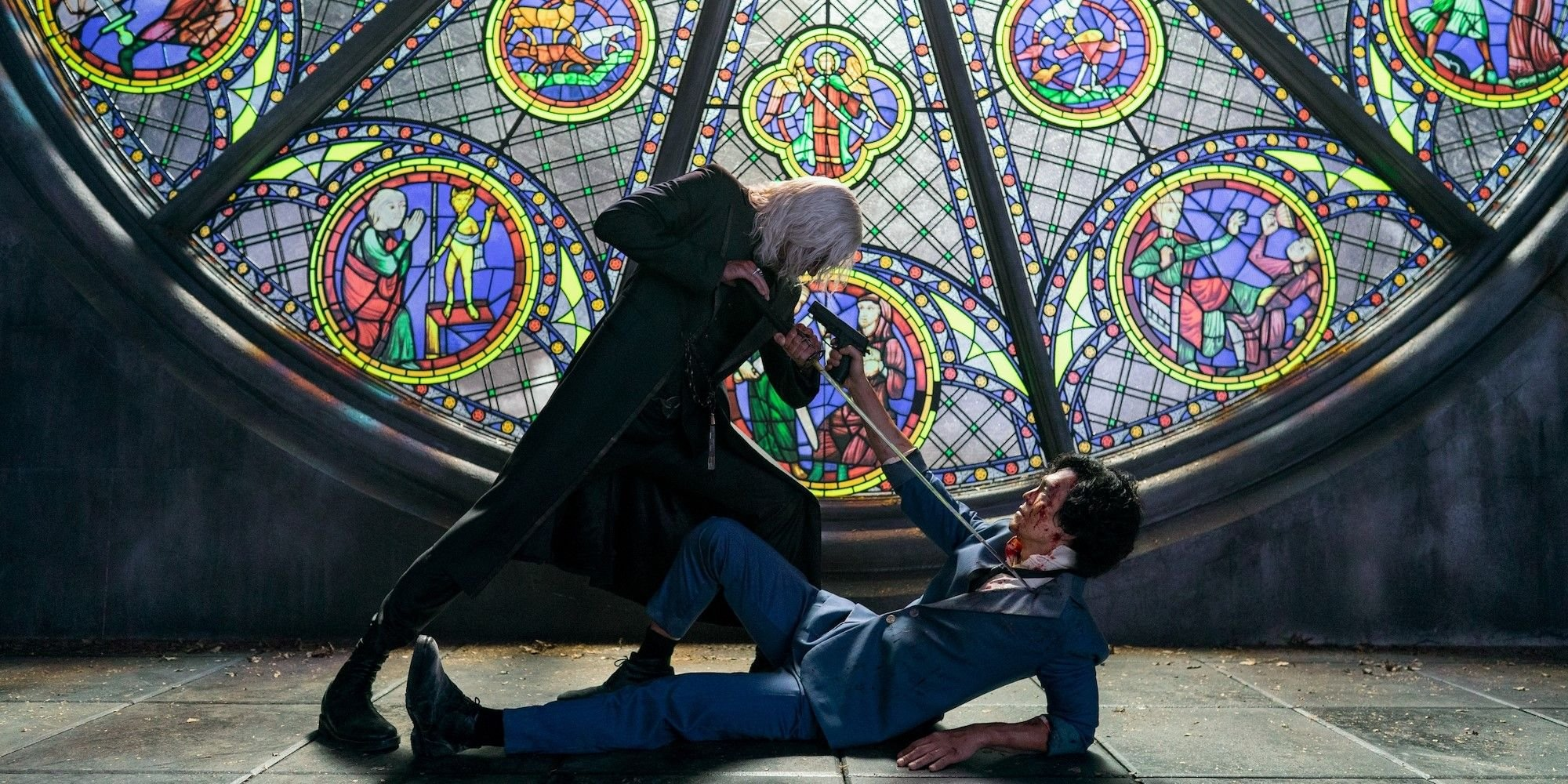
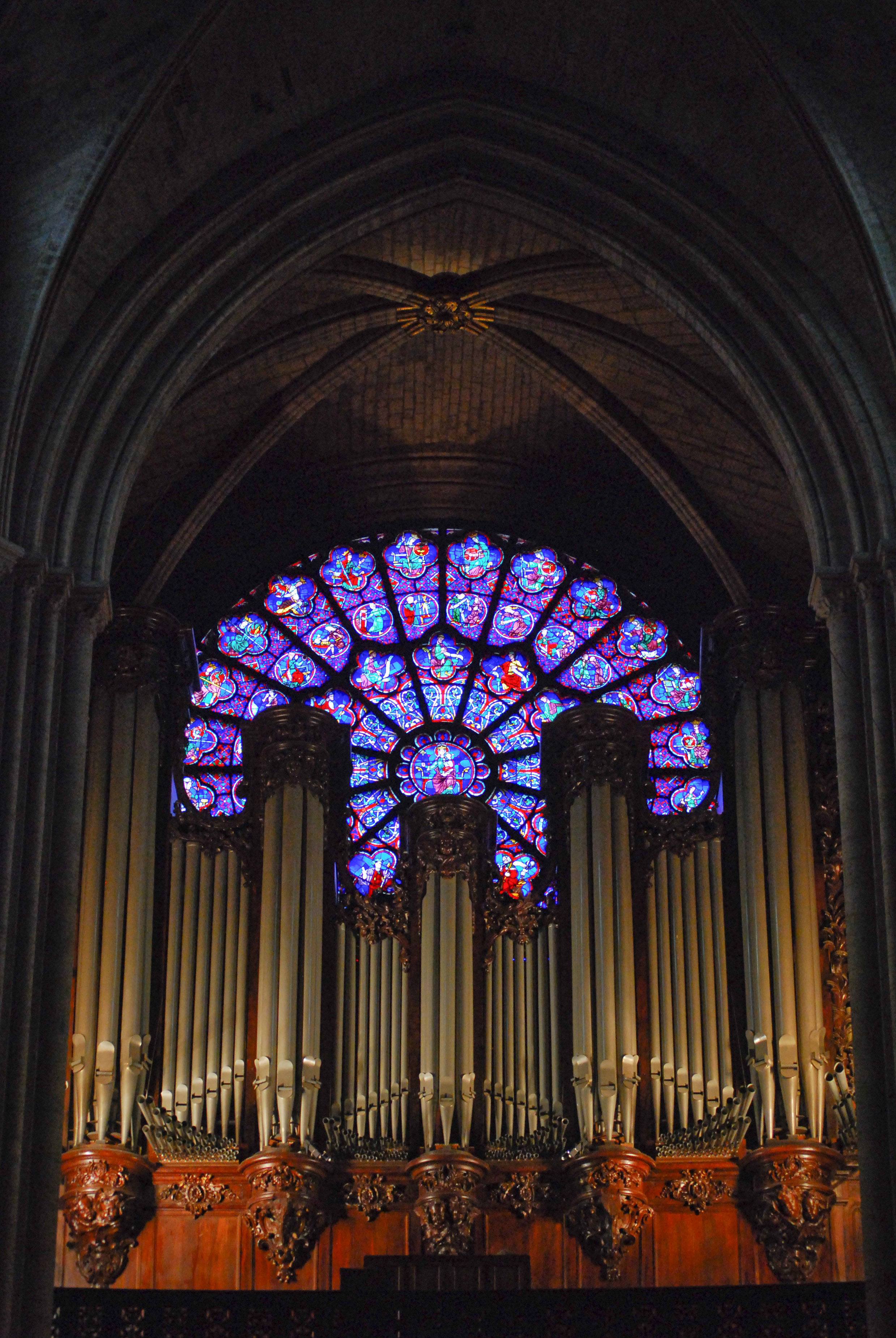
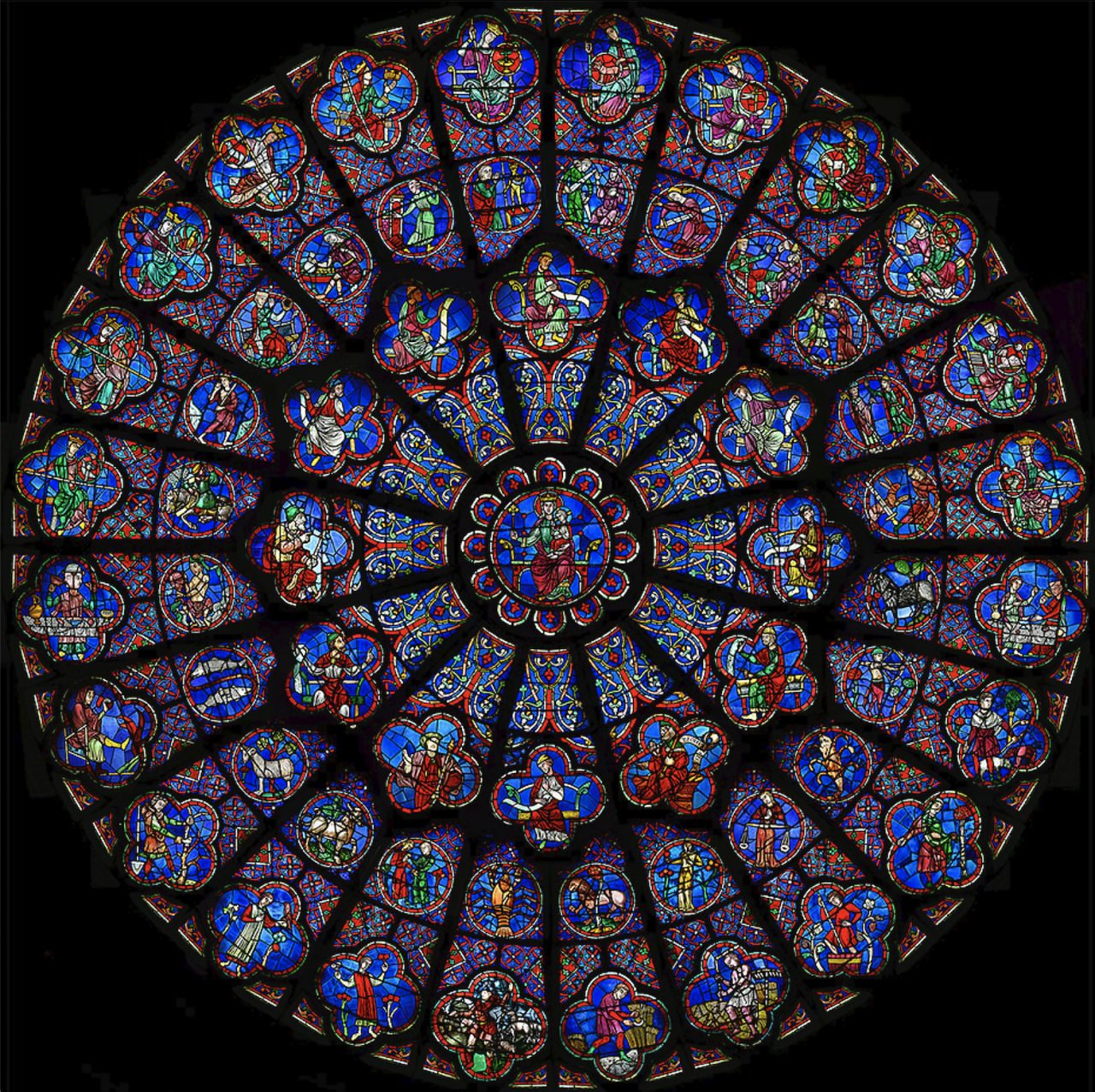
… it’s Parisian! The rose window in the probably entirely digital set (even the candles, etc probably aren’t real) is made largely with reference to roundels from the west rose of Paris Cathedral (Notre-Dame, the one that had its roof burnt off).
Paris is not a cathedral that retained much of its original stained glass. I have banged on before how much of it is heavy-handed and grim nineteenth century stuff I’d love to see taken out. However the programme of the west rose, including Virtues and vices, the zodiac and the labours of the months, with the Virgin and Child encircled by prophets at its centre is basically a design installed in the late 1220s, if massively restored.
Due to not much of it being Real medieval, the glazing of Paris Cathedral is one of those things that isn’t looked at in art history very often because there’s easier things to think about. The west window even more so, because the bloody organ is, until very recently, always in the bloody way.
From Wikicommons
So I made this below graphic identifying everything in the window before we look at which bits were used in the Netflix Bebop.15 The attacking Virtues, in the literary tradition of the Psychomachia adopted in the visual arts, have attributes, mostly emblazoned on their shields, that identify them as the contrary states to the Vices in the roundels below. The panels circled in YELLOW (all in the lower half of the window, so presumably related to complications with the earliest organ) are stylistically distinct replacements in a Renaissance pictorial style, probably sixteenth century. The panels highlighted in WHITE are largely original early thirteenth-century glass, while everything else is on a sliding scale from quite-restored to entirely made in the nineteenth century. While views of the window has been generally blocked by the organ, some high-quality photos have been made of it during the instrument’s removal for cleaning and restoration after the 2019 fire.
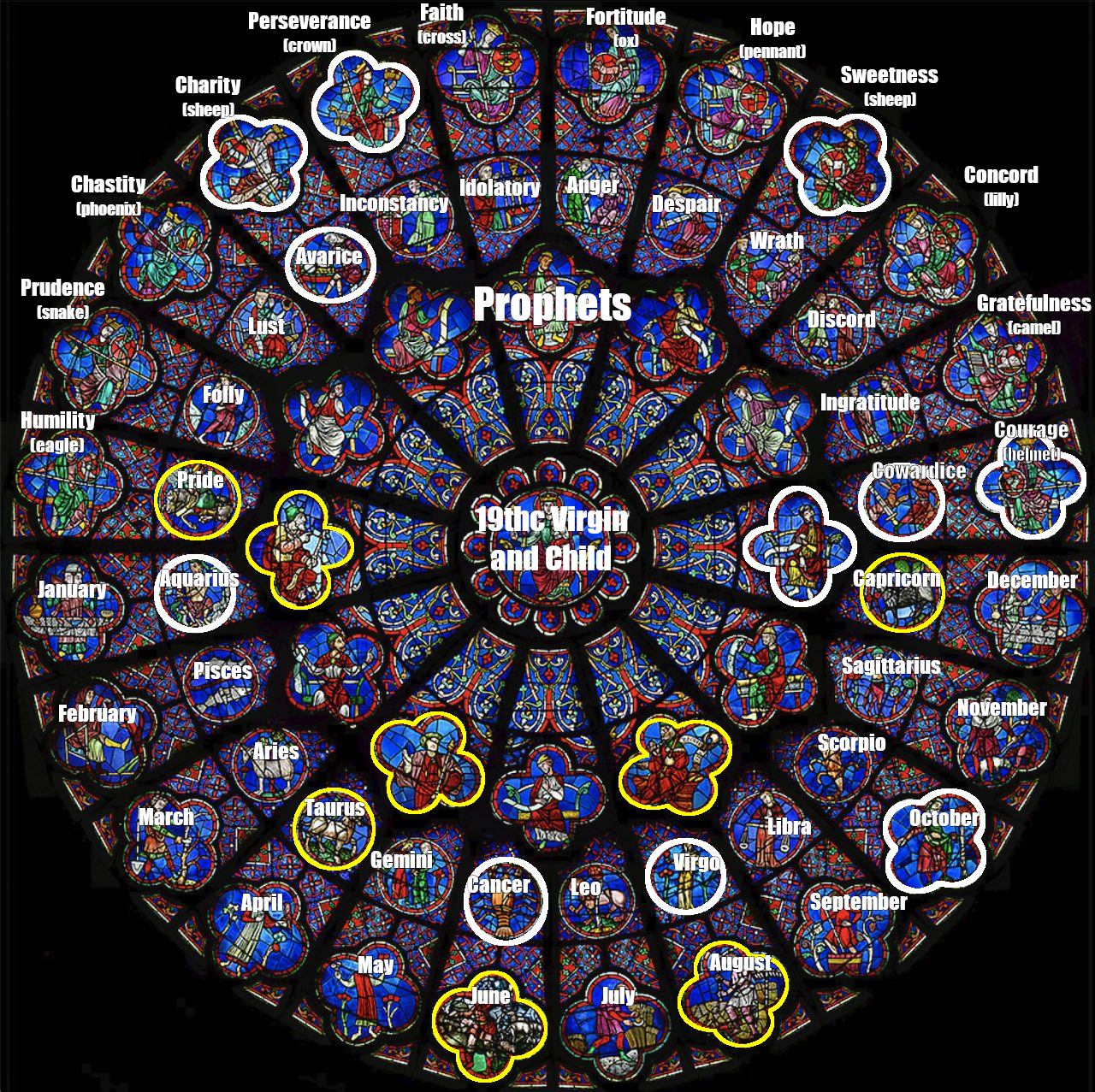
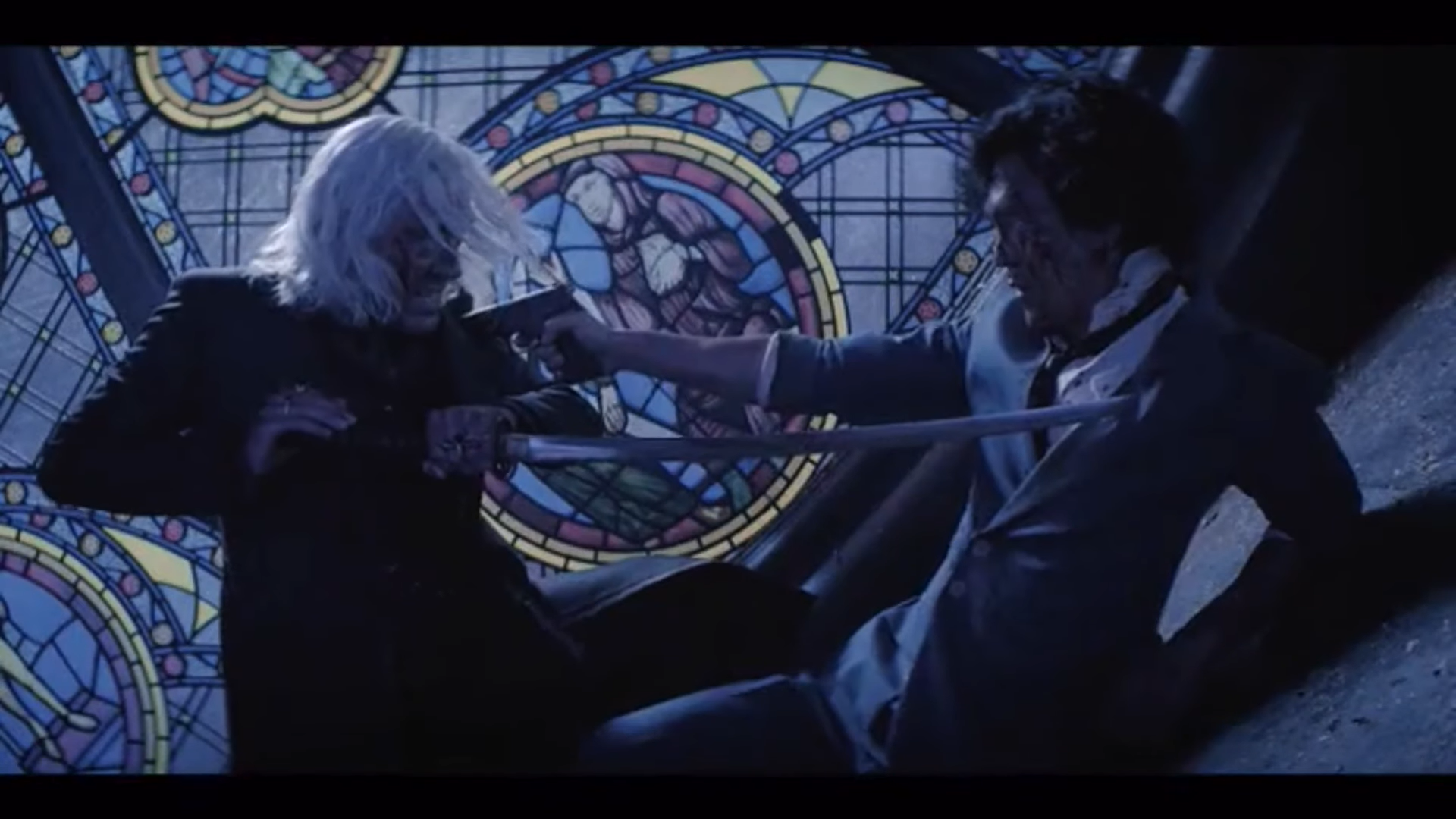
The Netflix Bebop rose takes the central Virgin and Child (which has literally no medieval glass in it at all, it’s entirely modern, but it’s surely the subject that was there I can’t see what else 12 prophets would surround otherwise), and fills the perimeter with the vices from the upper half of the third register. Directly behind Spike and Vicious at the base of the window is the vice of Anger with Idolatry to the left and Wrath to the right. So perhaps there is a bit of thought of putting the violent vices around the violent confrontation of sinners, or perhaps they just picked the one where it’s an image person holding up a sword.
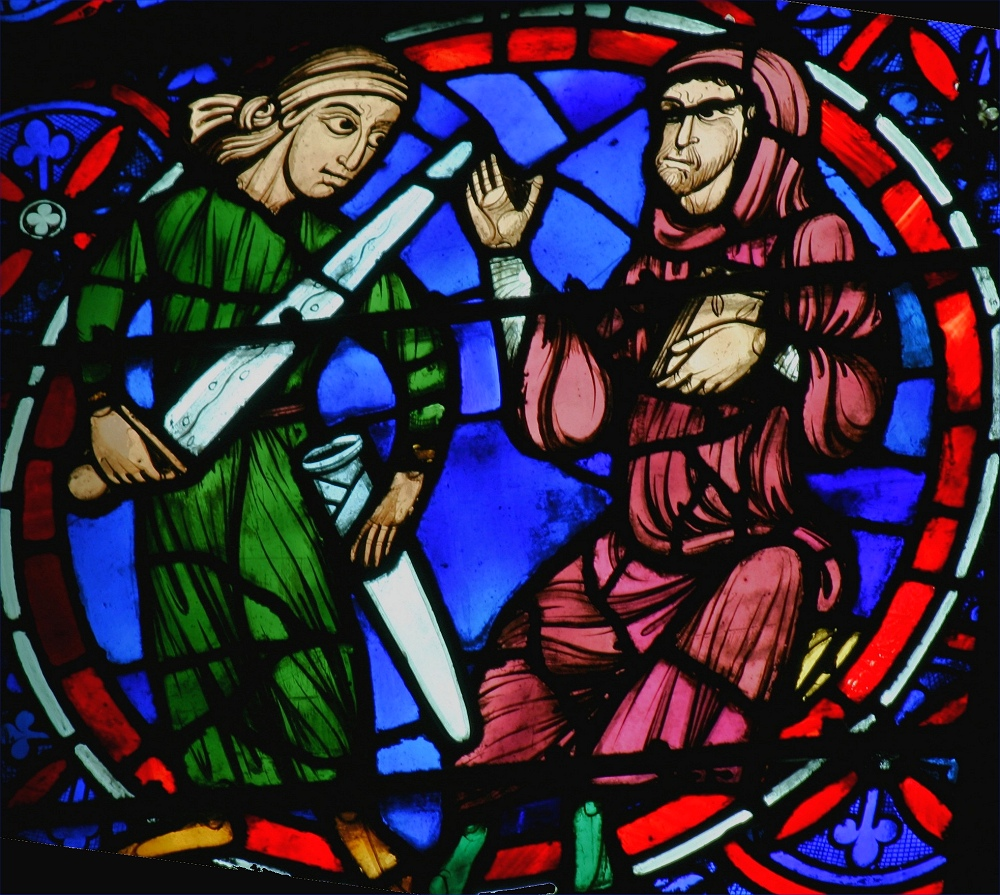
While some of the stained-glass roundels in Paris’ west window are massively restored to the point being entirely made-up in the nineteenth century, the particular cycle of Virtues and Vices in the window owes a lot to the 12 pairs on the plinth of the central portal of the Cathedral west front, also c.1220s. Here are Fortitude/Anger, Sweetness/Wrath and Concord/Discord.
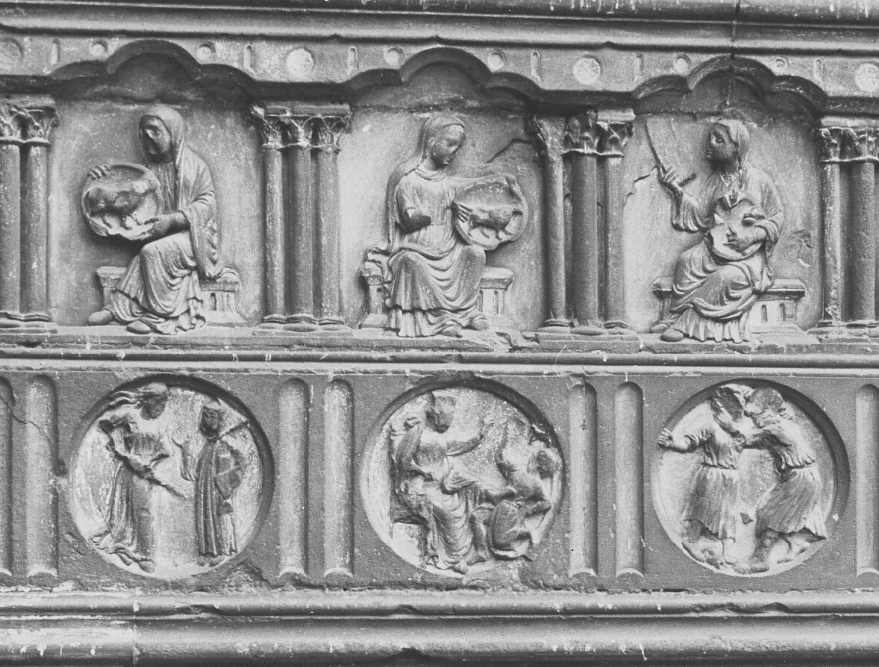
Conway Library, Photographer James Austin
Anyway, if we look at the “money shot” in the Netflix Bebop we can see they didn’t do a very good job populating the window with a scheme. In fact, they got rather lazy….
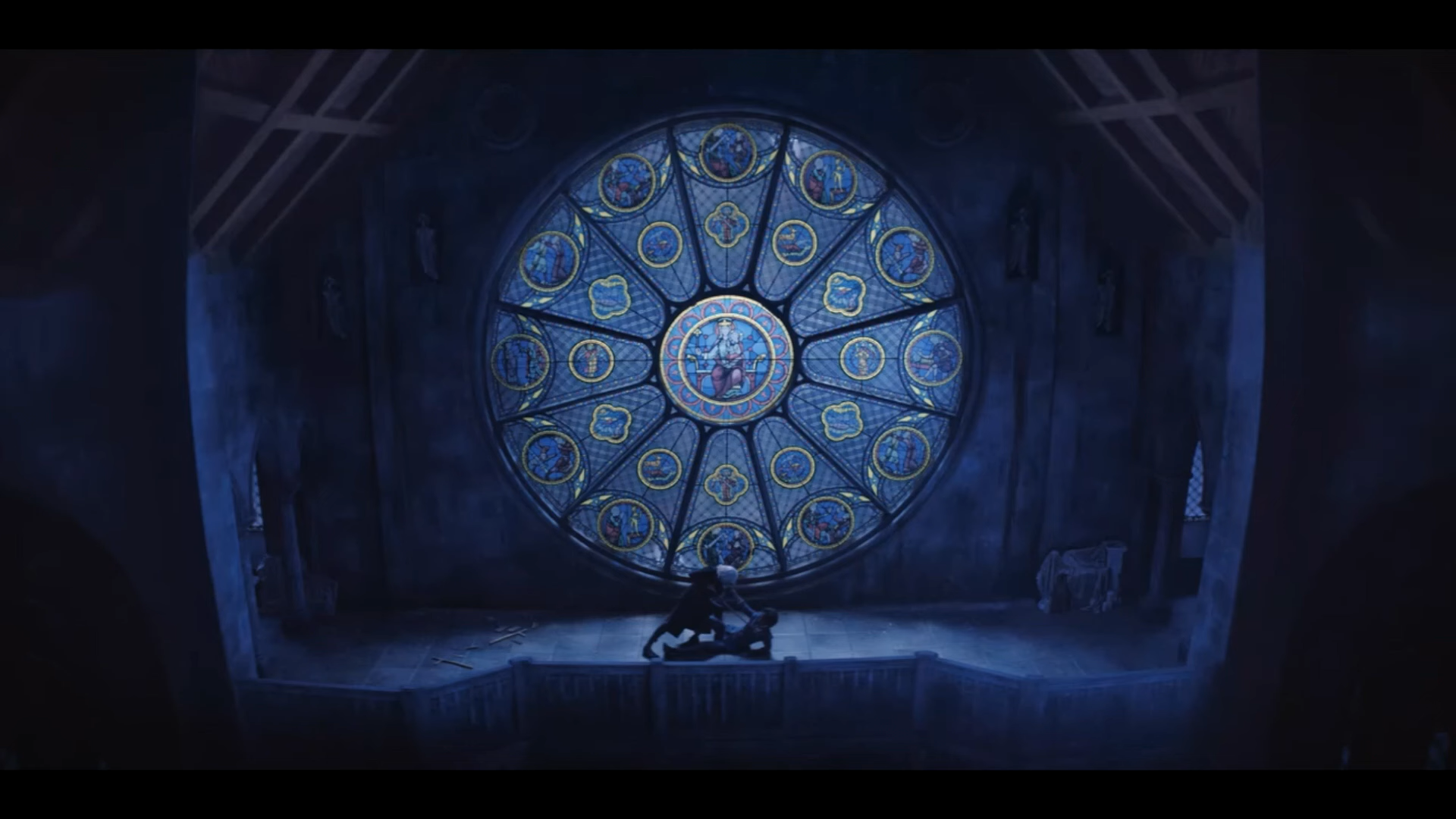
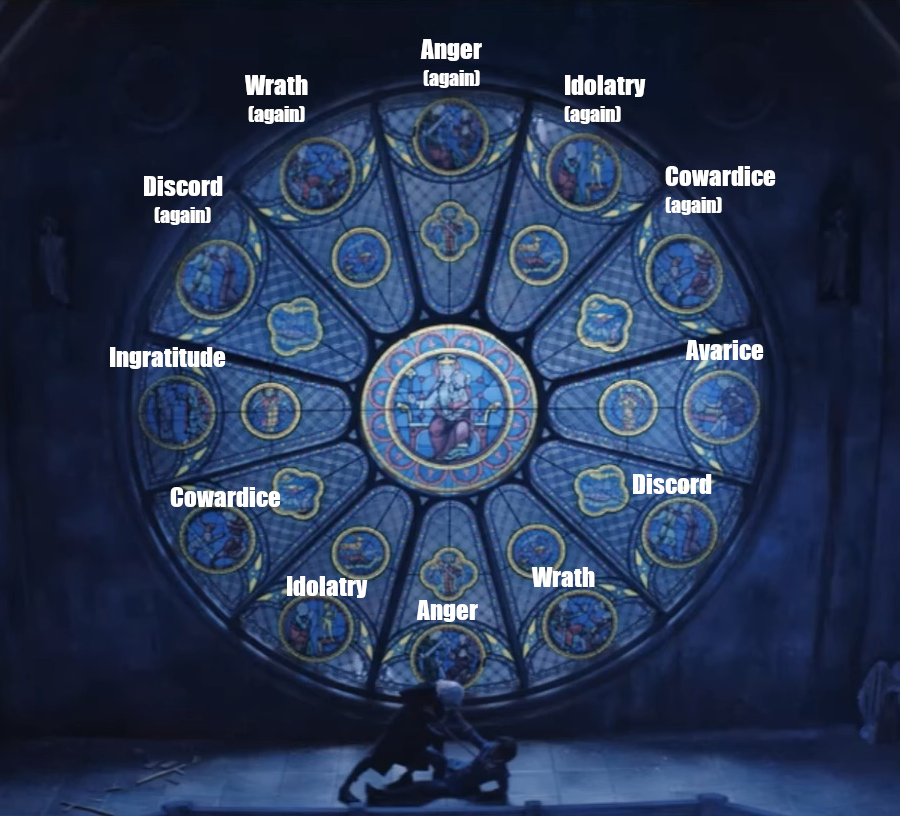
…. because the upper five roundels just repeat vices from the bottom half, which is terribly disappointing. Says a lot really. It also really looks like one of those sticky bits of plastic you can buy in cathedral gift shops. Very much like the superficial cosplay that the Netflix series goes in for (although the lead casting looks great, from the general look of the series I won’t be rushing to watch it soon. Gonna watch Super Dimension Fortress Macross instead I think).
SEE YOU SPACE WINDOW …
- The broadcast history of Cowboy Bebop is quite interesting, as only half of the 26 episodes aired on TV Tokyo, a network channel, April-June 1998 in a slot on Fridays at 18:00, essentially for reasons related to violent content (just before the onset of adult-orientated anime being largely stuck in late-night broadcast slots on Japanese network TV, although Neon Genesis Evangelion’s October 1995 to March 1996 18:30 TV Tokyo slot was a precedent). The show aired in full on the satellite network WOWOW October 1998-April 1999 at 1 AM Saturday (25:00 Friday in Japanese broadcast terminology).
It premiered on the new “Adult Swim” block on American cable channel Cartoon Network (which was kind of a big thing at the time, I remember it, even if I couldn’t see it) with a double bill of the first two episodes from 3 September 2001 at midnight (Sunday/Monday) although the run was heavily disrupted in the wake of the 11 September attacks, again for content issues. It first aired in the UK on the short-lived CNX channel which launched 14 October 2002. They aired episodes every night at 9pm and thus ploughed through the entire series in less than a month then repeated it ad infinitum until the channel tanked and was fully rebranded into Toonami a year later, showing exclusively kids’ action-orientated cartoons. ↩︎ - Chartres’ north tower was built beginning c.1134/8, originally with a timber spire, as an addition to the early eleventh-century building which has now been entirely replaced except for its east end crypt which is buried under the current cathedral and not generally accessible to the public. I didn’t get down there anyway. ↩︎
- The transepts porches almost certainly were always planned. Check out John James, The Contractors of Chartres, 2nd ed. (Mandorla: Wyong, New South Wales, 1981), pp.33-52, but be prepared not understand. Don’t say I didn’t warn you. ↩︎
- The set designer for Cowboy Bebop was Isamu Imakake who presumably had a big hand in the appearance of the showdown church, although it’s far from the most complicated set in the series. The backgrounds were outsourced by Sunrise Inc. to Studio Easter, founded by the series’ art director Junichi Higashi (this had been the arrangement for Sunrise’s Gundam series too). The credited staff for Bebop’s backgrounds are Yoshio Kajiwara, Nobuaki Ishihara, Akira Itomitsu, Toshiyuki Tokuda, Kenya Shimizu, Sadako Minamisawa, Kaori Fujii, Tomoko Takahashi, Shizukο Νakata and Aya Shimizu. Episode 5 was storyboarded by series director Shinichirō Watanabe (who also storyboarded episodes 1, 2, 9, 17 and 25-26) with episode direction by Tetsuya Watanabe. ↩︎
- This episode was made in 1997 well before transmission, but the series production continued after the end of the initial run on network TV in June 1998 into early 1999, going by the dates on production sketches in the art book cited in note 13. ↩︎
- Bay 119 in the Corpus Vitrearum numbering, with the adjacent window to the right/south bay 117. Frankl, cited below, uses a different numbering system. ↩︎
- In addition, the titulus “Thomas” appears twice in these adjacent lights showing the Apostles, they really didn’t seem to care much by this point finishing Chartres’ glazing off. On the glazing of this clerestory and its notably spotty quality compared to the main run of medieval glazing in the Cathedral see Paul Frankl, “The Chronology of the Stained Glass in Chartres Cathedral” Art Bulletin 45:4 (1963), p.320. https://doi.org/10.2307/3048112. ↩︎
- I have never understood these two pilasters, except that they serve to hold the dividing shafts between the windows. They could not serve as responds to the colonnades of the previous early-eleventh-century basilica built under Bishop Fulbert: its arcades were set the same width apart as the current ones. They’re weird as well but so is nearly all of Chartres if you go there and actually look at the building. ↩︎
- Recently found out that this term, イギリス, is how the Japanese generally refer to the United Kingdom. They have no concept of Britishness. Which, fair enough, is very funny. ↩︎
- Yeah John Milton, Paradise Lost, book 4, 196, I know ↩︎
- At least the sorts of fancy buildings we think of as cathedrals, rather than the reality of what a lot of medieval churches with a bishop’s seat look like. I made this! Also some exceptions in the fancy department are Bourges which doesn’t have transepts and Beauvais where they never managed to build a nave. ↩︎
- Yes I measured this, that’s how far the bottom sill of the Chartres west rose window is from the base of the west portals. No, you couldn’t survive that fall without slowing your descent and lessening your impact, both of which are difficult if you are busy having a flashback to your troubled past. Jet caught him on a crash mat on the deck of the Bebop okay? ↩︎
- Sunrise Co. Ltd. Sunrise Art Works: Cowboy Bebop TV Series (Tokyo: Sandano Yu, 2012), p.136. The location is identified in the sketches as “聖堂”, kanji generally used for cathedrals in Japanese, e.g.: for Chartres, シャルトル大聖堂, “sharutorudaiseidō”, but literally the two characters mean “holy” and “temple/hall” and used fairly indiscriminately for sacred buildings of world religions rather than meaning a Christian church building with the seat of a bishop. ↩︎
- The only Remois element which endures in the anime itself are the circles in the corner spandrels of the rose window, used in the background design and and retained in the painted backgrounds for the final showdown. At Reims’ rose they are glazed but here they are reduced to elements of the surrounding interior wall surface. I feel like such an incredible nerd typing this footnote, you cannot believe ↩︎
- This is the most important footnote, as it contains links to other websites that I wouldn’t have deciphered the Paris west rose without. Do click on them all to learn more about this wonderful window stuck behind an organ.
The website “therosewindow.com” has a full list of the subjects, as well as close-up images taken from the organ gallery. Presumably the identifications, although there are clearly some errors, are taken from the assessment of the window by Jean Lafond in Marcel Aubert et al., Les vitraux de Notre-Dame et de la Sainte-Chapelle de Paris, Corpus Vitrearum Medii Aevi, France, I (Paris: Caisse nationale des monuments historiques, 1959), which I couldn’t access online.
Definitely worth a read is Elizabeth Pastan, “It Ought to be Mary: Themes in the Western Rose Window of Notre-Dame of Paris”, Different Visions: New Perspectives on Medieval Art 8 (2022), https://doi.org/10.61302/FRYZ5161 which considers the imagery and whether there was necessarily a Marian image at the centre.
The 12 similar images on the plinth of the central west portal of the Cathedral are discussed in Antoine Pierre Marie Gilbert, Description historique de la basilique métropolitaine de Paris (Paris 1821), p.67, available on archive.org, here and I used them to try and iron out the differences between Wrath, Anger and Ingratitude which seem to get confused across descriptions.
This page on the website cathedrale.gothique.free.fr also has some brilliant pictures from the organ gallery and some interesting interpretations of the subjects which were very helpful.
This was probably more research than I ought to have done regarding a window in a live-action version of anime, that I haven’t actually watched. tbh. ↩︎
 Stained Glass Attitudes


Fascinating! Did not expect Cowboy Bebop to appear here – some fascinating detective work here!
There’s a fascinating church in the .hack series, which plays an important role in the general lore, especially the anime and games. I’ve wondered for a long time if it might be based on a real-life location, but I’ve had a hard time figuring it out.
While it is similar to the one seen in Cowboy Bebop, it’s different enough that I’m not totally comfortable declaring it to be based on Chartres Cathedral. Would love to see your opinion. Maybe this could be a series? Either way, thank you for this fascinating article.