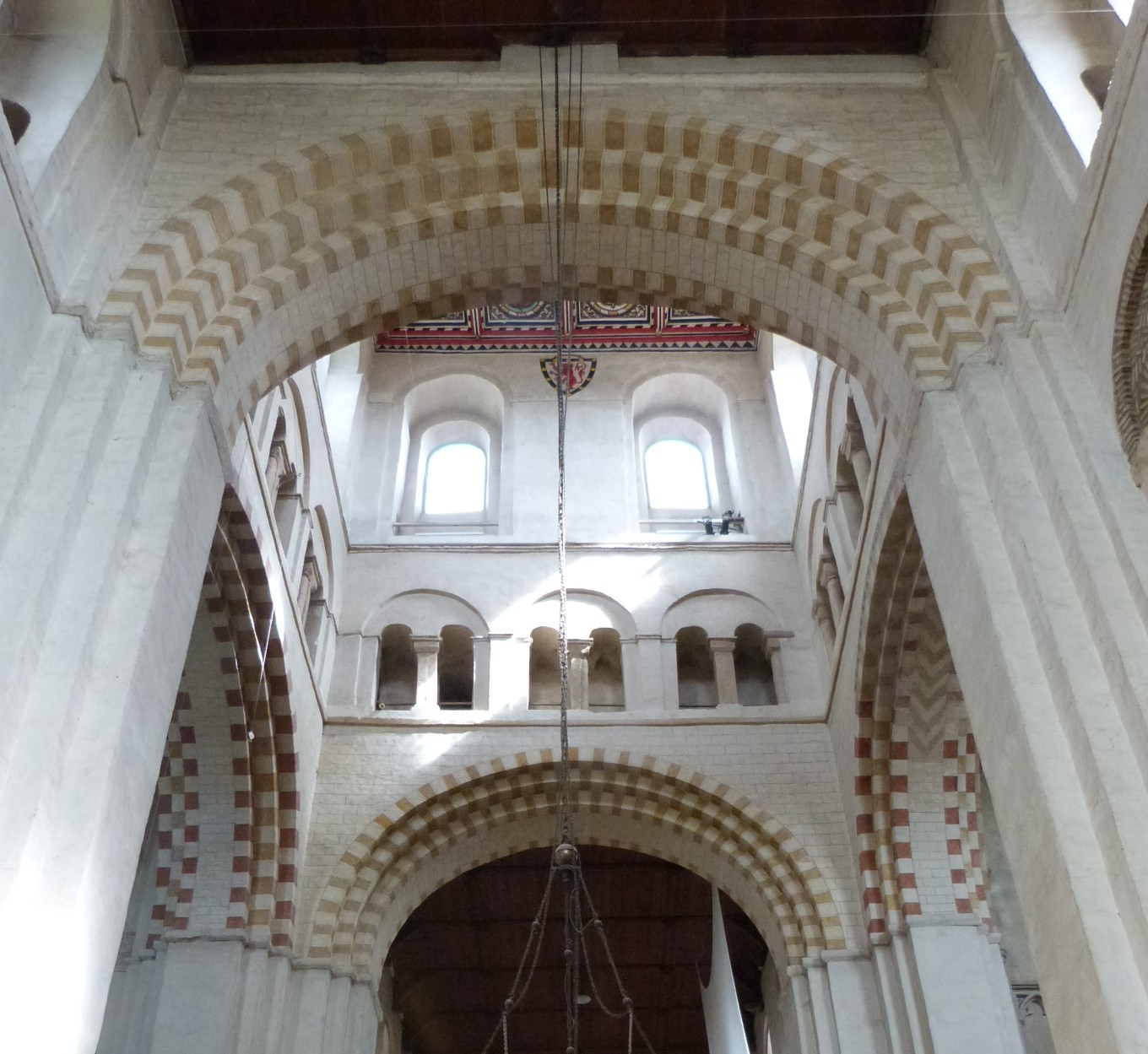
The Norman Conquest of 1066 brought more than just a new regime to England, it brought a new style: the Romanesque. The Normans proceeded to flatten every single one of the Anglo-Saxon cathedrals and rebuild them on a heroic scale. Their first churches went for scale above anything else. However, the crowning towers of these triumphal buildings had a nasty habit of falling down. Among many more, the bell tower of Old Sarum (Salisbury) blew down 5 days after the cathedral was consecrated in 1092, Ely famously tumbled down on to the Gothic choir in 1322, and Chichester lost its south-west tower in 1210, its north-west in 1635 and its central tower as late as 1861.
The Normans realised in the twelfth century that they were better off taking their time and the sculpture for their big thick walls became richer and richer. Many of the habits of ornament such as chevron or “zig-zag” are peculiar to England, and affected the whole course of English architecture. Of course, some of their ideas were better than others…
____________________________________________

Why do we put this zig-zag stuff on like every arch we carve, Master John?
Chevron? I’ll give you one guess
It’s pretty easy?
Ding ding
____________________________________________
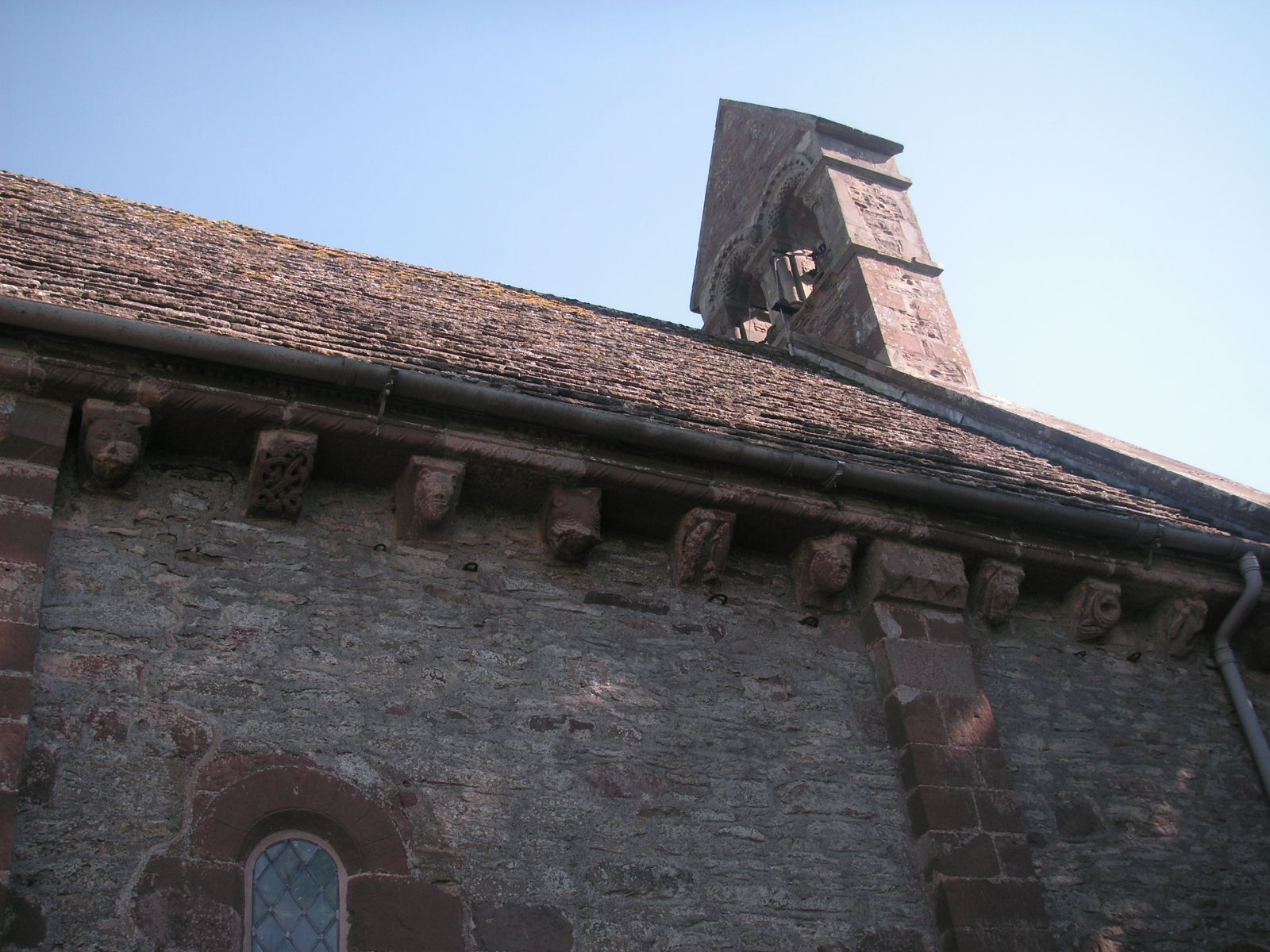
So did you guys finish that corbel table yet
Oh yes
Let’s have a look round then
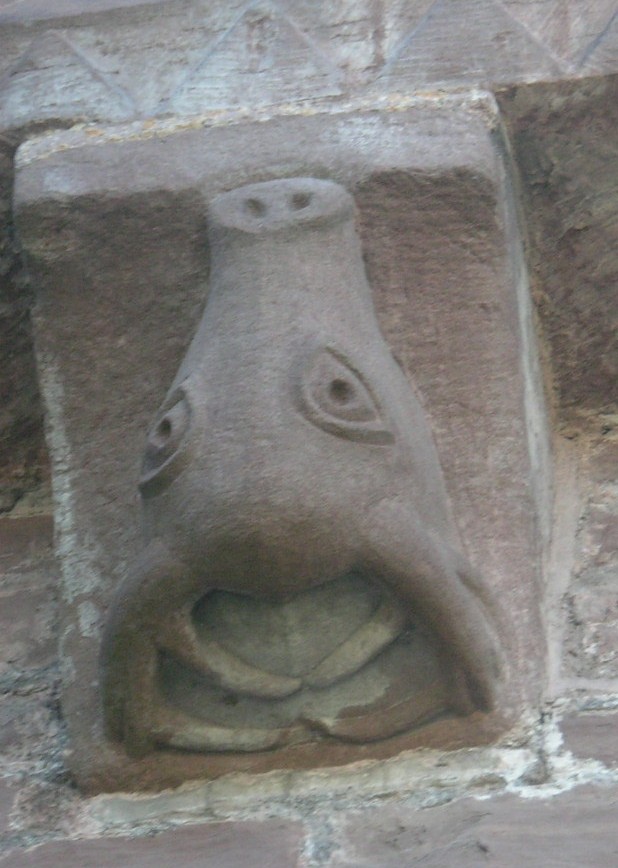 Sorry this one was my first go, my bad
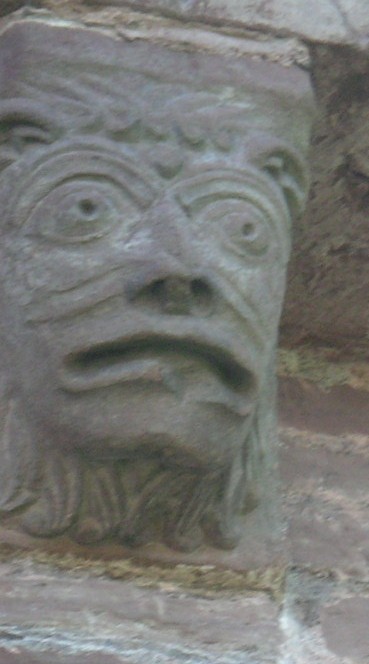
Well, that’s okay, I do like these wide-eyed monsters though
John did these, he’s good at them
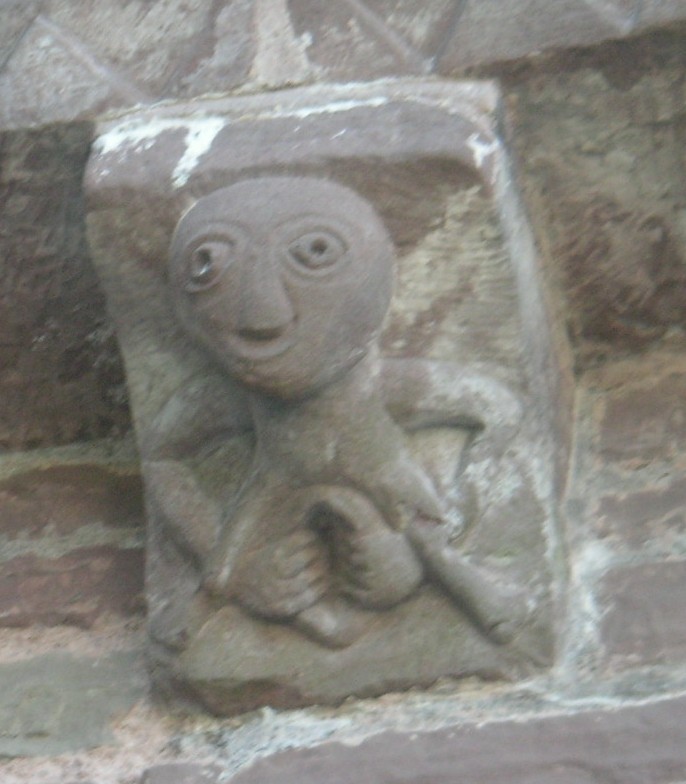 Ah, a sheela-na-gig, my favourite
Yes, we remembered you like them
Those dames eh
Hmm, yeah
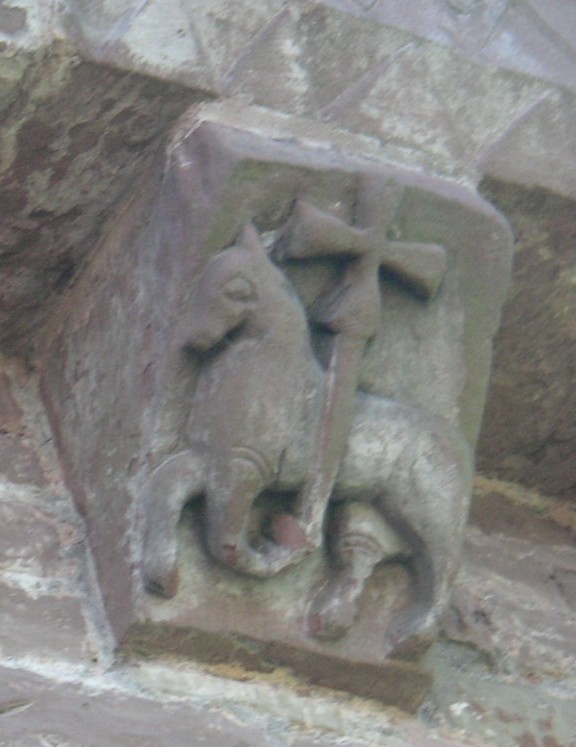 Is this that Lamb of God I asked for over the east window
Yes
It looks like a horse
John is not as good at animals
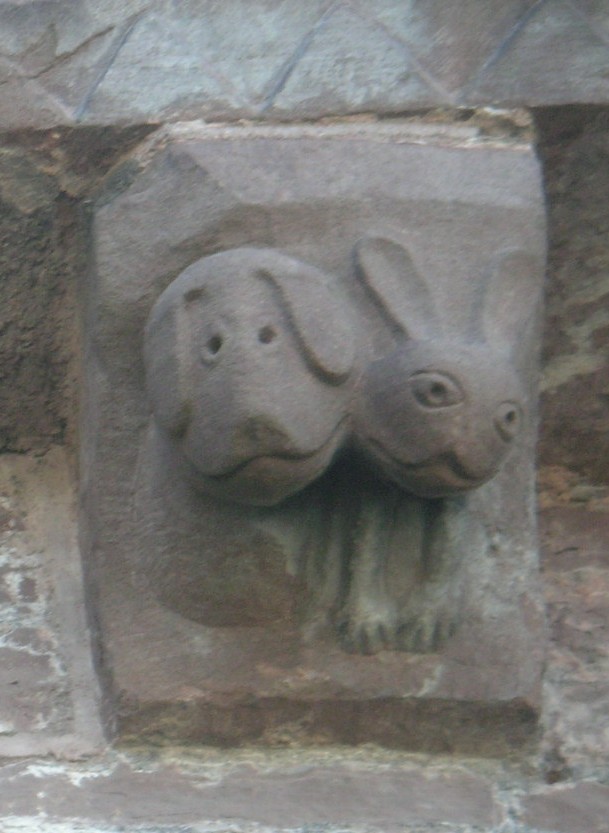 What is this
It is a puppy and a bunny
What are they doing on my new church
Being best friends
It’s not the sort of thing I expect out of you guys, frankly
Well I thought it just balanced out that bald demon lady pulling her vagina open
____________________________________________

Master John, why do we carve these funny little owl faces on every doorway we do these days
Beakheads?
Whatever they’re called
Guess
Are they some sort of reminder of the sin that besets all Christian souls in this dark fallen world of temptation
No try again
Is it because they are basically just zig-zag with eyes
Quite, now, get carving
____________________________________________
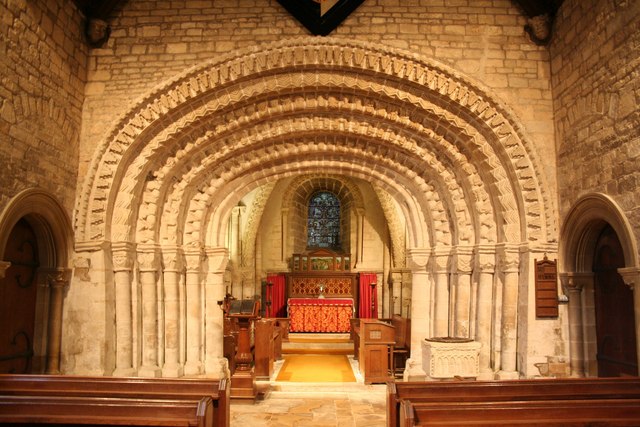
Photograph by Richard Croft – From geograph.org.uk.
So how many elaborately carved orders would you like in the arch at the end of the nave
Five
We usually do about three, just to give you an idea
Yes but I want five
You do realise that is going to be a really big arch
Yeah well I have big ideas and one of them is that this arch needs to be HUGE
Well if it ends up not quite round and slumping in the middle don’t think we’re coming back to fix it
Don’t forget the beakheads
____________________________________________
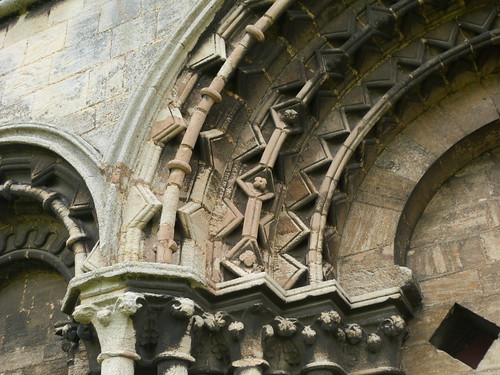
So how would you like your west portal
Well I imagine it will have all that zig-zag stuff round the arches like usual
Ah yes but regular common-garden chevron is totally yesterday’s news
What do you recommend then
We can give you on the central portal an order of angled chevron, with syncopated-hypenated lozenge work in the second order and then a third order with hypenated chevron with a ringed-shaft and then of course crocket capitals in the French style atop the engaged shaft-work
That sounds expensive
Do you want everyone to remember you still have an apse round the back
Ugh fine, room any beakheads though I love those little guys
What is this the 1130s
____________________________________________
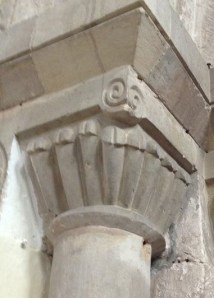
Did you finish carving the arch capitals yet this church is getting consecrated tomorrow
Dah-dah
Uhh
You see I improved on the scallop capital design by putting these little lines at the top, so they look like flowers ready to bloom
Umm
Do you think the priests will like them
Son let us go and never speak of this again
____________________________________________
If you enjoyed this Norman sculpture, then there is plenty more at the Corpus of Romanesque Sculpture of Britain and Ireland, where you can search to see what carving there is in your area. You can also volunteer to go around photographing this stuff so they can catalogue every surviving example in the British Isles to try and understand what was going on with this wonderful enigmatic artistic style.
The photographs are taken by me, except Tickencote which is by Richard Croft, Iffley which is by the appropriately-named Martin Beek, and the capital at Burton Agnes was shown to me by Evan McWilliams to much merriment.
 Stained Glass Attitudes
Oh, brother. You guys and your focus on your dangly bits. (Not so dangly ’round that one column, I’ll grant you.)
Enjoyed your humor again, of course, and also enjoyed the surprises for me in this post:
1. Stone arches built for sh#t? You’re kidding! I had no idea!
2. Goofy-looking cartoonish-buffoonish dog and cat gargoyles? I feel…disappointed. Almost offended, for some reason I don’t understand–something to do with my sense of aesthetics, I think. Gargoyles are grotesque, but also attractive. That cat and dog are not, to me.
I recently made a quite snotty and now exposed as also quite-ignorant comment on someone’s post about a stone-carver’s convention. I haughtily criticized the low quality of the workmanship displayed (inadvertently asymmetrical, for example), and I remember mentioning specifically how ridiculously buffoonish the facial features of most figures were–implying they’d never cut the olde mustyrd back in the day. I wuz rong.
3. WTFrig kinda female figure is THAT? Were the they who did those allowed to do them? Gee. I didn’t know that. I know the poetry was pretty open about sex, but that figure’s type of openness really surprised me, on a Christian church. How many figures exposing labia ARE there on Christian churches around Europe? Is this a fluke?
Excellent, I think you would get on with me and my sister, avid fans of Norman arches, beak heads, animals etc (also bloggers!) We also amuse each other with thinking how the carvers might have talked about their work.
Thanks for bringing a potentially dry topic to life. Your dialogues between mason/builder and ‘client’ are wonderful. Thanks. PS: I’d forgotten about the ahem sculpture at Kilpeck. We’ll have to revisit when on hols near there next month.