Northumberland, owing to its rather precarious position in the Middle Ages surrounded on two sides by Scotland, is a county more known for its castles than its parish churches. What churches there are tend towards being small, or almost entirely rebuilt after the Middle Ages. Around the river Wansbeck however, just north of the row of partly pre-Conquest survivals along Hadrian’s Wall, there are a number of largely 13thc churches of remarkable size for their date, and the 14thc chancel of Morpeth, which would be remarkable for any part of the country.
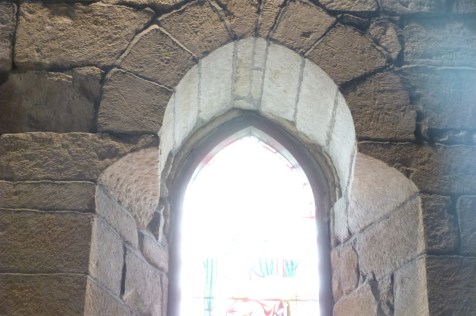 Be on the lookout for the distinctive North Country device of trefoil rerearches! They’re a peculiar device where the interior jambs of a lancet window splay out further than the pointed head. Presumably they let more light in.
Close to Hexham and Newcastle, all very rural except for Morpeth, which has a proper centre.
Bothal, St Andrew
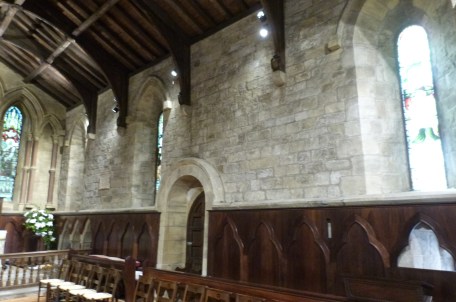
Start as you mean to go on: Bothal is typical for the area for having a long, mature Early English chancel, of the first part of the 13thc, although the E wall is entirely Victorian (which usually means a Perp window was smashed into it). The c.1512 (when they both died) Ogle monument is a rather splendid double alabaster tomb for a local lord and his lady.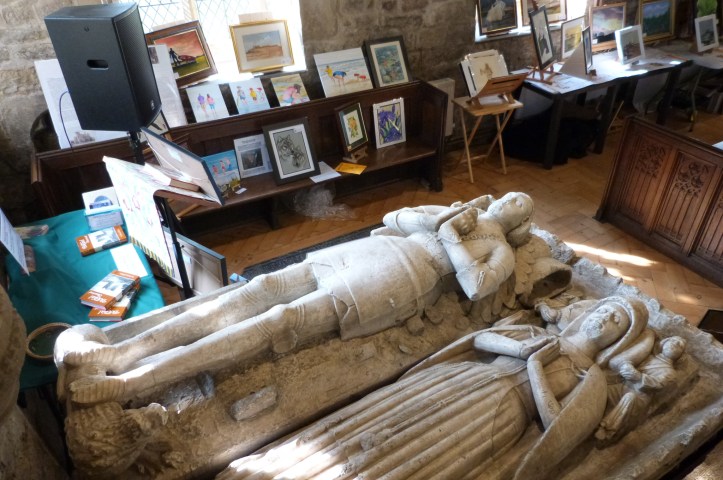
Morpeth, St Mary the Virgin
First things first: this is some distance S of the market town and over the river (past a 13thc Bridge Chantry!). When I went it was having an open day. One hopes it is open regularly, as it’s one of the best churches in the county.
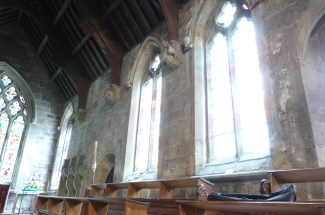 What’s unusual about this church is that it has a fully-kitted out 14thc chancel: perhaps the most northernmost in England. Its sedilia are exceptional by any counties’ standards: the arches are a “nodding ogee”, meaning they are a sinuous S-shape in profile and elevation. The carving’s a little clunky, but there are details of angels and other suchlike intriguing little things. The head stops of the windows are good 14thc sculpture characterful faces (the angel corbels holding up the roof are, of course, Victorian). The singularity (perhaps some comparisons can be made with Yorkshire) of this chancel makes it hard to date precisely. Second quarter of the 14thc is about as far as I can go.
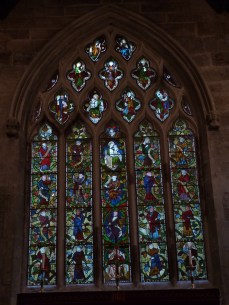
The big surprise here is that the E window has its original window, a Tree of Jesse. The Jesse was essentially a pictorial imagining of the genealogy of Christ from King David that opens the Gospels of Matthew and Luke. Although, surprisingly, the family tree ended up on Joseph, the Virga Jesse, partly because of the pun with Virgin, ended up more about Mary than anything else, and hence why it’s the E window for this church dedicated to her.
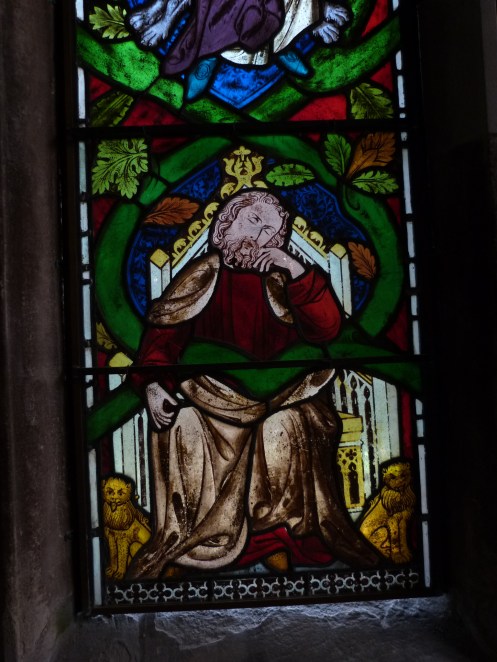
The window is very restored (read, lots and lots of pieces replaced anew) by ubiquitous Early-Victorian ecclesiastical stained glass William Wailes of Newcastle, and has a bit of his “bubble-gum” tendancy, but it’s still very impressive. Jesse is usually dreaming at the bottom in a recumbent position, but here, he’s nodded off in a 3D-throne, with the “tree” creeping out of his pants.
Mitford, St Mary Magdalene
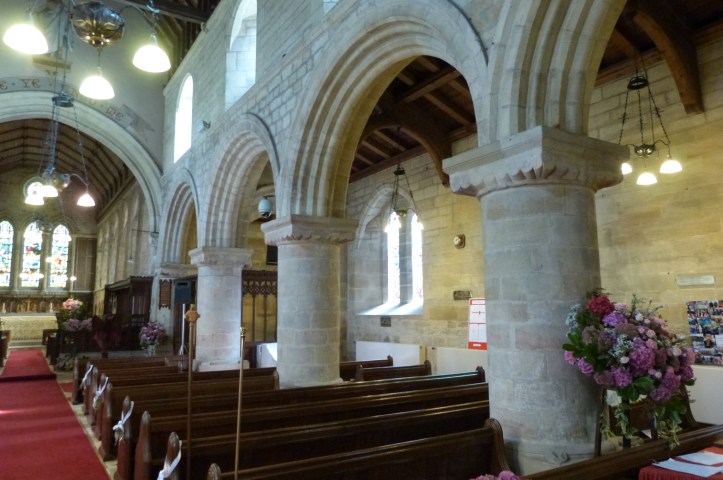
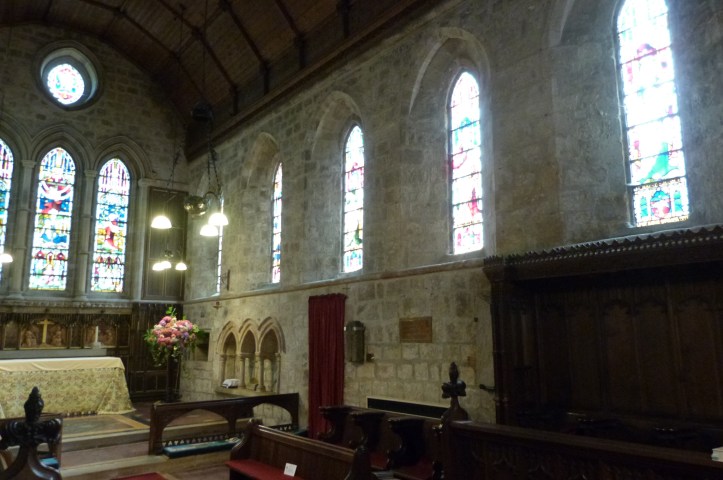
Memorable for its powerful Romanesque S arcade of many-scalloped capitals and surprisingly complex arch mouldings, excavated from the wall in the 19thc, when the S aisle was reinstated.
The typical long 13thc chancel of the area, but unlike Bothal it has a partly original east wall, with shafting inside the lancets. Not sure if I trust the vescia at the top though.
Hartburn, St Andrew
Let’s get this out of the way: the village DOES have a funny name. But you’ll feel silly when you realise it just means stag (hart as in “White Hart”) and stream (as in many northern placenames, e.g. Bannockburn, Blackburn).
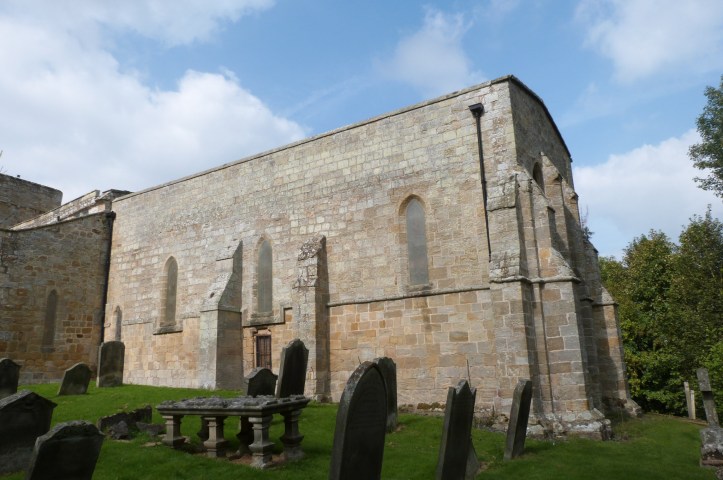
There’s something a bit more bashed-about feeling with this church. Certainly a good part of the chancel north wall fell down, and it was rebuilt with no windows. The E wall has the common northern device of putting buttresses in between the lancets (Bamburgh, Ovingham), and there’s a degree of sophistication the way the stringcourse wraps round the original buttresses, and drops down out of the way of the lower W lancets.
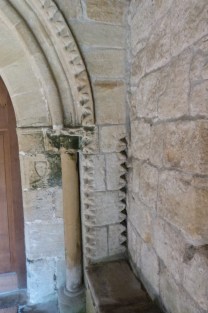 The S door is a bit odd too. Not only does it have dogtooth ornament all the way round it down to the ground, it has on the edge of the jamb stones facing AWAY from the door. One wonders if it was reappropriated from another use. Or, as Pevsner thinks, a mason got a bit overenthusiastic.
Less mucked-about with than other places, Hartburn has its E lancets again enhanced by fancy engaged shafting (obscured slightly by the 19thc reredos), sedilia and piscina with nice roll-mouldings, original 13th aisle walls (with trefoil rerearches!) and strange capital with little “blobs” on them rather than proper foliage carving. Overall, a satisfying gloomth.
Bolam, St Andrew
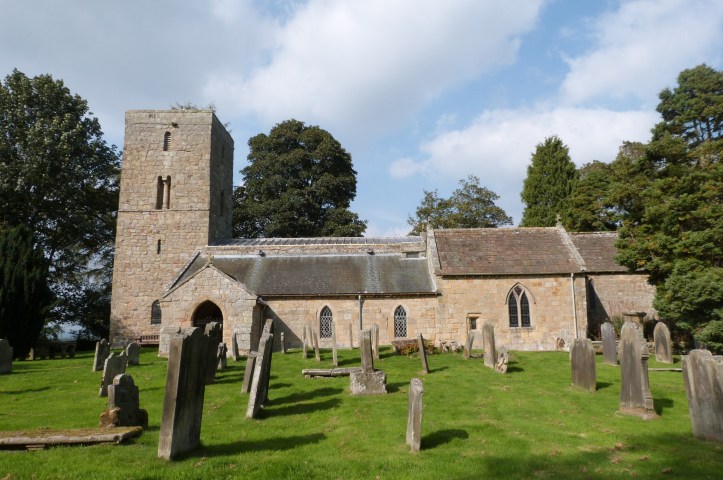
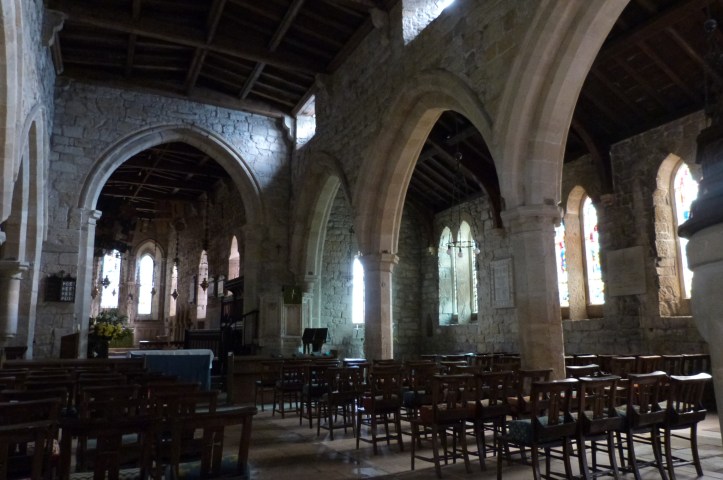
As the rather varied exterior shows, this is a building that gives more of a feeling of being expanded piecemeal throughout the Middle Ages than any other round here. An early 11thc tower, perhaps originally the main part of the church, but since the E side was given a wide arch in the 12thc, it’s difficult to say.
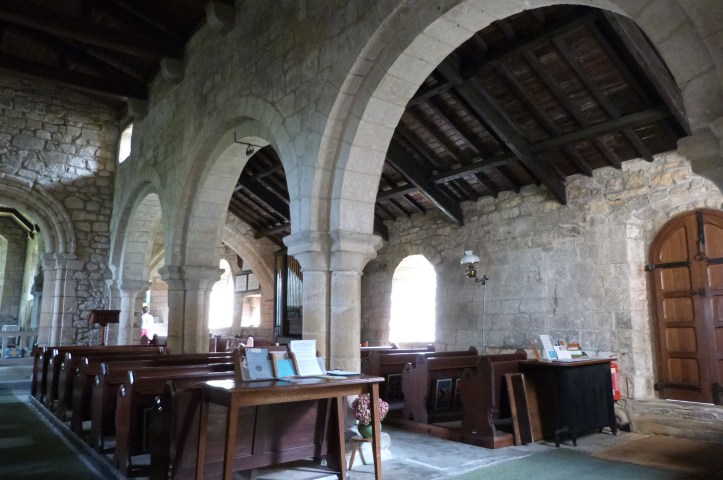 The chancel arch is 12thc, and probably led into a semi-circular apse, which was replaced around 1300 by a standard oblong chancel: smaller and simpler than most around here. The S chapel attached to it is quite a rival in size, and has its own statue niche. The aisle was probably added sometime in between, around 1200s or 1210s. The arcade has an Early Gothic look to it (and such compound piers are unusual in parish churches and look like an emulation of something higher rank), and the S door is round-headed, yet covered in dogtooth.
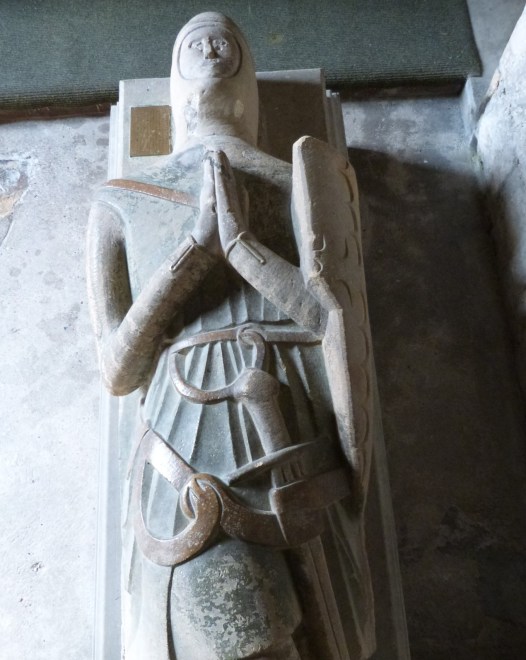
There’s an effigy of a knight here, perhaps mid-14thc. It’s really rather amusing for reasons I can’t articulate.
Kirkharle, St Wilfred
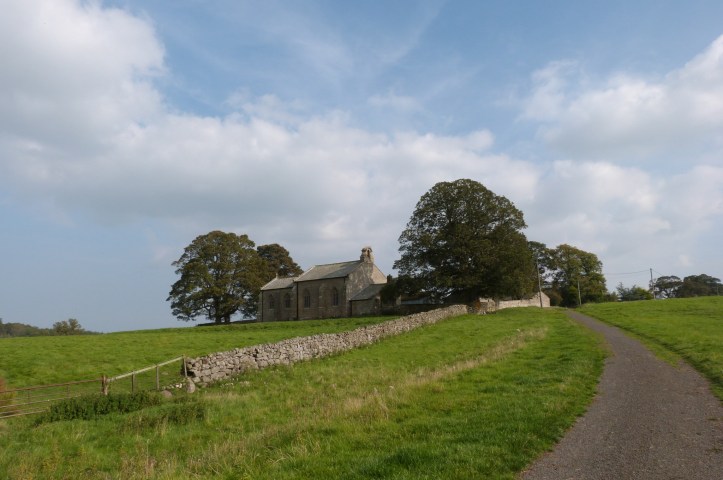
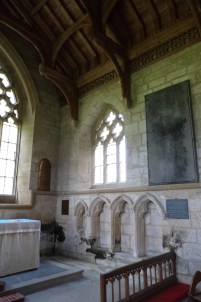
Bit of a hamlet this, its claim to fame is that it’s the birthplace of the absurdly named Lancelot “Capability” Brown (who is famous for destroying loads of Tudor gardens for vast sweeping Romantic landscaped estates): the church is next to some farm buildings with a cafe named after him.
It’s quite a minor church this, hardly any furnishings to speak of, and no arcades. But the tracery, if it’s renewed correctly (and the sedilia do help its case), is quite a gallery of first-quarter 14thc Decorated. Bad mould problem when I visited. Even I wouldn’t sit in the sedilia.
Kirkwhelpington, St Bartholomew
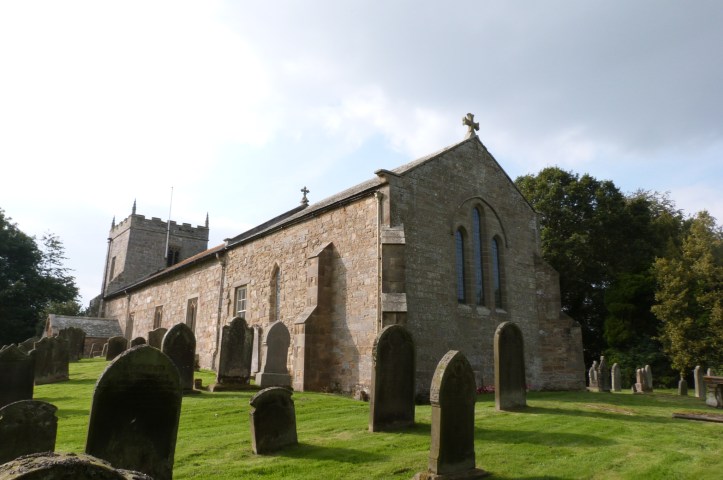
Another rather minor church, and not very pleasing inside, but architecturally a bit of a puzzle. First thing that strikes is how absurdly long it is, even more so when you see inside the chancel that the sedilia are truncated, and it must have been shortened.
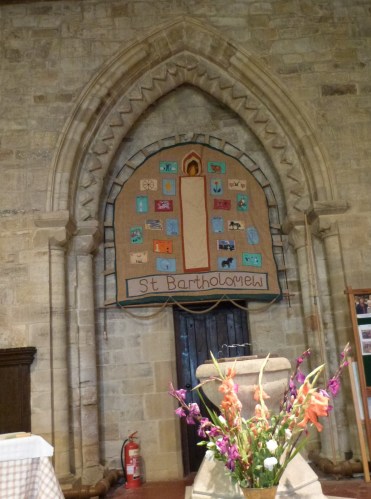
The arch to the rather stumpy Perp tower is a giant Romanesque arch, but clearly reset into a gothic pointed arch (behind that banner made by babies is a load more fragments). Excavations have shown the church had aisles and transepts. The chancel has a gratingly inappropriate sash window, which is nonetheless and interesting survival of the sort of hack job that turned this church from its medieval form into a frustrating stump.
Other medieval churches around here are Whalton, St Mary Magdalen and Thockrington, St Aidan, but I’ve not been to either of those. Just outside of Morpeth are the remains Newminster Abbey, which I located on my 2020 MonasteryQuest™, my info on it for now, is confined to this tweet.
 Stained Glass Attitudes