It’s a funny thing that Bredon Hill, arguably the centrepiece of A.E. Housman’s famous poetry collection A Shropshire Lad isn’t in Shropshire. It’s not even nearly in Shropshire. It actually is in south Worcestershire, overlooking the Vale of Gloucester. It’s exceptionally good church country. This selection includes the three villages at the south side of Bredon Hill, (Bredon, Overton and Beckford), two absolutely exceptional 12thc churches with large chancels (Ripple and Bishop’s Cleeve) and some other more ordinary places but with much history to discover. All the larger churches have the distinction of a crossing tower: which rubbishes the assumption that a cruciform church implies the church was formerly the big-boss “Minster church” of the region.
You might not be able to do all these in day, certainly if you include the Abbey. The churches are listed in rough order of must-see.
Tewkesbury Abbey
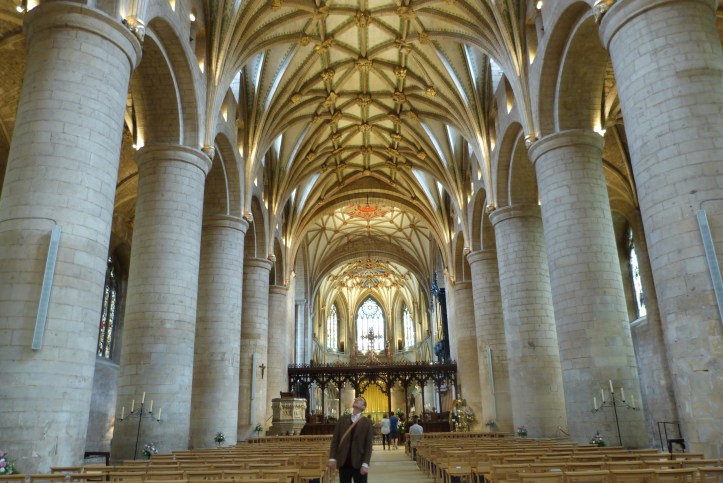
One of the best-preserved great abbey churches of medieval England that isn’t a cathedral. A very creative late Romanesque great church, that had the unusual action taken of rebuilding the superstructure of the E end in the 1320s and 1330s with fiddly stone vaults and huge stained glass windows, much of which survive. The Despenser Family were clearly inspired by Westminster Abbey in remodelling the choir into their own bourgeois mausoleum.
Free entry, pretty accessible, if not as open early as cathedrals (check their website, usually about 8.30 – 5.30). Abbey is just outside the town, closest car park (Gloucester Road) is a pay and display, up to 3 hours £2 as of 2022.
Bishop’s Cleeve, St Michael and All Angels
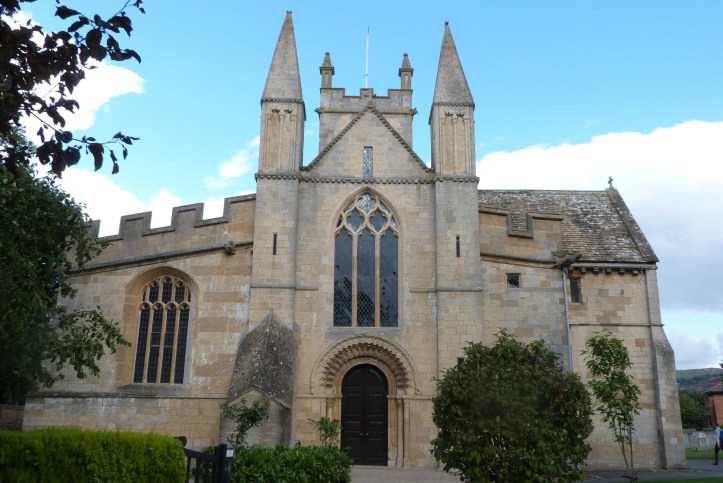
Bishop’s Cleeve really is a top-hole parish church. Sadly, it’s not always open, but also it doesn’t have strict custodian opening hours, and sometimes it is just unlocked. Probably best to try in the morning. The village is quite large and parking is a pain. Be bold and drive straight through the churchyard gates: there’s quite a few spaces in front of the church.
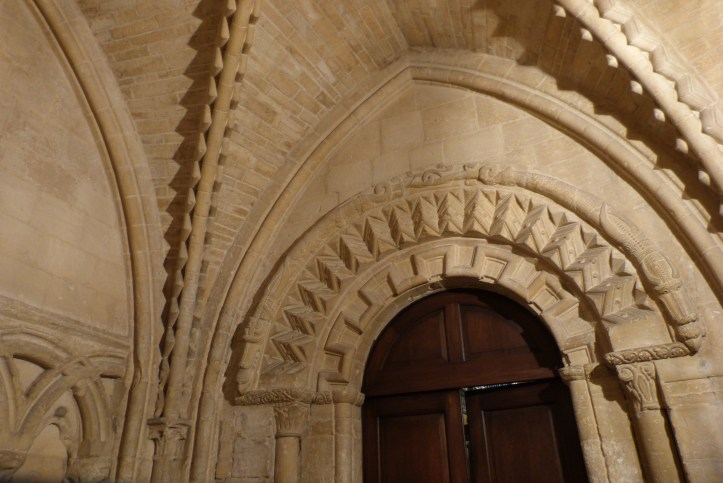
This is one of those churches that never seemed to run low on money. Essentially it’s a large cruciform church with an aisled nave built in the late Romanesque style, but with plenty of additions, including a giant 14thc chancel (sadly with a rather silly Victorian E window). The name comes from the fact that the Bishop of Worcester owned the manor (a good part of the old rectory is a 13thc residence with preserved internal features, however as far as I know it’s privately owned and you can’t get inside). However the bishop only ever had the right of advowson to appoint the parish priest, and never managed to appropriate the rectory, so its possible much of its ambition was entirely independent of the episcopate.
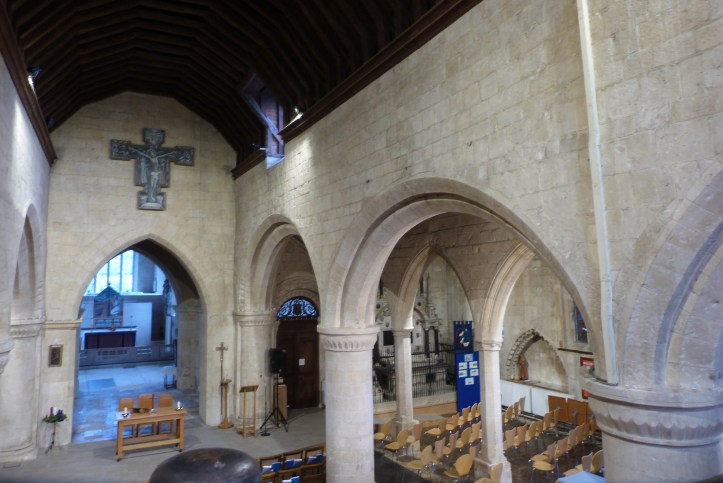
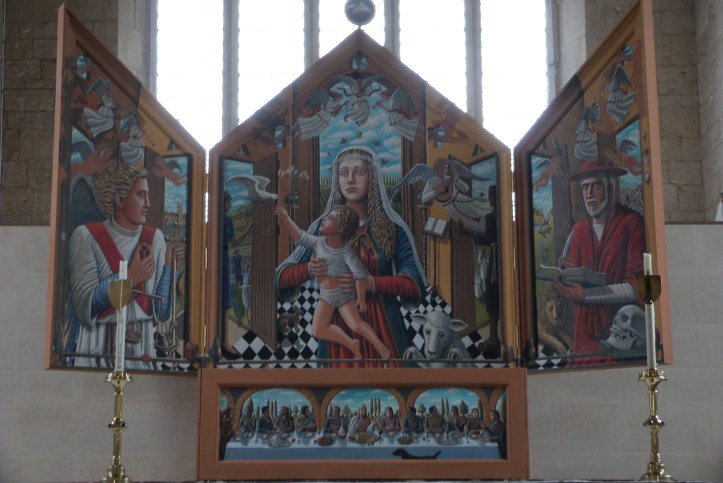
This continued after the Middle Ages. The huge span of the nave arcades is because every other pier was removed, presumably to allow for galleries, like the large Jacobean musicians gallery which survives at the W end. The church also has two paintings by local artist PJ Crook, a rood installed in 1987 and an altarpiece unveiled in December 2018. A rare instance of quality art commission for the 21stc C of E.
Ripple, St Mary
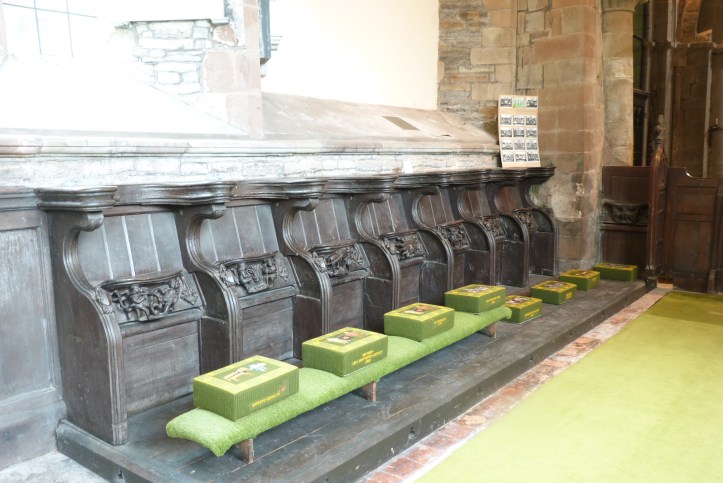
Ripple is an exceedingly swanky church, often overshadowed by its uniquely interesting complete set of misericords. But make sure you don’t just march to the chancel for them. The Early Gothic nave has an original clerestory, a very early example of this later common feature. The proportions really make it quite exceptional.
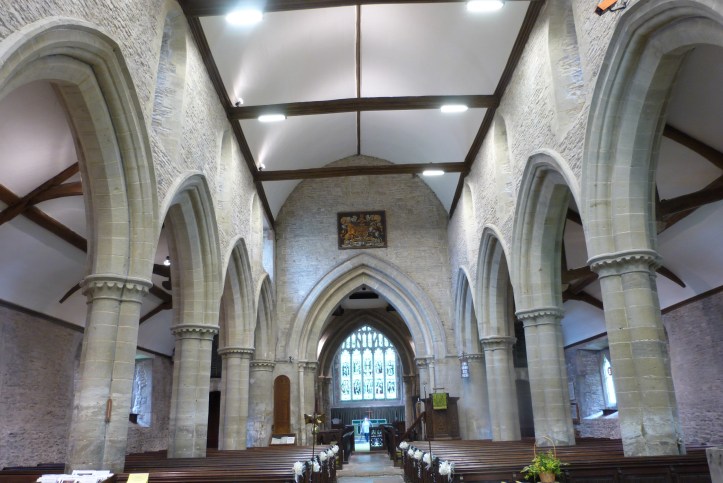
The chancel is large but curious how clunky it is. Odd windows with simply three cusped lights, and a lancet at the E with a trefoil in it. Whatever the E window was originally, it presumably failed because there’s now a standard Perp window there.
The thing that everyone comes to Ripple for are the misericords, which show the Labours of the Months. They’re a bit of an enigma, really. They have an unique figure style, and no other set of stalls has such a singular programme for the usual marginal space of the misericord. If we have them as late 14thc, then they are some of the earliest stalls in a parish church. They are great fun though. Especially the look on the face of the pig when he realises what happens in November.
Bredon, St Giles
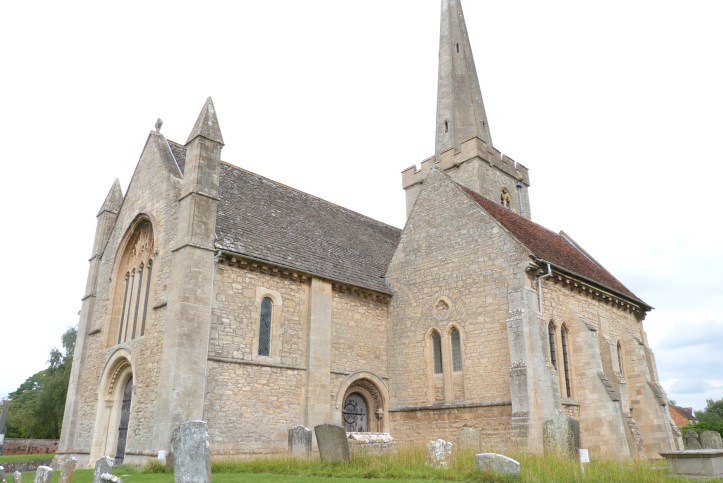
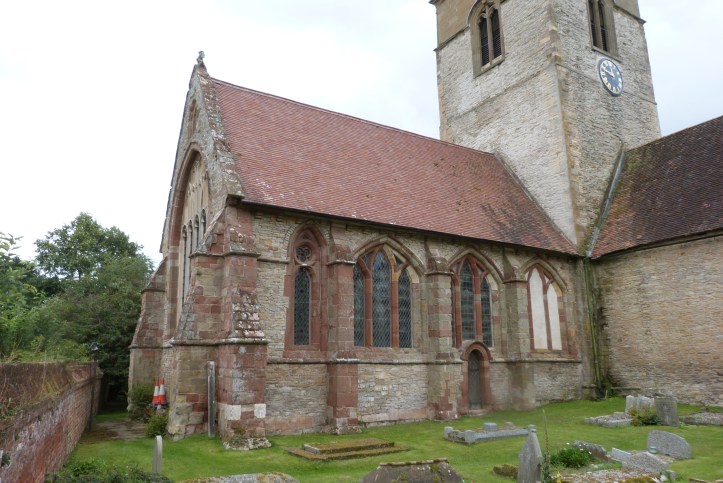
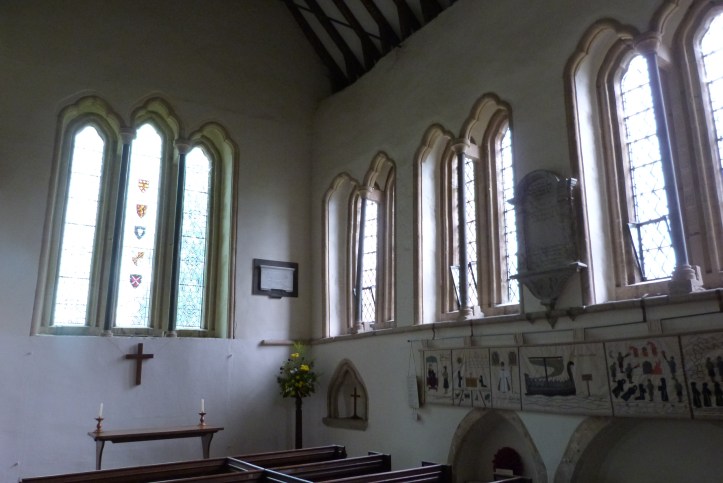
Bredon has a wonderfully needle-like spire on its crossing tower, and in its bones is essentially a aisleless and cruciform Romanesque church. A significant addition is the S chapel, almost like a church in itself. Clever windows with delicate free-standing shafting.
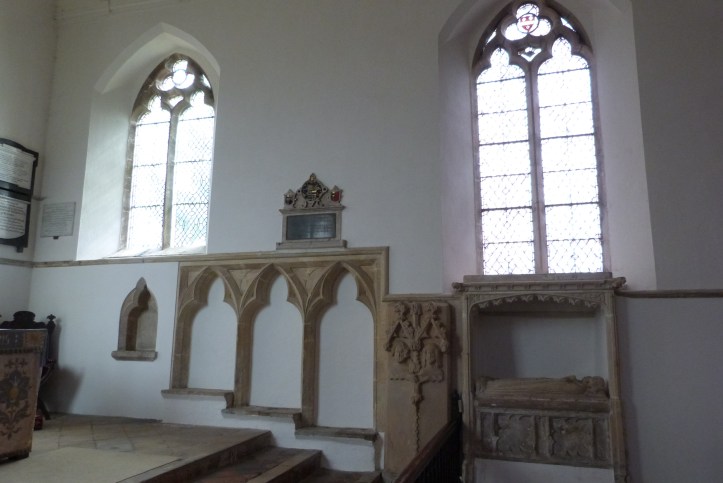
The early 14thc chancel contains some early monuments, most of all the unique grave slab of a very grumpy-looking husband and wife with Christ crucified on a foliate cross between them. They look like Grant Wood’s American Gothic.
Overbury, St Faith
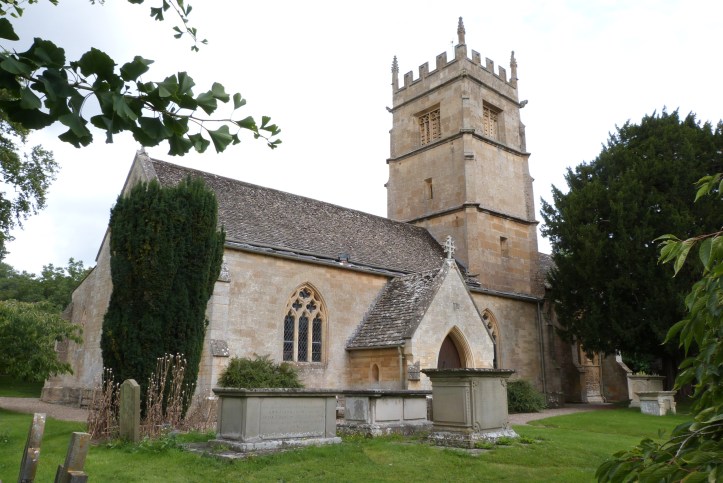
With another centralised tower, this church looks like it’s entirely 14thc and 15thc ashlar on the outside, so it’s a big surprise to see two powerful Romanesque arcades, with clerestory, swallowed up inside.
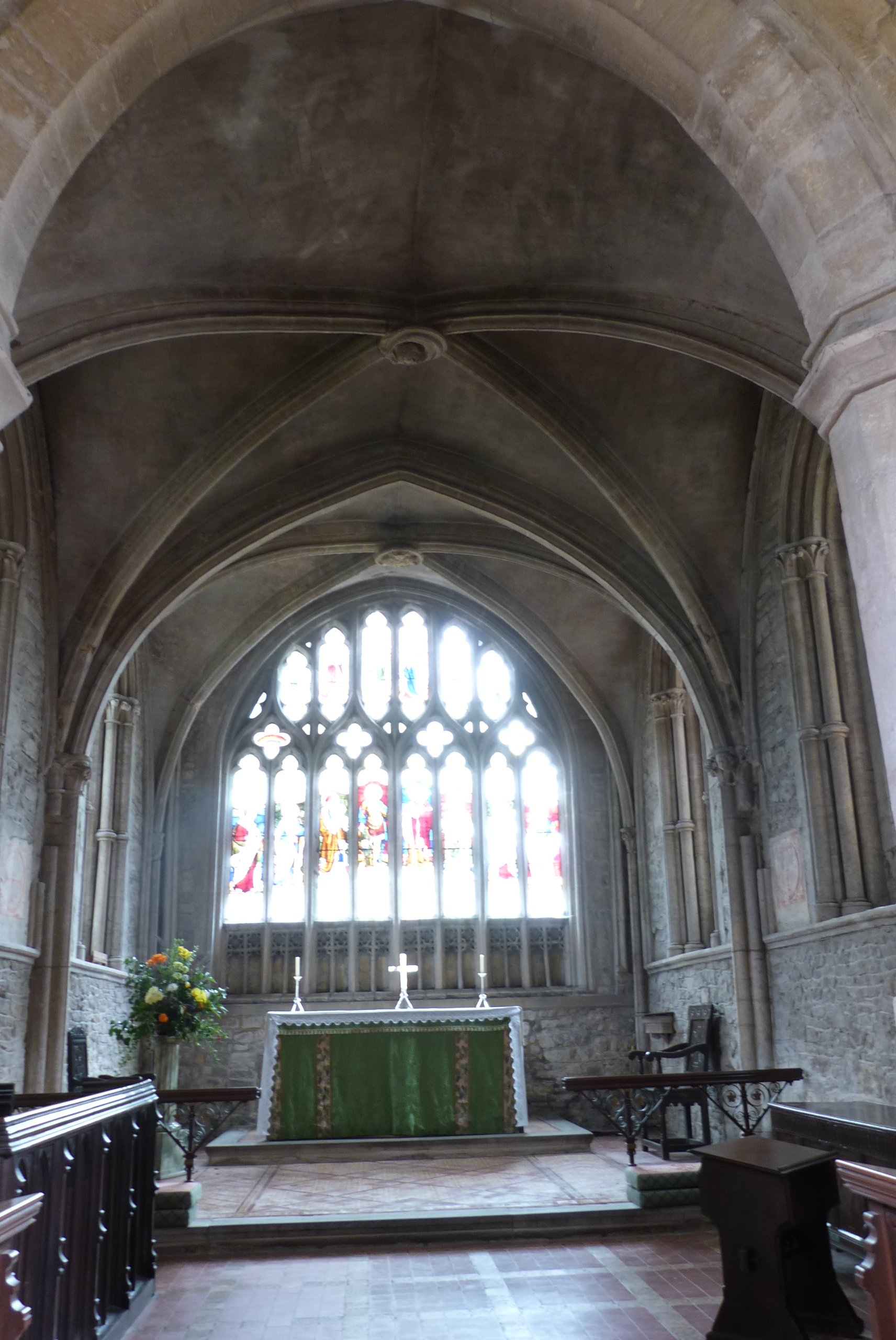
The chancel, rubble-built on the outside, also surprising with that great rarity in an English parish church: a full rib-vault. Beautiful shafting and carving, probably rather early in the 13thc. The E wall has been knocked out for a later window, but it’s actually got rather unusual and attractive tracery.
Beckford, St John the Baptist
The last of this three central-tower churches, a similar late medieval tower to Overton, but no aisles, and the base of the Romanesque crossing tower still survives.
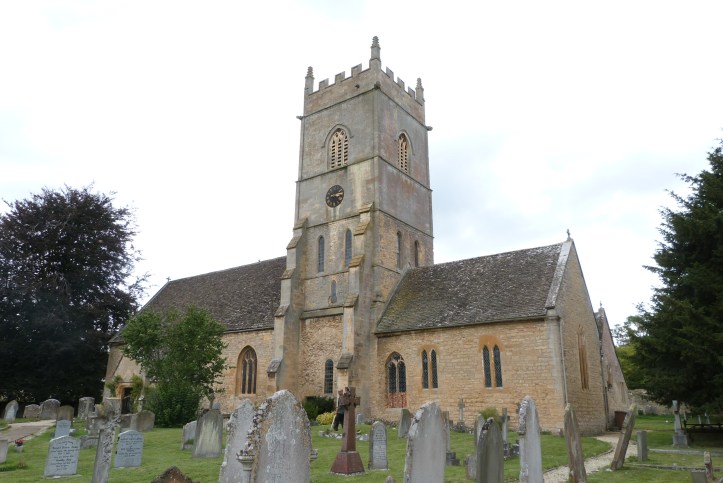
Undoubtedly the highlight of Beckford is the tympanum of the S door. While the much decayed N tympanum probably shows the important scene of the Harrowing of Hell, this just looks like an idle doodle on the back of a napkin.
Tredington, St John the Baptist
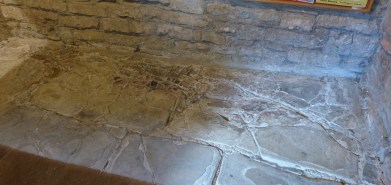
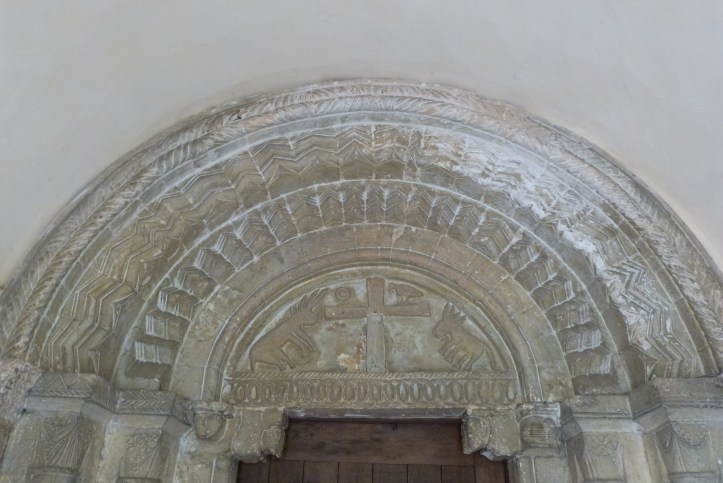
Basically a Romanesque unaisled nave with a later chancel as you’d expect, with good carving on the nave doorways, but I really have to admit I got really excited by the supposed ichthyosaur fossil in the S porch. However I’ve now been told it’s a tall tale that Pevsner fell for and it’s just a broken up bit of limestone. Ho hum.
Stoke Orchard, St James
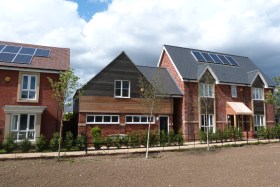
This is sadly becoming a suburb of Tewkesbury, which wouldn’t be so lamentable if the properties weren’t so bloody awful. Anyway, here’s the church.
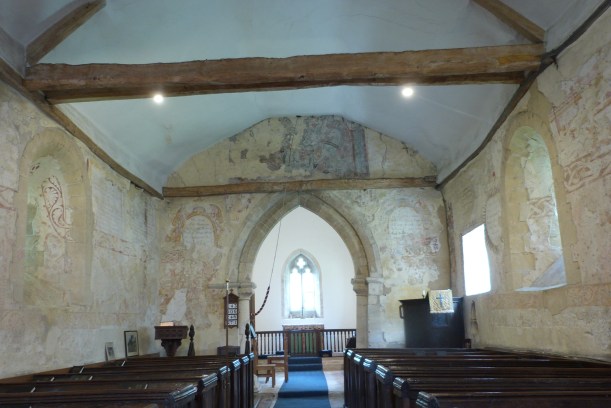
A small two-cell building, distinguished by the almost total survival of painted plaster of various dates in the nave. A lot of it is 18thc text, but there’s a large part of a scheme of the life of St James the Great, painted shortly after the current nave was constructed (c.1170s-1200s). It’s not the best quality stuff, or that legible, but it’s a remarkable survival. Certainly worth a stop.
Now, on to the deep cuts…
Ashchurch, St Nicholas
Sort of marooned from other churches, and indeed divorced from its village (sharp turn off the A road, but thankfully a nice big car park). Worth a visit: unusually well-preserved rood screen, and an amusingly pessimistic 17thc memorial (I’ll leave you to discover it).
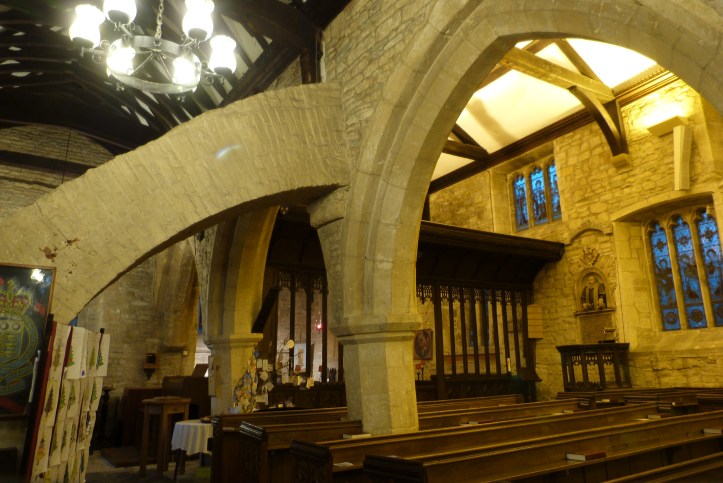
Woolstone, St Martin
Woolstone, Oxenton and Teddington are three deep-cuts on the edge of the Cotswolds. Slightly frustrating you have to keep going back to the A435 to get between each of them.
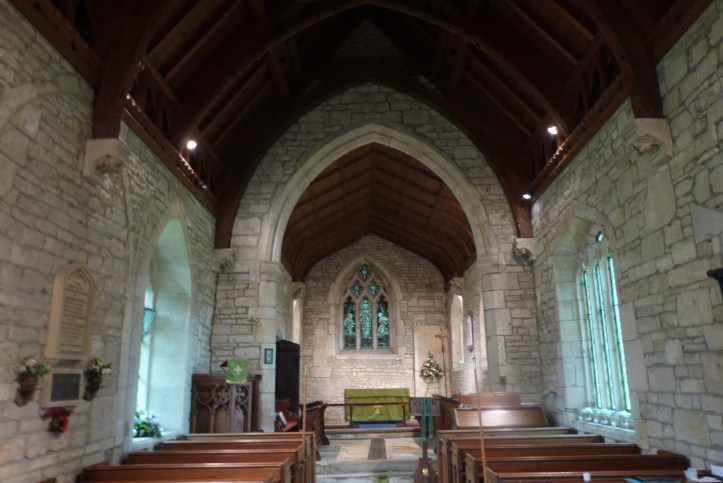
Woolstone has a nice sloped setting, and while small and rather over-cleaned, there’s some excellent medieval sculpture in the chancel: two fancy niches for the Virgin and patron saint, and a 14thc effigy of a priest.
Oxenton, St John the Baptist
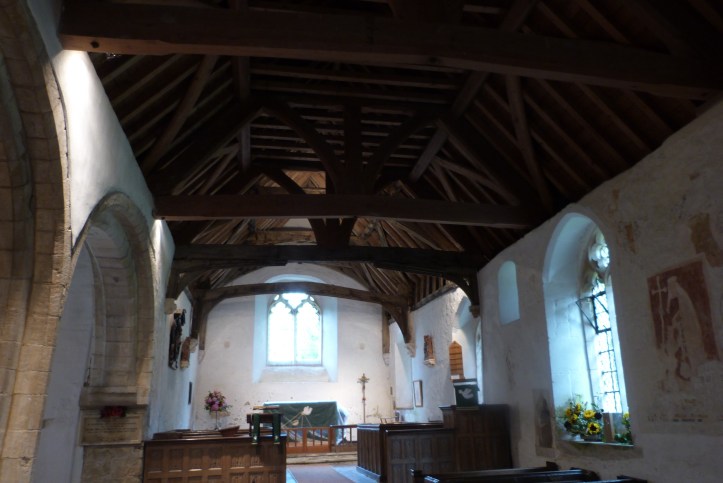
I think the Pevsner (yeah, I know, it’s all David Verey round here) bigs this up a bit more than it deserves as an “unspoiled medieval church” and a “possession of Tewkesbury Abbey” (it was a dependent chapel of the parish of Tewkesbury, like just about every small church round here). However it is still an interesting small church with quite a few wall paintings. And the Perp tower plonked into the W end is undeniably posh.
Teddington, St Nicholas
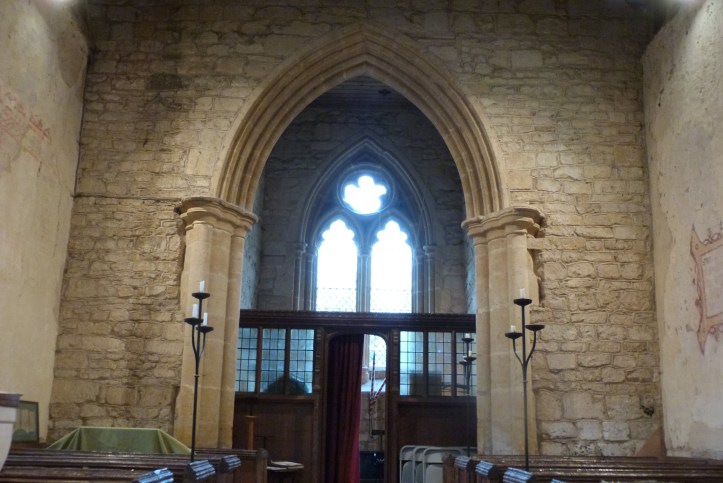
This church is most fascinating for how the W tower reuses two pieces from Hailes Abbey: a 13thc two-light window and an arch of similar date. It’s almost certainly from the abbey church, which makes it more evocative of the quality of that utterly levelled building than the site itself. However it’s shouted down by the bizarrely gigantic royal arms, unusually, painted directly onto the S wall.
 Stained Glass Attitudes