Richmondshire? Is this some secret county that only gets unlocked when you complete a high-score of church visits? No, it’s a district of North Yorkshire – the only district in England named by adding the “shire” suffix. Certainly it’s helpful to avoid confusion with the London borough, but that can’t be the main reason. It may be to do with its vast size (some hundreds in Yorkshire were “shire”, e.g. Hullshire, Howdenshire), which spreads into the largely unpopulated Yorkshire Dales. The area around its “capital” however, has some quality churches in attractive landscape which are often overlooked.
This tour features on three medieval churches which aptly demonstrate how parish churches borrowed and developed each others’ ideas. Then there are plenty of other ancient churches between Richmond (around Richmond itself will be a future Trail) and Ripon (which is a great base to explore these from). Also very close to the World Heritage site Fountains Abbey.
Patrick Brompton, Ainderby Steeple and Burneston
These three churches aren’t super-close to each other, particularly since the A1(M) slices through the middle. However, they’re a really fascinating chain of emulation, starting with Patrick Brompton – the name of the ancient Irish saint pointing to an early foundation. Try and visit them in the following order, but don’t worry if you can’t.
Patrick Brompton, St Patrick
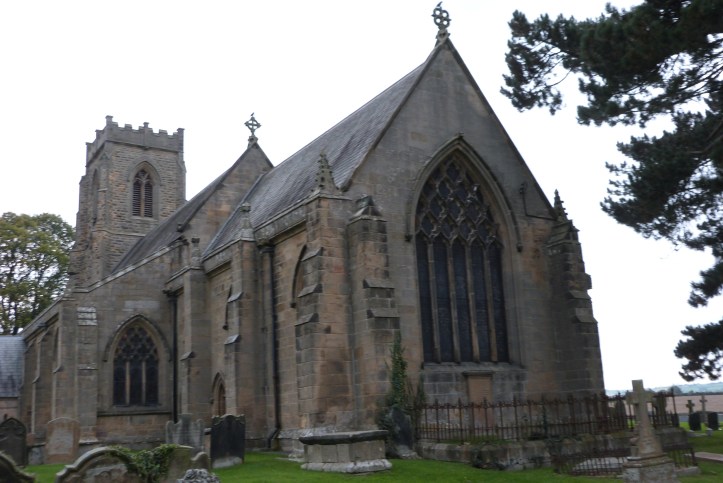
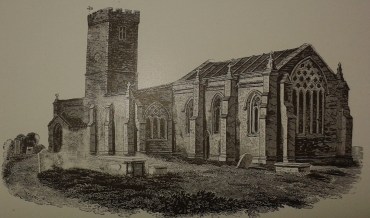
This is one of my favourite churches, despite it being quite heavily restored: it does make a difference when the church is restored well, though. It’s the oldest in every way, except for the tower, which is a Victorian rebuild of the original which collapsed.
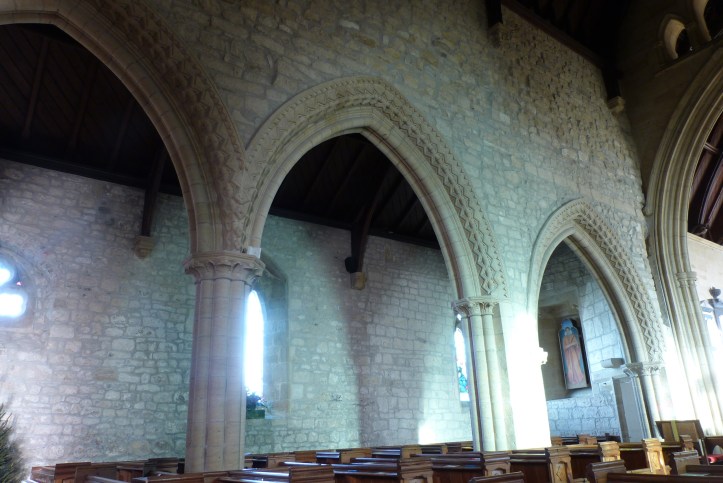
The arcades are wonderful examples of Early Gothic: pointed arches but still with Anglo-Norman Romanesque ornament (see also Bedale). Notice that only the off-set smaller arch has a counterpart on the other side, presumably when it was built the church only had a north aisle and some sort of transeptal chapels.
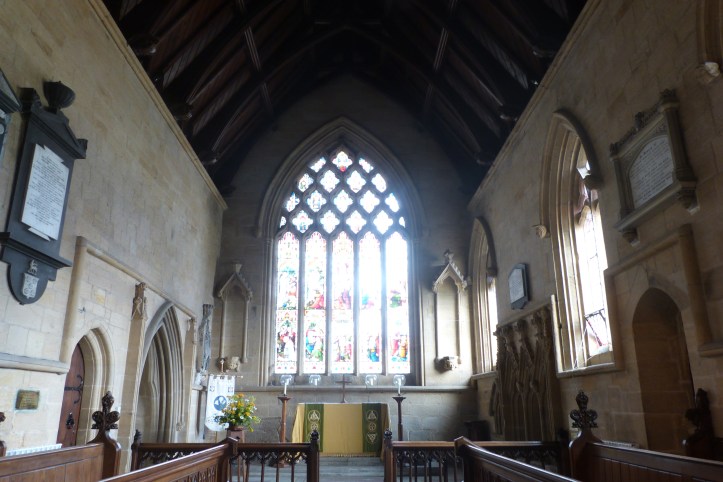
The chancel however, is a tremendous overture of its genre that begins the story of exchange around this area. It has niches for the statues of the patron saint (certainly St Patrick) and Virgin Mary. The larger one on the south side was probably for St Patrick (going off evidence of surviving wall paintings in other churches, the Virgin was on the N). There’s an Easter Sepulchre alcove, and a sedilia and piscina group.
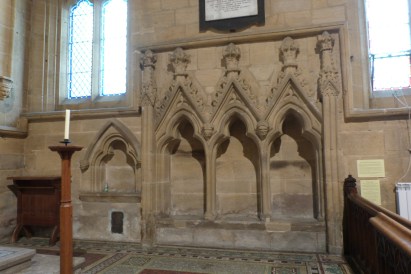
The sedilia, essential French-inspired Rayonnant in their details, obviously set a bit of a benchmark (pun intended) around here. They have gables directly over the trefoil niches, the space within elegantly filled with a pointed trefoil.
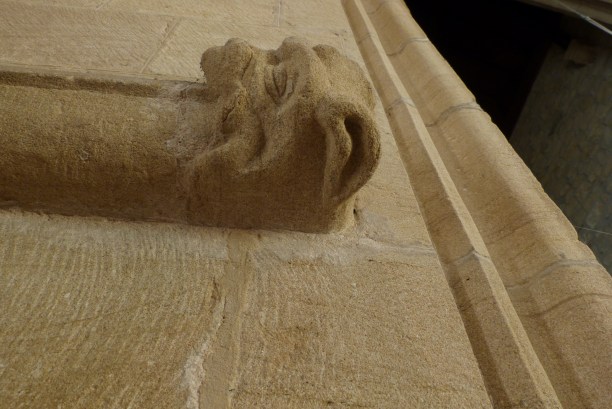
Not quite as artful but part of a long tradition is what the masons do with the string-course that wanders around the sedilia, tying all the furnishings up with a bow. Because the masons can’t just let it end, a little beastie gobbles it up just before the chancel arch.
Ainderby Steeple, St Helen
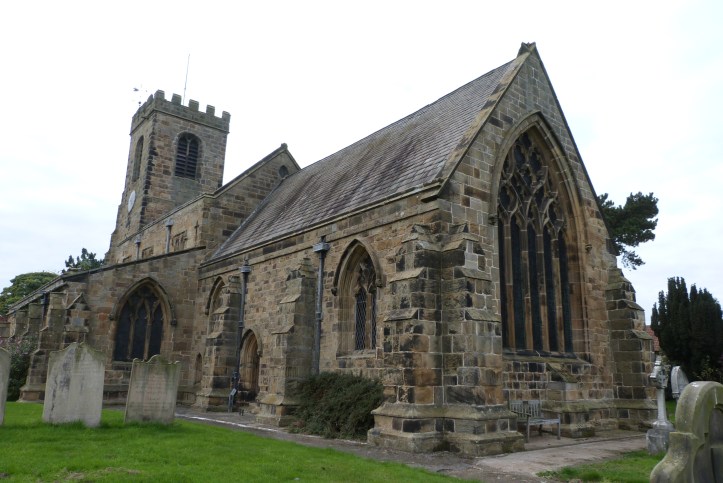
Steeple didn’t really receive the connotation of “tower with spire” until probably the 19thc, and this tower is all the church of St Helen ever had. The effort instead was put into its chancel, which owes a helluva lot to Patrick Brompton.
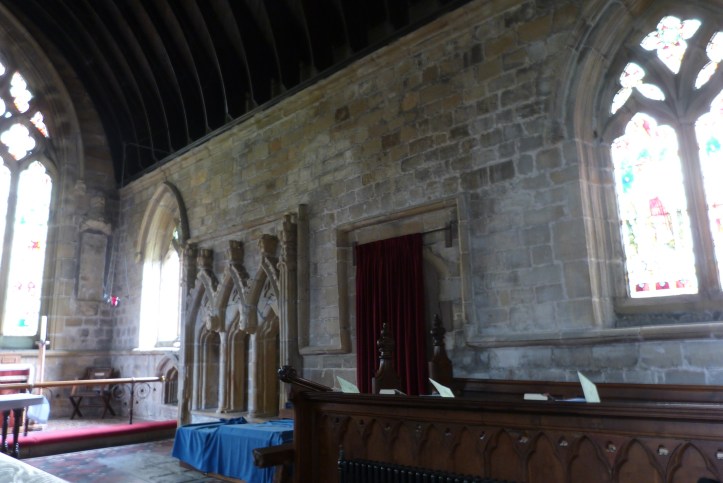
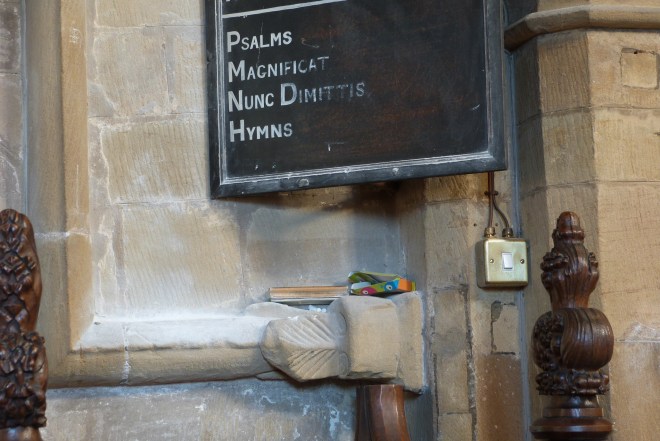
All the elements from that earlier building are here: the patron/Virgin niches, ornate sedilia group, wandering string course: even that pesky string-course swallower! All that’s missing is the Easter Sepulchre alcove, although this may have occupied the site now taken by the organ. The thing is, the actually quality of the sculpture is much, much lower. I mean, look at the sedilia.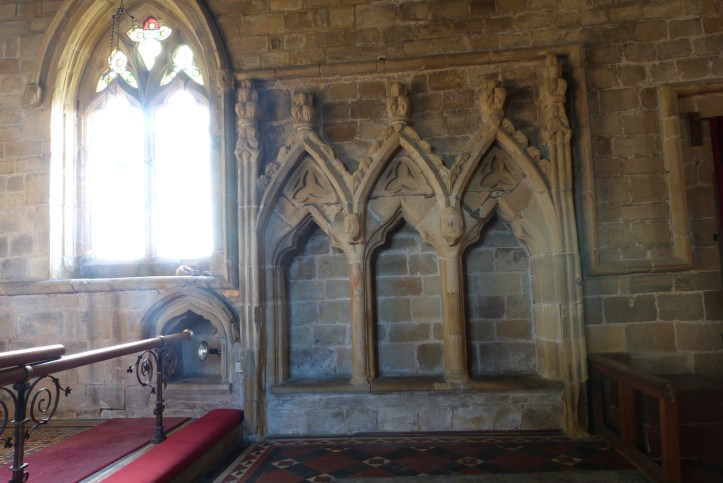
They’ve got all the same elements as Patrick Brompton, but look how clumsy they are. The trefoils don’t elegantly link up the empty space inside the gables, they’re just plonked there. It’s almost as if someone carved them from memory: they certainly did not use a drawing to copy them!
Burneston, St Lambert
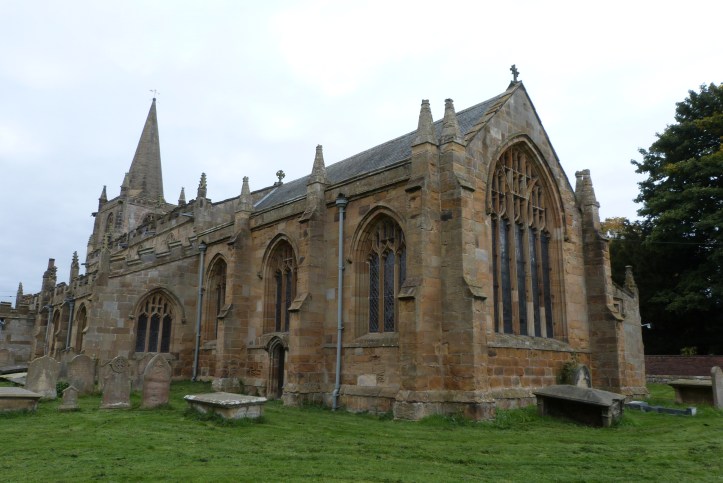
This chancel is the last in the chain of Chinese Whispers. Although all its windows are rigid Perpendicular-style, there’s something unmistakably Decorated about the whole thing. And indeed, inside, there’s deja vu all over again.
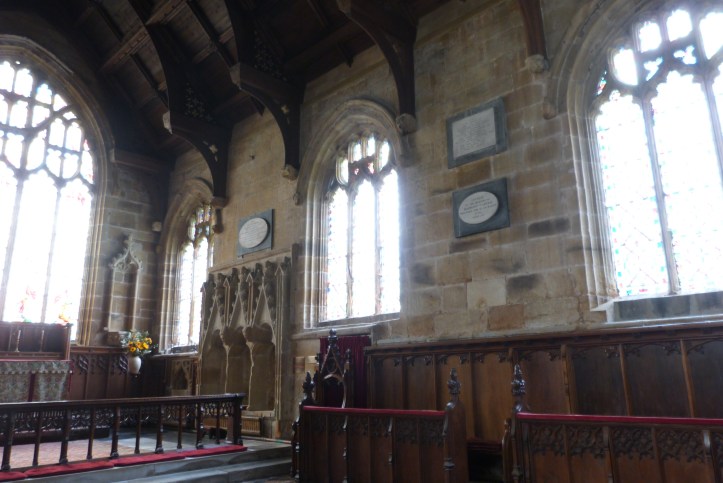
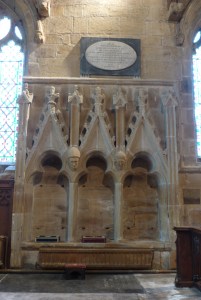
The chancel is probably earlier side of Perp around 1400, which makes its connections to the above two 14thc churches more understandable. It has the basic ensemble of ornate sedilia and piscina, patron/Virgin niches and wandering string course – although sadly the swallower’s nowhere to be seen. The sedilia have also ditched the trefoil completely: perhaps they were referencing Ainderby Steeple and thought it was best to leave it out because they’d made such a dog’s breakfast of it.
Other churches in the area
Make sure you visit some of the following around here too. They’re all mostly open every day.
Bedale, St Gregory
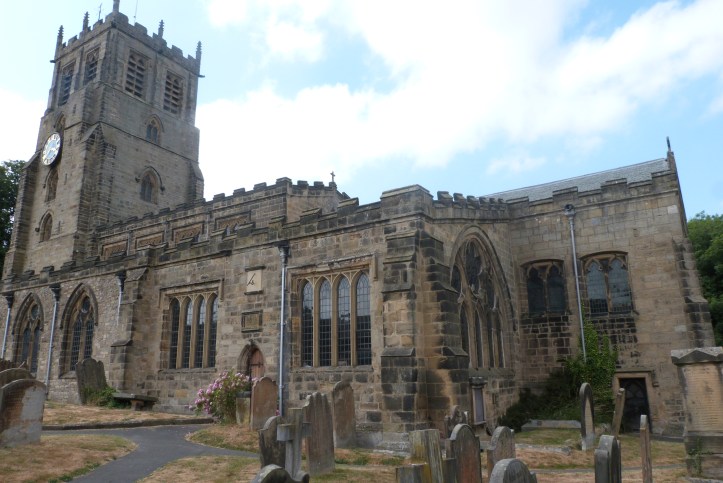
One of the more famous churches in the area, in a town with a large market street. Parking can be a bit of a squeeze around the church but I’ve always found somewhere (but there is no church car park). A church of quite large proportions. What’s out of all proportion is the E window of the S aisle. This is clearly made of tracery salvaged from a dissolved monastery, probably Jervaulx Abbey. It clearly is meant to be at least twice as tall, and probably a terminal window from a large wall (such as a presbytery E wall or transept, or if Easby Abbey is anything to go by, the refectory).
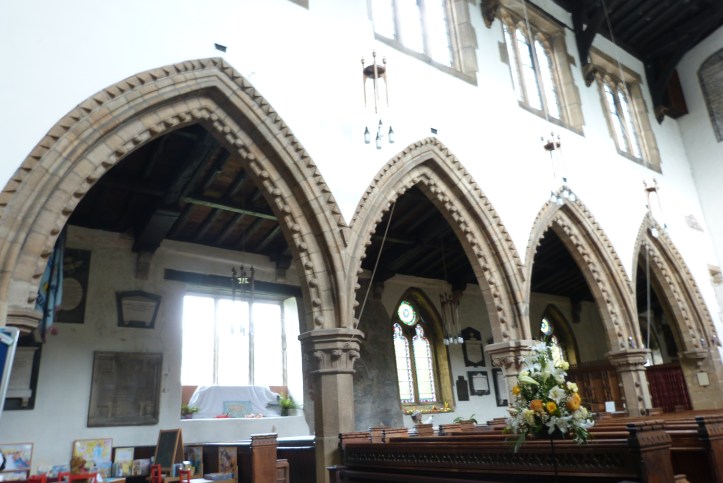
The N arcade is fantastic Early Gothic of around 1200, similar to Patrick Brompton, but a bit later and not as high a quality. Indeed Pevsner calls it “very curious, inventive certainly, if somewhat gross.” Which is a masterful bit of bathetic description which always makes me laugh. Indeed, god knows what the idea was with those big balls everywhere (notice how they go down the first column as well as on all the arches).
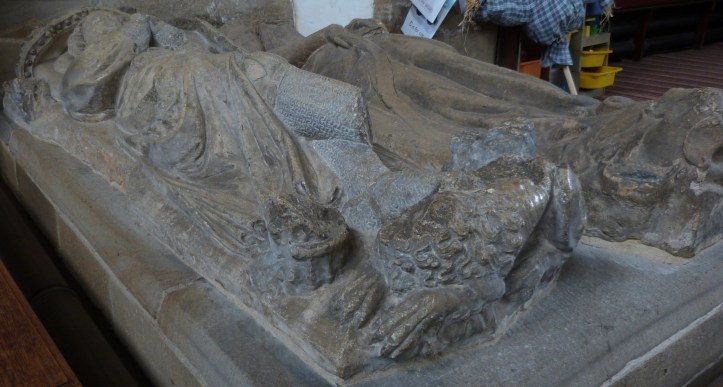
![an01552190_001_l[1]](https://stainedglassattitudes.com/wp-content/uploads/2019/01/an01552190_001_l1.jpg?w=300&h=209)
Hornby, St Mary
Not to be confused with Hornby in North Lancashire.
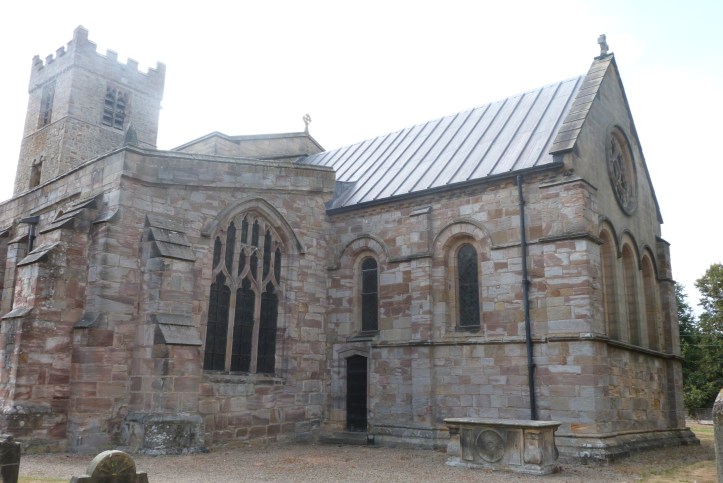
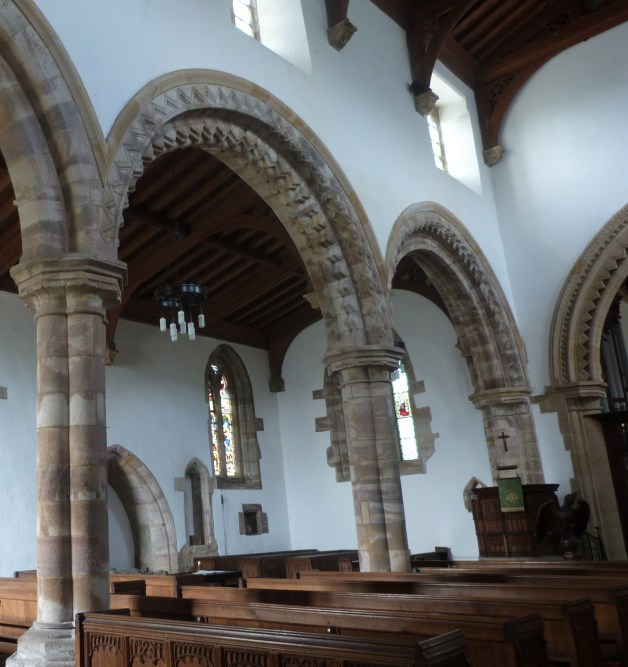
A largely Romanesque building with a lot of clout, although rather other-enthusiastic restoration by J.L. Pearson in the 1870s. The E wall with three windows and a rose is him thinking of the sort of thing that might have been there. Even more overzealous is his Neo-Norman chancel arch, with pales in comparison to the ancient racousness of its late-12thc arcades.
There’s a side chapel full of a few rather sad old monuments and effigies, but the real surprise is the back of the screen, which retains its original decorative 15thc painting. It’s rare enough for something like this to randomly survive, but Yorkshire diocese had an episocopal command to remove screens in the 18thc, so barely any can be seen round here now. Anyway, it looks like William Morris designed it.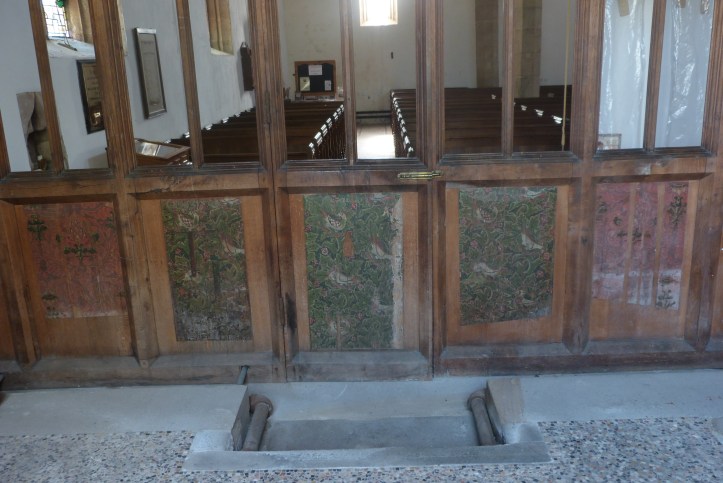
Kirby Malzeard, St Mary
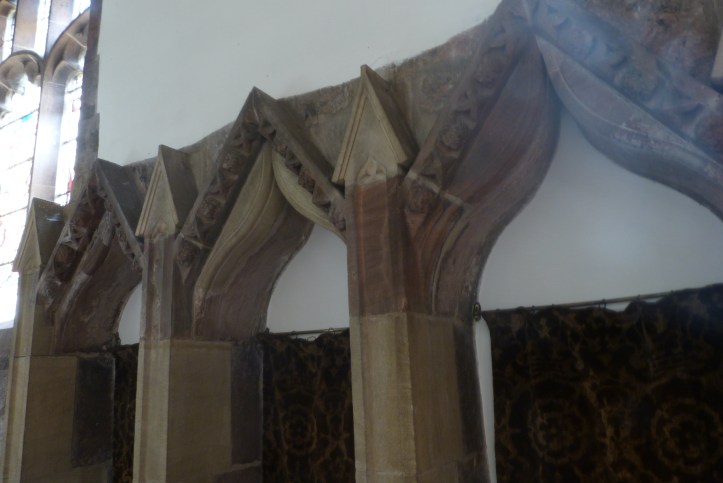
Not the best church in the area, but just on the West Riding side of the river, so easy to overlook. Suffers a bit from over-restoration by Blomfield in the 1870s (that most over-eager of decades for the British) and again after a fire in 1908. There’s a Romanesque core here, but Blomfield’s strange choice of neo-Perp work is quite overbearing. The medieval sedilia are bizarre. They have ogee arches with dogtooth, which is like a mash-up of the greatest hits of the 13th and 14th centuries.
St Michael, Well
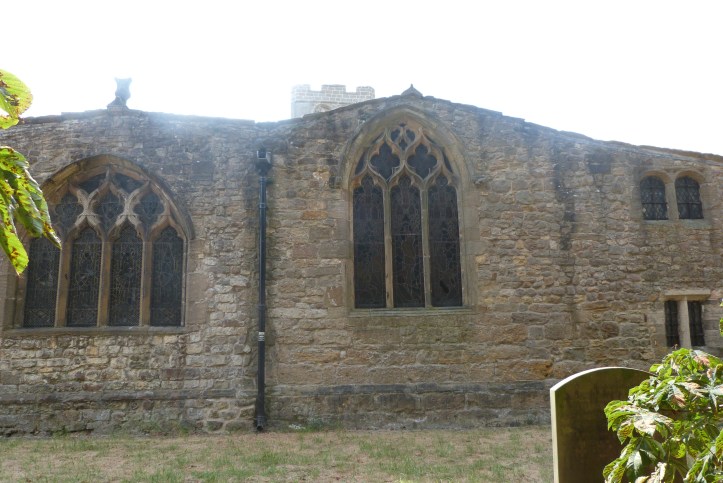
A small but atmospheric little church. The 14thc E wall looks suitably gnarled by the trails of time and specifically, the gable being inexpertly lowered at some point.
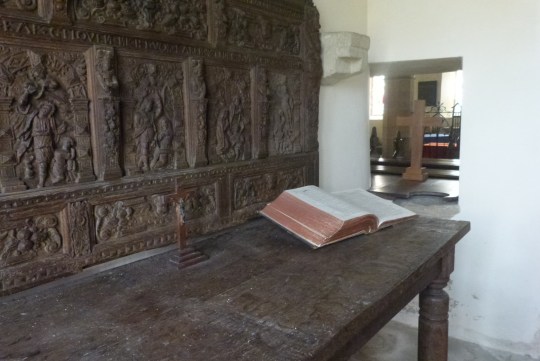
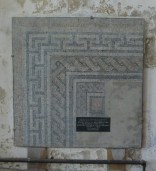 Inside, there’s some rather random accoutrements, including a very nice Antwerp Mannerismy wooden altarpiece and the unusual sight of a Roman mosaic floor, discovered in the remains of a nearby villa. Funny how churches became dumping grounds for random bits of local history, but where else should it go? All the way to some museum that has loads of this sort of thing anyway?
West Tanfield, St Nicholas
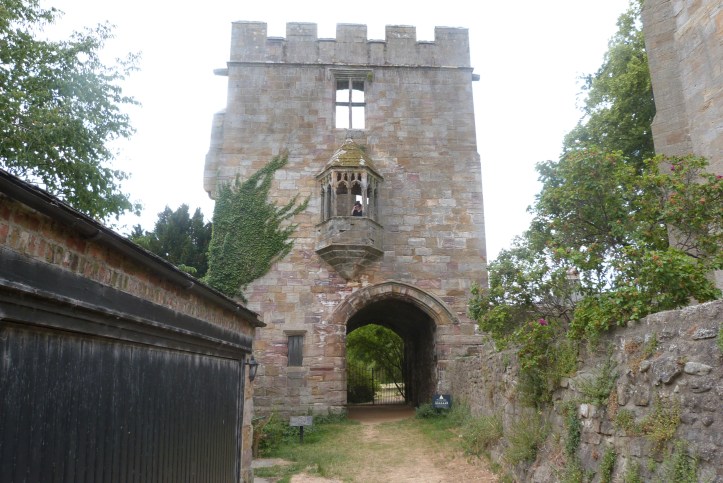
The church’s exterior is totally upstaged by the Marmion Tower just next door, the gatehouse to the old manor. Its 15thc oriel window is a great photo opportunity for you to ask a friend to take of you for a souvenir of your visit to Richmondshire (it’s owned by English Heritage and open any reasonable hour for you to go up inside).
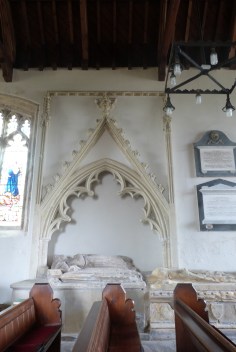
However the interior of this church is full of amazing things: primarily monuments, although the rather weak local sandstone is often in a parlous state. The most special monument is the double to John Marmion d.1387 and his wife. Not so much for the alabaster effigies, but the survival of the iron hearse over them, which can only really be paralleled at the Beauchamp Chapel at Warwick, and Westminster Abbey. This would have have been draped with fabrics often, surprisingly, obscuring the monument, but the candles on it would have contributed to the visibility on dark winters’ days.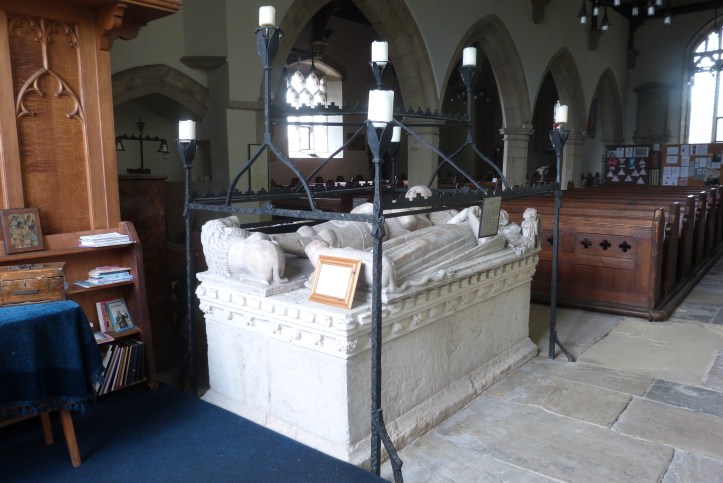
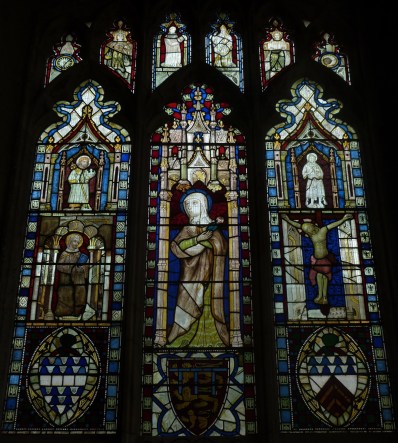
No doubt connected with the munificence of someone represented by one of these effigies is a window made up of 15thc stained glass with many complete figures. Although there’s a lot of modern pieces (I don’t think the central head is original, for instance) it’s still quite a thing to behold.
Catterick, St Anne
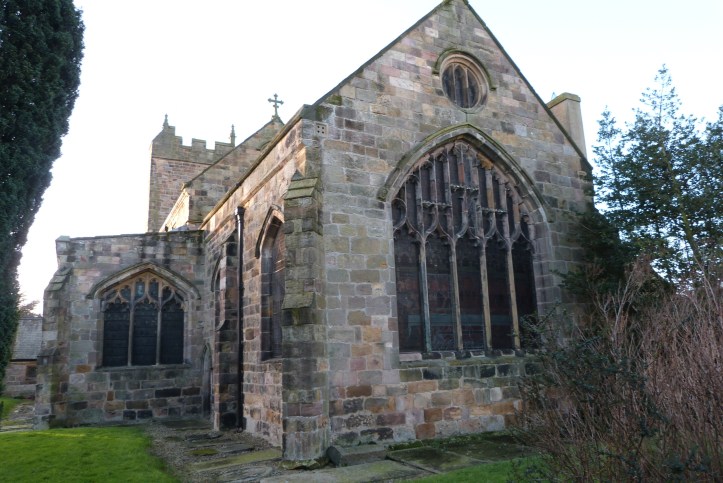
I don’t like to be a text-obsessed art historian, but the church at Catterick is notable for being one of the very few medieval English parish churches to have a contract associated with its construction, dated 1412. It is between Katherine Burgh, wife of the recently-deceased Lord of the Manor, and the mason Richard de Cracall.
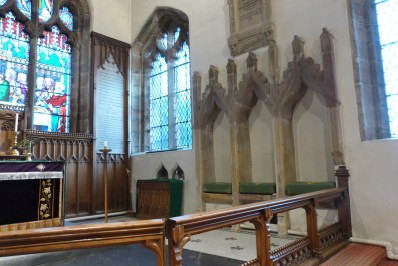 I do wonder if they needed to set out the shape of the church with Richard in writing because he was a bit crap, because the outstanding thing about the building is how incredibly boring it is. Hardly any mouldings, dull tracery, overall clunky feeling. Even the sedilia (called “prismatories” in the contract, a word that appears nowhere else in Middle English, so probably a scribal error) are flat and simply carved, unlike those of a similar date at Burneston.
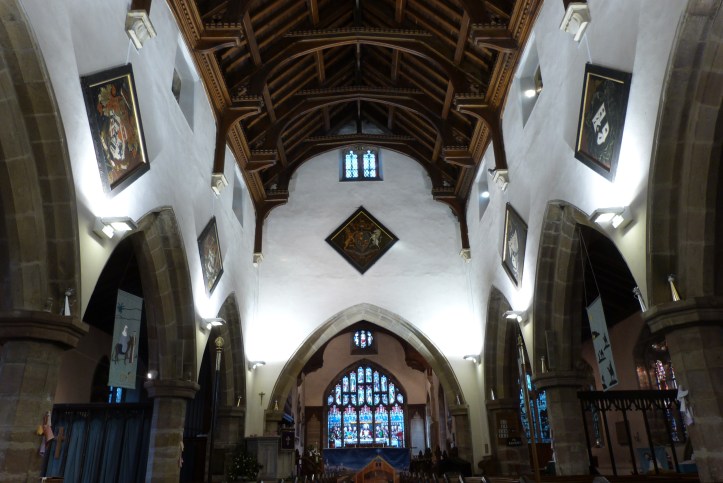
The church is modified from the original contract: the aisles were extended into chancel chapels in the 16thc (but retaining the original E windows), and most annoyingly, the Victorians put a porthole clerestory on top of the arcades. Still, it’s definitely worth a visit for the unique history. The village also has a medieval bridge that also has a contract. Obviously the manor had good archiving practice.
More Richmondshire churches will follow in future guides, but that’s all for now.
 Stained Glass Attitudes